
Beyond the Science: Safeguards and Ethics in Gene Editing
Explore ethical implications, safety concerns, and international guidelines for gene editing technologies like CRISPR, addressing societal impact and potential medical benefits.
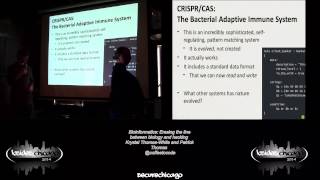
Bioinformatics - Erasing the Line Between Biology and Hacking
Explore the intersection of biology and hacking in bioinformatics, discovering how computational techniques are revolutionizing biological research and creating new security challenges.
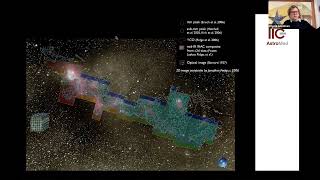
Exploring High Dimensional Data in Astronomy, Genomics and Beyond Using Glue
Discover "glue," a powerful analysis/visualization tool for exploring diverse datasets across fields. Learn its origins, capabilities, and applications in astronomy, genomics, and beyond.
AI in Early Detection of Diseases - Session 2
Exploring AI innovations in early disease detection, discussing challenges, opportunities, and future prospects for AI-driven health technologies across various medical fields.
NHGRI Scientific Directors Discuss 30 Years of Intramural Research - Part 2
Four NHGRI Scientific Directors discuss the Intramural Research Program's history, leadership styles, mentorship, challenges, and future directions in genomics research, highlighting its impact on the field.

Data-Driven Understanding of Human Disease: From Machine Learning Methods to Biological Discoveries
Data-driven disease understanding: machine learning methods for genomic analysis, integrating model organism data with human studies to uncover disease mechanisms and genetic architecture.
Visual Pattern Exploration At and Across Scales
Innovative visualization systems for exploring patterns in large-scale datasets, combining interactive visual techniques with machine learning to enhance data analysis in genomics, geospatial, and time-series fields.
Toward Efficient Genomic Compression Using Channel Codes for Joint Alignment and Reconstruction
Explore innovative genomic compression techniques using channel codes for efficient alignment and reconstruction, advancing data storage and analysis in genomics research.
Garbh-Ini Project - Machine Learning for Maternal and Child Health
Explore machine learning applications in healthcare through the Garbh-Ini Project, focusing on predicting outcomes, analyzing medical data, and bridging the gap between computational modeling and clinical practice.

AI and Machine Learning in Single Cell Genomics - Day 2
Explore cutting-edge single-cell genomics research, featuring expert talks on spatial transcriptomics, multi-omics, and bioinformatics from leading institutions in Atlanta and across America.

AWSOM24 Conference - AI and Machine Learning in Single Cell Genomics
Explore cutting-edge single-cell genomics research with expert talks on bioinformatics, experimental applications, and translational studies in this comprehensive workshop from leading institutions.

Introduction to Machine Learning in Computational Biology - Lecture 1
Comprehensive overview of computational biology, exploring GenAI, representation learning, and their applications in genomics and language models. Insights into future directions and potential impacts.
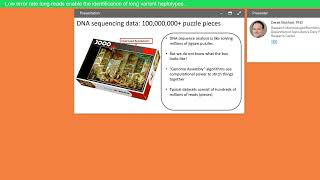
Low Error Rate Long-Reads Enable the Identification of Long Variant Haplotypes in Metagenome Assemblies
Explore how low error rate long-reads improve metagenome assembly, enabling identification of long variant haplotypes in microbial communities. Learn about overcoming challenges in separating closely related organisms.
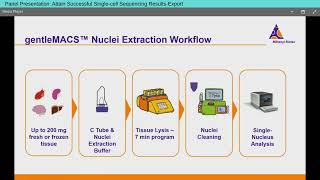
Attain Successful Single-Cell Sequencing Results with Latest Cell and Nuclei Isolation Workflows
Explore cutting-edge single-cell sequencing techniques and workflows for successful whole transcriptome profiling. Learn from experts about revolutionary technologies enabling parallel analysis of thousands of cells.
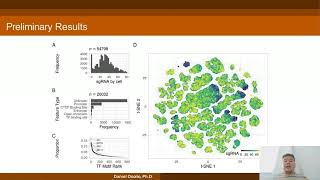
Systematic Characterization of Gene Regulatory Networks Rewiring Patterns Mediated by Non-Coding Regions
Explore gene regulatory network rewiring patterns through innovative experimental methods and computational approaches for characterizing effects of perturbations at single-cell level.
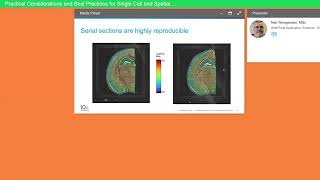
Practical Considerations and Best Practices for Single Cell and Spatial Transcriptomics
Explore best practices for single cell and spatial transcriptomics, uncovering complex biological systems with high-resolution approaches. Gain insights from an expert in genomics and earn PACE credits.
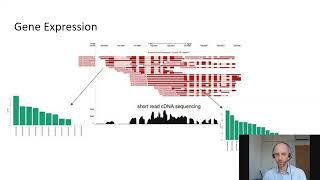
Studying Promoter and Isoform Diversity with Long-Read Transcriptome Sequencing
Explore promoter and isoform diversity in cancer transcriptomes using long-read RNA sequencing. Gain insights into alternative promoters' role in gene regulation and their impact on cancer research.
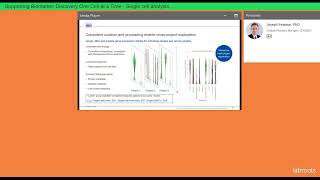
Supporting Biomarker Discovery One Cell at a Time - Single Cell Analysis Solutions That Drive Results
Explore single-cell gene expression analysis for revealing complex cell populations, uncovering regulatory relationships, and visualizing gene expression differences across cell types.
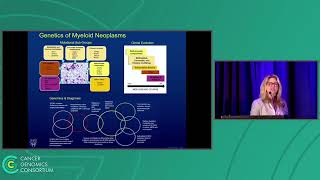
High-Resolution Target-Capture DNA Analysis for Suspect Clonal Hematopoiesis
Explore high-resolution DNA analysis for clonal hematopoiesis. Learn about mutational hierarchy, precision medicine, and clinical applications in cancer and bone marrow failure.
Hierarchical Models for Deep Mutational Scans - CGSI 2024
Explore hierarchical models for deep mutational scans, focusing on robust analysis frameworks, drug transporter biophysics, and variant effect prediction in genomics research.
Issues with Deconvolution Using Single-Cell Profiles - CGSI 2024
Explore challenges in deconvolution using single-cell profiles, examining key issues and potential solutions in computational genomics.