
What Makes Great Games Great? Game Design
Explore the science of deep engagement in game design, learning about Flow theory, its four requirements, and practical applications for creating captivating gaming experiences.
Jedi Tricks for Visual Quality on Mobile
Discover key techniques for achieving authentic Star Wars visuals on mobile, including lighting, VFX, and performance optimization for an immersive gaming experience.

Gearboxes and Gas Pedals - Vehicle Physics in Unity
Explore vehicle physics in Unity, from wheel colliders to advanced features like gearboxes and traction control. Learn tuning techniques for realistic and enjoyable car handling in games.

Real World HoloLens Mixed Reality Development with Unity - Be Part of the Future
Explore HoloLens mixed reality development with Unity, covering setup, skills, and best practices. Learn through demos and real-world applications to create compelling AR/VR experiences.

Building Simulated Worlds - Orchestrating Thousands of Unity3D Instances
Explore the technical challenges of creating massive, persistent game worlds using Unity3D and SpatialOS, focusing on distributed systems and entity-component architecture.
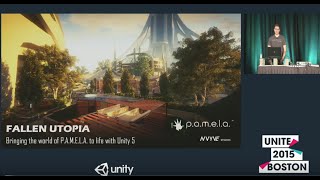
Fallen Utopia - Bringing the World of PAMELA to Life with Unity 5
Explore the artistic process and Unity 5 tools behind PAMELA's sci-fi horror aesthetics, from concept to high-end visuals, lighting, and level design.
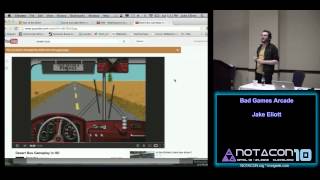
Bad Games Arcade - Jake Eliott
Explore the world of intentionally bad games, from ET to Desert Bus, and discover the artistic value in flawed design and unconventional gameplay experiences.
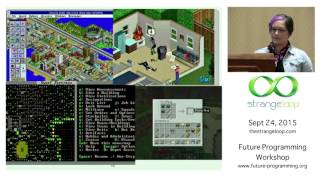
Ceptre - A Language for Modeling Generative Interactive Systems
Explore Ceptre, a formal language for modeling interactive systems, game design, and program rules, with applications in game development and balance evaluation.
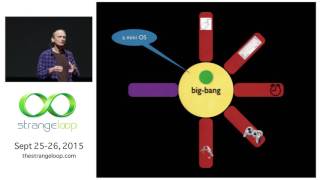
Big-Bang - The World, Universe, and Network in the Programming Language
Explore functional programming with Racket's Universe library, from teaching middle school students to implementing complex network systems. Learn how algebraic functions can create interactive, graphical programs.
Unity for the Enterprise Developer
Explore Unity game development from an enterprise C# perspective, covering project structure, language versions, asset management, and key differences from traditional C# projects.
Using Conan in a Real-World Complex Project
Explore IncludeOS's use of Conan for cross-platform dependency management in library OS development, covering package editing, maintenance, and workflow optimization.
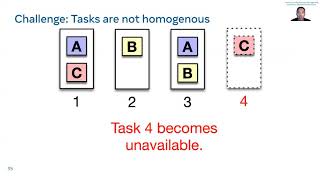
Twine - A Unified Cluster Management System for Shared Infrastructure
Explore Facebook's Twine, a unified cluster management system for shared infrastructure, scaling to manage one million machines across data centers with innovative approaches to workload customization and resource allocation.
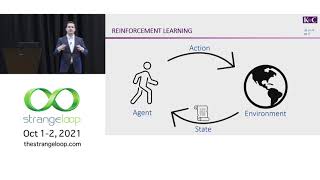
Crowd Dynamics, RL and Unity - A Journey
Explore crowd dynamics modeling using reinforcement learning and Unity. Learn about extended Kalman filters, PPO in Unity-ML, and result validation for simulating diverse crowd behaviors.
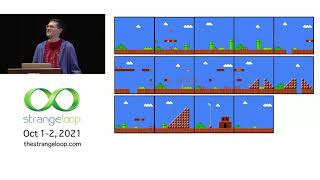
Game Development in Eight Bits
Explore NES game development techniques: graphics, physics, collision detection, randomness, and data compression. Learn how iconic 8-bit era games were created with limited hardware.
Next Level Cheating and Leveling Up Mitigations
Explore advanced game cheating techniques and anti-cheat strategies, including practical attacks on popular anti-cheat engines and their implications for multiplayer gaming security.

Reverse Engineering a DOS PC FMV Game from 1994
Explore the intricacies of reverse engineering a 1994 DOS PC FMV game, uncovering techniques and challenges in dissecting vintage software architecture.

Of Mice and Pants - Queering the Conventional Gamer Mouse for Cooperative Play
Explore innovative game design strategies that challenge conventional mouse interactions, promoting inclusive and cooperative gameplay experiences through queering techniques.
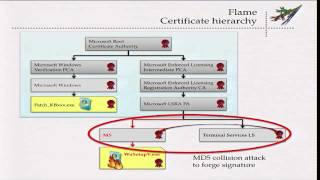
Counter-Cryptanalysis
Learn about counter-cryptanalysis techniques, collision attacks, and digital signature forgeries, with a focus on the Flame malware case study and new paradigms for enhancing cryptographic security.
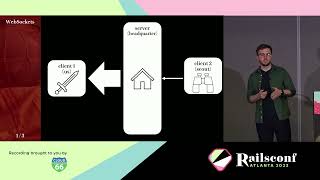
Exploring the Power of Turbo Streams and ActionCable
Explore real-time web development with Turbo Streams and ActionCable by building a tic-tac-toe game, suitable for both beginners and advanced coders interested in Hotwire's Turbo.
Building a Commercial Game Engine using mRuby and SDL
Explore the process of building a cross-platform game engine using Ruby, covering rendering, simulation pipelines, and Ruby's viability for game development beyond web applications.

A New World - A New Gaming Experience
Explore SpatialOS technology and its impact on game development, featuring a live demo showcasing innovative gameplay possibilities and transformative potential.