
Mathematics for Game Engine Development
Explore essential mathematics for game engine development, covering GLM integration and implementation for robust 3D graphics and physics calculations.
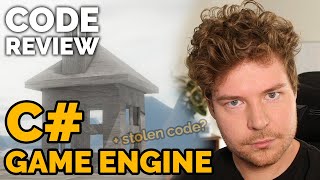
C# Game Engine Code Review - Building a 3D Renderer at 16
Comprehensive code review of a C# game engine, offering insights on architecture, rendering techniques, and optimization strategies for aspiring game developers.

Universally Unique Identifiers - Game Engine Series
Learn about Universally Unique Identifiers (UUIDs/GUIDs), their implementation, hashing, and practical application in game engine development.

Making Game Engines Is Hard
Explore the challenges and complexities of game engine development, with insights into environment mapping and demos of the Hazel engine.

Scene Camera - Game Engine Series
Learn to implement a scene camera in game engine development, covering resizing, viewport, aspect ratio, and orthographic projection.

Code Review and ImGui Layer Events - Game Engine Series
Learn game engine development: code review, ImGui layer events, input handling, and cross-platform rendering APIs. Enhance your skills in C++ and graphics programming.

Font Rendering - How to Make a Game Engine
Explore font rendering techniques in game engine development, covering text drawing, texture atlases, UV rendering, and character packing for efficient and visually appealing text display.

Texture Arrays - How to Make a Game Engine
Learn to implement texture arrays in game engine development, covering setup, texture slots, shader integration, and practical testing for efficient rendering of multiple textures.

Groups - How to Make a Game Engine
Learn to implement and manage groups in game engine development, focusing on rendering, submission, testing, and creation processes for enhanced game performance.

Input - Sparky Engine - How to Make a Game Engine
Learn to create a game engine, focusing on user input handling for keys and mouse, with practical implementation in the Sparky Engine.

Window - Sparky Engine - How to Make a Game Engine
Learn to create a game engine from scratch, focusing on initial planning, setting up GLFW, and creating an OpenGL window in C++. Gain practical insights into the foundational steps of game engine development.

Introduction to Visual Studio - Sparky Engine - How To Make a Game Engine
Learn to create a game engine using Visual Studio, covering setup, debugging, build configurations, and essential programming concepts for efficient development.

Window Abstraction and GLFW - Game Engine Series
Learn to implement window abstraction and GLFW in game engine development, focusing on key concepts and practical implementation techniques.

SubTextures - Creating a Sprite Sheet API - Game Engine Series
Learn to create and implement a Sprite Sheet API for game engines, covering subtextures, texture coordinates, and efficient sprite management techniques.

Testing Hazel's Performance - Game Engine Series
Explore performance optimization techniques for game engines through a Boulder Dash clone, focusing on debugging, GUI improvements, and release testing.

Vertex Buffer Layouts - Game Engine Series
Learn to implement vertex buffer layouts in game engine development, covering buffer offsets, shader enums, and OpenGL base types for efficient rendering.

Input Polling - Game Engine Series
Learn to implement input polling for mouse and keyboard in game engine development, focusing on efficient window access and button handling techniques.

GitHub and Hazel - Game Engine Series
Learn to integrate GitHub with game engine development, covering commits, collaboration, and cross-platform issues. Explore Premake, wikis, and runtime configurations for efficient project management.

ImGui - Game Engine Series
Learn to integrate ImGui into your game engine, enhancing UI development with immediate mode graphics and improving overall functionality and user experience.

Premake - Game Engine Series
Learn to set up and configure Premake for efficient game engine development, covering project generation, workspace setup, and Windows-specific considerations.

Logging - Game Engine Series
Learn efficient game engine logging techniques using spdlog, covering implementation, wrapper creation, and API design for improved debugging and development.