
OpenGL Shaders - Game Engine Series
Learn to implement OpenGL shaders in game engine development, covering shader compilation, integration, and practical application for enhanced graphics rendering.

FAST Random Number Generation in 3 Lines of Code - Ray Tracing Series
Learn to implement fast random number generation in just 3 lines of code for ray tracing applications, with a focus on GPU optimization and performance in C++.

Emission and Emissive Materials - Ray Tracing Series
Explore emission and emissive materials in ray tracing, enhancing your ability to create realistic lighting effects and improve the visual quality of rendered scenes.
Rendering Sprite Pixels in C++
Learn efficient sprite rendering techniques in C++, from reading spritesheets to implementing transparency, enhancing your game development skills.
Human Pong Tutorial
Learn to create a fun, interactive Human Pong game using computer vision and body tracking. Develop skills in motion detection and real-time gameplay mechanics.
Deck of Cards Tutorial - Creating a Virtual Card Game
Learn to create a realistic deck of cards using Adobe Illustrator, mastering vector shapes and gradients for stunning graphic design projects.
Interaction Design Basics for Game Development - Lecture 2
Explore game interaction design fundamentals, focusing on player-centric approaches and critical analysis. Learn about the communication cycle between games and players.

Emulating NT Synchronization Primitives in Wine
Explore a proposed kernel driver solution to enhance Wine's performance by emulating NT synchronization primitives, potentially doubling speed for multithreaded applications like modern games.
Perspective in 3D - Vector Math and Ray Tracing for Financial Data Analysis
Explore vector math, ray tracing, and creative engineering as Perspective's expression language is repurposed for 3D graphics, blending financial analysis with game engine concepts.
The Open Graphics Stack
Explore the open graphics stack for embedded systems, covering Linux, Vulkan, and Mesa compilers, with insights on application, engine, driver, and kernel components.

Hazel Engine on Linux - Continuous Integration and Self-Hosted Runners
Explore Hazel Engine on Linux: CI setup, platform expansion, VPS self-hosted runners, and GitHub workflows. Learn about Remote SSH in VS Code for efficient development.

From Photo to Expression: Generating Photorealistic Facial Rigs
Explore machine learning's impact on facial animation in gaming, showcasing EA's FaceRig solution for automatic blendshape creation across diverse character identities.
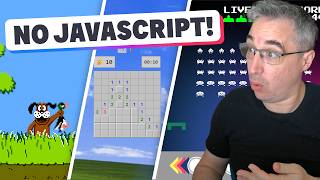
CSS-Only Games: From Space Invaders to Adventure Games
Explore amazing CSS-only games, from classic Space Invaders to 3D Connect Four and adventure games. Discover the power of CSS in creating interactive, engaging experiences beyond traditional styling.

Overview of a Modern DRM Driver
Explore modern DRM driver features: firmware-offloaded scheduling, GPU VA manager, and explicit-only sync primitives in Imagination Technologies' open-source PowerVR driver.

Timed Buttons Escape Room Puzzle Tutorial - Building an Interactive Challenge
Learn to create an escape room puzzle using illuminated arcade buttons, Arduino coding, and strategic timing. Covers hardware setup, wiring, and programming for an engaging interactive challenge.

Blend iClone's Crowd Simulation with AI-Generated Facial and Clothing Textures
Explore advanced crowd simulation using iClone Crowd Sim, integrating AI-generated textures for realistic facial features and clothing in complex animated scenes.
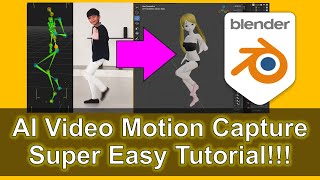
AI Video Motion Capture for Blender 4.1 - ThreeDPoseTracker to BVH Tutorial
Learn to perform AI video motion capture for Blender 4.1 using ThreeDPoseTracker. This step-by-step guide covers converting video to BVH format and importing into Blender for 3D humanoid animation.
Making Connections: Real-Time Path-Traced Light Transport in Game Engines
Explore real-time path-traced lighting in modern game engines, focusing on hardware-accelerated ray tracing and ReSTIR algorithms. Learn theoretical and practical aspects for implementation in Unreal Engine 5.
Raspberry Pi 5: Challenges and Solutions in Bringing up OpenGL/Vulkan Drivers for a New GPU
Explore challenges and solutions in developing open-source OpenGL/Vulkan drivers for Raspberry Pi 5's new GPU, with insights on major changes and future developments.
Facial Animation and AccuFace Mocap in Character Creator and iClone - Part 9
Enhance character animations with AccuFace mocap in iClone. Learn to export from Character Creator, import mocap data, and refine animations using iClone tools for realistic facial expressions.

From Magic to Mechanics: Demystifying GPU Programming
Demystifying GPU programming: Learn parallel programming fundamentals, GPU architecture, and how to leverage WebGPU and Vulkan for high-performance computing across devices.