Applications of Generative Design for Fabrication in Healthcare Settings
Exploring generative design for healthcare fabrication, optimizing medical device creation through digital tools, and empowering clinicians with collaborative design systems for improved patient care.
Achieving a Sustainable Future with Clean, Renewable Energy and Storage
Explore sustainable solutions for global energy challenges, focusing on clean, renewable sources and storage. Learn about innovative technologies and policies for a greener future.
Stanford Seminar - On and Out-of-Body Interactions & Experiences
Explore novel interaction techniques for on-body and out-of-body technologies, including wearables, robots, and drones, to enhance human-machine integration and extend physical abilities.
Robots in Dynamic Tasks - Learning, Risk, and Safety
Explore advanced robotics in dynamic environments, covering autonomous drones, aerial manipulators, and risk-aware planning. Learn about machine learning applications, nonlinear control, and adaptive strategies for complex robotic tasks.

Stanford Seminar - Towards Shape Changing Displays and Shape Changing Robots
Exploring shape-changing systems in haptic interfaces and robotics, focusing on physical interaction, adaptive displays, and innovative truss robots for enhanced functionality and manipulation.
Stanford Seminar - From Open-Source to Safety-Certified Robotic Software
Exploring the evolution of ROS from open-source to safety-certified software for robotics and automotive applications, discussing challenges, improvements, and future prospects in the field.
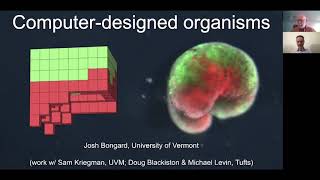
Stanford Seminar - Computer-Designed Organisms - Josh Bongard
Explore the cutting-edge field of computer-designed organisms with Josh Bongard, delving into the intersection of biology, robotics, and artificial intelligence.
Current Status of TinyML and the Enormous Opportunities Ahead - Panel Discussion
Panel discussion exploring tinyML's current state and future potential, featuring experts from Qualcomm and Google. Covers applications, challenges, privacy concerns, and emerging opportunities in ultra-low power embedded AI computing.
Edge Computing in Autonomous Vehicles - Panel Discussion
Experts discuss edge computing in autonomous vehicles, exploring technological advancements, challenges, and future implications for the automotive industry and society.
Stanford Seminar - Promise of 5G Wireless – The Journey Begins
Explore the future of wireless technology with a Stanford expert, covering 5G's potential, challenges, and impact on various industries like AI, transportation, and computing.
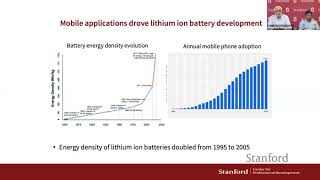
Battery Innovations to Fight Climate Change - Abbas El Gamal and Ram Rajagopal
Explore battery innovations for transportation and grid services, recent advancements, and Stanford's initiatives in energy storage and emerging technologies.
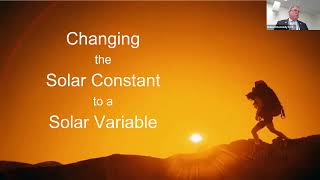
Stanford Seminar - Changing the Solar Constant at Earth to a Solar Variable
Explore space-based geoengineering solutions for climate change, focusing on sunshade technology to cool the planet. Learn about prototype development and the potential impact of solar radiation management.

Safety and Liveness of Robot Behaviors
Explore formal methods for designing robots, guaranteeing behavior, and identifying potential issues. Learn about safety and liveness properties in robotic systems, including multi-robot and human-robot interactions.
Distributional Representations and Scalable Simulations for Real-to-Sim-to-Real
Explore challenges and solutions in representing deformable objects, using distributional approaches and differentiable simulators for real-to-sim applications in robotics and autonomous systems.
Stanford Seminar - Deploying Autonomous Service Mobile Robots, and Keeping Them Autonomous
Explore challenges and solutions in deploying autonomous mobile robots in dynamic environments, covering robustness, failure anticipation, and efficient adaptation to user needs through advanced perception and learning techniques.
Stanford Seminar - Robot Manipulation in the Logistics Industry
Exploring challenges and advancements in robot manipulation for logistics, including intelligent systems handling diverse objects, integrating with existing workflows, and operating safely alongside humans.
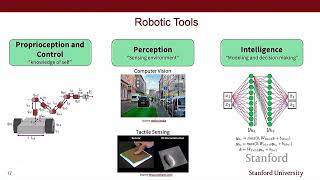
Considerations for Human-Robot Collaboration
Explore the future of human-robot collaboration, focusing on effective teamwork, contextual understanding, and the unique challenges of integrating robots into human-configured environments.
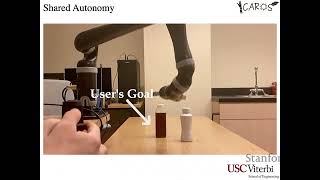
Towards Robust Human-Robot Interaction - A Quality Diversity Approach
Exploring diverse human-robot interaction scenarios using quality diversity algorithms to discover failure cases, improve scenario generation, and enhance understanding of complex systems.
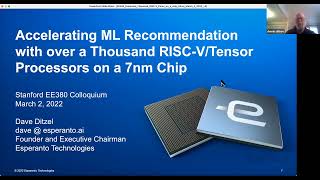
Stanford Seminar - Accelerating ML Recommendation with Over a Thousand RISC-V-Tensor Processors
Explore Esperanto's innovative 7nm chip with 1000+ RISC-V processors, designed for efficient ML recommendation. Learn about its architecture, performance, and energy-saving features.
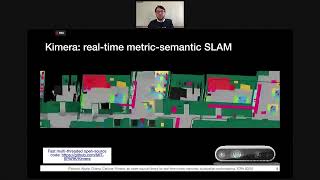
Opening the Doors of Robot Perception - Luca Carlone
Explore cutting-edge spatial perception algorithms for robots, including 3D scene understanding, metric-semantic mapping, and certifiable perception techniques for robust and reliable autonomous systems.
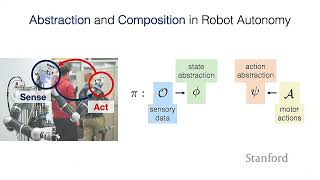
Stanford Seminar - Objects, Skills, and the Quest for Compositional Robot Autonomy
Explore compositional robot autonomy through state-action abstractions, object representations, and sensorimotor skills. Discover innovative approaches for building scalable and generalizable autonomous systems.