
Securing the Internet of Things
Explore IoT security challenges and solutions, covering smart devices, common verticals, technologies, and key vulnerabilities in this comprehensive talk on securing the Internet of Things.
The U.S. Election System, Can We Fix It? Yes We Can! - DefCamp - 2019
Explore vulnerabilities in U.S. election systems and potential solutions, covering voter registration, voting machines, and result reporting. Learn about security measures and the importance of human factors in election integrity.
Intel AMT - Using & Abusing the Ghost in the Machine
Explore Intel AMT vulnerabilities and forensics techniques. Learn about potential attacks, mitigations, and non-destructive investigation methods for compromised systems. Gain insights into remote management technology risks.
Netscreen of Death
Explore firmware vulnerabilities, live debugging, and real-world attacks on network security devices. Learn about untrusted code, scripting, and common criteria audits in this technical deep dive.
Defending, Detecting, and Responding to Hardware and Firmware Attacks - Teddy Reed - USENIX Enigma Conference - 2016
Explore firmware security, attack surfaces, and defense strategies. Learn to detect vulnerabilities, monitor integrity, and implement deep systems defense for enterprise protection against hardware and firmware attacks.
Modern Secure Boot Attacks - Alex Matrosov - Ekoparty Security Conference - 2019
Explore modern Secure Boot attacks, focusing on bypassing Intel Boot Guard in enterprise systems. Learn about hardware Root of Trust, Embedded Controllers, and UEFI Firmware vulnerabilities.
Open System Firmware Projects
Explore open source system firmware initiatives aimed at enhancing boot, device, and management firmware. Industry experts discuss efforts to improve openness, portability, security, and maintainability.

Securing Your In-Ear Fitness Coach - Challenges in Hardening Next Generation Wearables
Explore security challenges and solutions for next-gen wearables, focusing on a custom Security Development Lifecycle for hardware, software, and cloud components in IoT ecosystems.
Breaking Through Another Side - Bypassing Firmware Security Boundaries from Embedded Controller
Reverse engineering Embedded Controller firmware to bypass Intel BIOS Guard on Lenovo Thinkpads, exploring hardware security boundaries and firmware update processes.
My Threat Model is Your Threat Model
Explore evolving threat landscapes, from nation-state conflicts to sophisticated attacks on individuals and devices. Learn about below-OS mitigations to protect BIOS, firmware, and data.
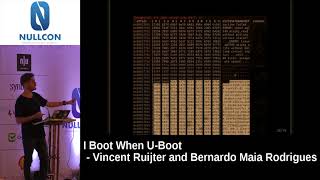
I Boot when U-Boot
Explore a custom bootkit for U-Boot devices, its persistence techniques, and implications for IoT security. Learn about backdooring methods and potential countermeasures.
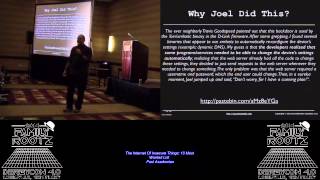
The Internet of Insecure Things - 10 Most Wanted List
Explore top 10 security vulnerabilities in Internet of Things devices, covering privacy concerns, industrial systems, and medical applications. Learn about real-world exploits and potential solutions.

Demystifying IMSI Catchers
Uncover the mysteries of IMSI catchers, their functionality, detection methods, and legal implications. Gain insights into cellular network fundamentals and cutting-edge research on unauthorized cell sites.

Looking for Malicious Hardware Implants with Minimal Equipment
Explore hardware security threats, detection methods, and threat modeling with minimal equipment. Learn to identify unexpected features and understand the challenges of hardware implants and interdiction.
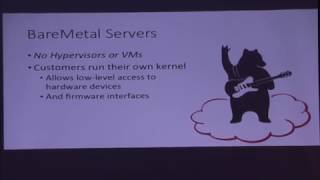
Securing Bare Metal Hardware at Scale
Explore advanced techniques for securing firmware in large-scale hardware deployments, addressing challenges and future trends in protecting against persistent backdoors and exploits.

Adventures in Hardware Hacking or Building Expensive Tools on a Budget
Explore hardware hacking techniques like CT scanning and chip decapping for non-destructive device analysis, circuit reconstruction, and vulnerability identification in embedded systems and access control.

Attacking IOBluetoothFamily HCI and Vendor-Specific Commands
Explores vulnerabilities in Bluetooth stacks, focusing on Host-Controller Interface (HCI) and vendor-specific commands. Demonstrates attack techniques and discusses security implications for MacOS and iOS devices.
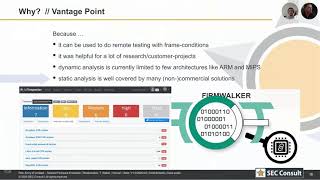
Army of Undead - Tailored Firmware Emulation
Explore automated firmware emulation techniques for embedded systems, covering root filesystem location, architecture identification, and emulation methods using open-source tools and scripts.
Bootstrapping Systems With Open Source Firmware
Explore open-source firmware for enhanced physical security and data protection. Learn about Heads, a custom firmware and OS configuration that combines hardware hardening with secure boot processes.
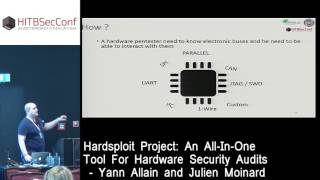
Hardsploit Project
Hardsploit: A comprehensive toolbox and framework for auditing electronic systems and embedded devices, addressing the growing security challenges in the Internet of Things era.
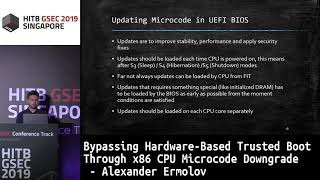
Bypassing Hardware-Based Trusted Boot Through x86 Downgrade
Exploiting microcode loader vulnerability to downgrade CPU microcode, enabling attacks on Intel security technologies like Boot Guard and TXT by loading older, vulnerable versions of Authenticated Code Modules.