
An Overview of the Andrew System
Overview of Andrew System: distributed computing environment for academic users. Explores file system, toolkit, messaging, and UI. Developed at Carnegie Mellon's Information Technology Center, used campus-wide by students, faculty, and staff.
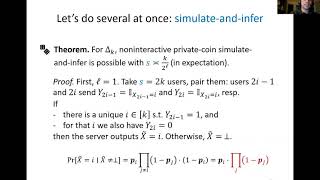
Cookbook - Lower Bounds for Statistical Inference in Distributed and Constrained Settings - Part 4
Explore statistical inference in distributed and constrained settings, focusing on lower bounds, simulation techniques, and non-interactive inference methods.
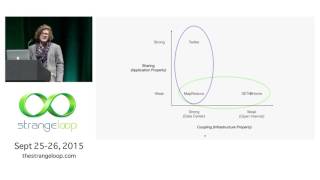
Distributed, Eventually Consistent Computations
Explore Lasp, a new programming model for distributed computations, combining convergent data structures with dataflow execution for large-scale applications with limited connectivity and unreliable networks.
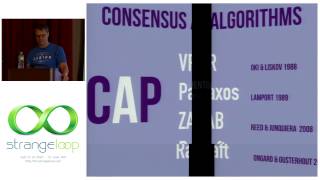
The Road to Akka Cluster, and Beyond
Exploring distributed computing landscape, from early computer architecture to modern challenges. Covers key theories, protocols, and technologies, with insights into Akka Cluster's design and future developments.
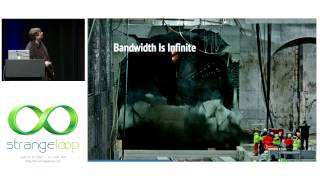
The Eight Fallacies of Distributed Computing
Explore eight common misconceptions in distributed computing, their implications, and real-world examples to help developers design more robust and scalable server architectures.
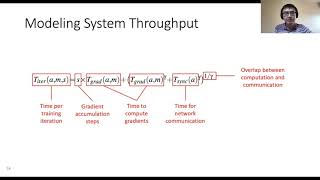
Pollux - Co-adaptive Cluster Scheduling for Goodput-Optimized Deep Learning
Innovative deep learning cluster scheduler optimizing resource allocation and job performance through adaptive co-optimization, resulting in reduced completion times and improved fairness among competing jobs.
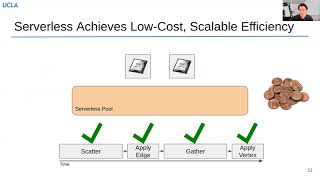
Dorylus - Affordable, Scalable, and Accurate GNN Training with Distributed CPU Servers and Serverless Threads
Distributed system for training Graph Neural Networks using serverless computing, offering affordable scalability for billion-edge graphs with improved performance-per-dollar compared to GPU servers.
SRE and ML - Why It Matters
Explore the intersection of SRE and Machine Learning, discussing its importance, challenges in ML reliability, and potential changes to the SRE profession. Skeptically examines ML automation in production.
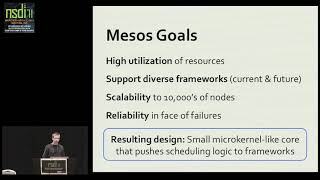
Mesos - A Platform for Fine-Grained Resource Sharing in the Data Center
Explore Mesos, a platform for efficient resource sharing in data centers. Learn about fine-grained allocation, resource offers, and improved cluster utilization across diverse computing frameworks.
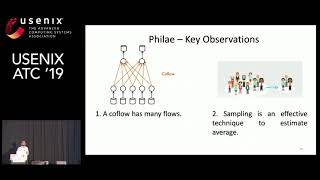
Your Coflow has Many Flows - Sampling them for Fun and Speed
Innovative coflow scheduling technique using flow sampling to estimate coflow size, improving performance and scalability for data-intensive applications in distributed computing environments.

The Secret Lives of SREs - Controlling the Costs of Coordination across Remote Teams
Exploring hidden complexities in SRE incident response, revealing surprising findings on coordination strategies, tooling impacts, and adaptive choreography in managing service outages.
Surprise-Inspired Networking
Explore the future of networking with a focus on edge computing and the value of new information. Insights on synthesizing data at the network edge for innovative system designs.
Distribute the Workload
Explore distributed systems and scalability techniques to enhance performance, redundancy, and availability of web services, inspired by ant colony principles.
Database Wizardry for Legacy Applications
Discover techniques to enhance legacy application databases using NoSQL and MapReduce, improving data consolidation and project performance without major structural changes.
Deep Learning con DL4J e Apache Spark
Esplora il Deep Learning distribuito con DeepLearning4J, ND4J e Apache Spark. Scopri potenzialità e sfide nell'implementazione di reti neurali multilayer su diverse modalità di deployment di cluster Spark.
Cutting Through the Fog of Microservices – Lightsabers Optional
Explore the evolution of distributed computing and service architectures, comparing approaches like SOAP, REST, GraphQL, and gRPC to gain insights for informed decision-making in microservices development.
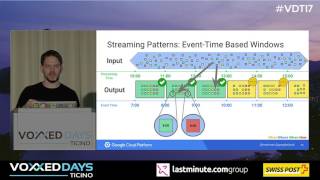
Improve Your App UX with One Model Processing Insights from Batch and Streams
Learn to enhance app UX using a unified model for batch and stream processing. Explore Dataflow's capabilities through a real-time demo, gaining practical insights on managing and visualizing data streams.
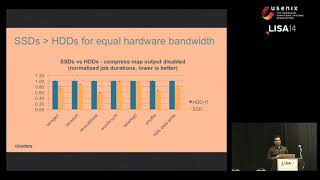
The Truth About MapReduce Performance on SSDs
Investigates SSD performance for MapReduce workloads, comparing to HDDs. Presents benchmarking method, cost-per-performance metrics, and quantifies SSD advantages in data processing efficiency.

Where Does the Real World End - The Blurring of the Physical and Digital
Exploring the convergence of physical and digital realms through IoT, sensors, and computing advancements, examining implications for business, society, and emerging applications.
Make Sense of Your Logs - From Zero to Hero in Less Than an Hour
Discover how to effectively analyze and make sense of big data using Elasticsearch, Logstash, and Kibana in this insightful presentation on distributed log analysis techniques.
Discovering RESTful Web Microservices - A Traveler's Guide
Explore key elements of REST, the Web, and Microservices to build flexible, resilient, and scalable components. Learn to implement Stateless, Persistence, and Aggregator Microservices with interoperability.