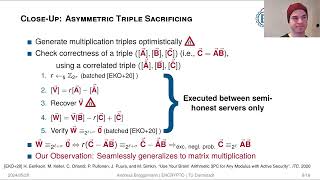
Don't Eject the Impostor: Fast Three-Party Computation with a Known Cheater
Explore fast three-party computation techniques with a known cheater, enhancing security and efficiency in multi-party protocols.

CASSINI: Network-Aware Job Scheduling in Machine Learning Clusters
Innovative network-aware scheduler for ML clusters, improving job completion times and reducing network congestion through strategic communication pattern interleaving.
Accelerating AI Workloads with GPUs in Kubernetes
Explore GPU acceleration for AI in Kubernetes, covering resource-sharing, configuration, scheduling, and scalability. Learn key capabilities and challenges for efficient AI/ML workloads in cloud environments.
Kubernetes and MLOps for Scalable and Reproducible Generative AI
Explore how Kubernetes and MLOps practices enable scalable, reliable, and reproducible generative AI workflows, empowering organizations to unlock the full potential of AI with seamless scalability and operational excellence.
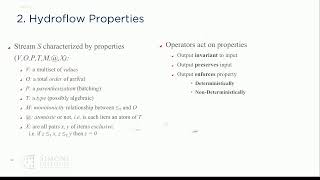
Logic and Algebras for Distributed Computing - Applications and Open Questions
Exploring connections between distributed computing and formal program representations, unifying logic and algebra-based approaches for practical language design and theoretical proofs.
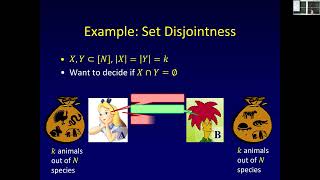
Communication and Information Complexity
Explore the intersection of communication and information complexity with Princeton's Mark Braverman, delving into cutting-edge research and theoretical advancements in this field.

Productive Parallel Programming with Dagger.jl - JuliaCon 2024 Workshop
Learn to write fast, parallel Julia code using Dagger.jl. Explore various programming interfaces, build example programs, and gain insights into parallelism through logging and profiling capabilities.
Offloading-Efficient Sparse AI Systems
Explore offloading-efficient sparse AI systems to optimize performance and resource utilization in artificial intelligence applications.
General Distributed Framework for Contraction of Sparse Tensor with Tensor Network
Optimize sparse tensor contractions with efficient loop nests and distributed-memory parallelization for improved performance in tensor decomposition and completion tasks.
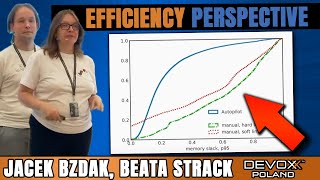
Challenges Running Planet-Wide Computer: Efficiency
Explore challenges and solutions for running efficient planet-wide computer systems, focusing on scalability and performance optimization techniques.
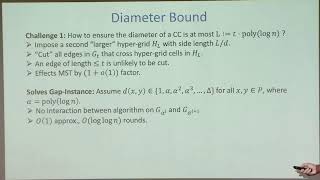
Massively Parallel Algorithms for High-Dimensional Euclidean Minimum Spanning Tree
Efficient distributed algorithms for clustering high-dimensional data using Euclidean Minimum Spanning Tree, achieving constant factor approximation in O~(loglogn) rounds of MPC model.
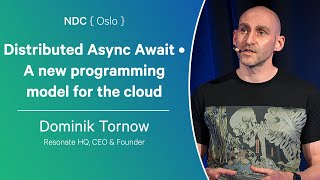
Distributed Async Await - A New Programming Model for the Cloud
Explore Distributed Async Await, a new cloud programming model extending async-await simplicity. Learn theoretical foundations and practical insights for crafting delightful, scalable cloud applications.
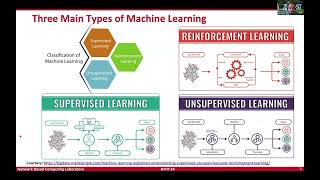
Principles and Practice of Scalable and Distributed Deep Neural Networks Training and Inference
Dive into scalable and distributed deep neural networks, exploring advanced training and inference techniques for enhanced performance and efficiency in modern AI systems.
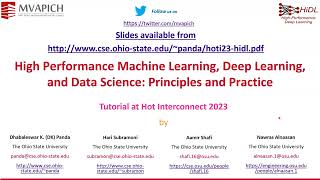
High Performance Machine Learning, Deep Learning, and Data Science - Principles and Practice
Master high-performance computing principles for machine learning and deep learning, focusing on practical implementation strategies and advanced techniques for optimizing data science workflows.
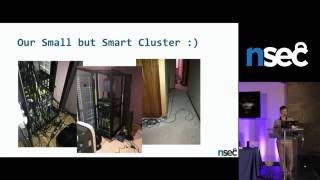
Analysis of High Level Intermediate Representation in a Distributed Environment for Large Scale Malware Processing
Explore advanced malware analysis techniques using distributed reverse engineering and machine learning to identify code similarities and extract key characteristics from millions of samples.

If Gaudí Had a Cluster
Explore a visual programming environment for architects, combining Gaudí's innovative spirit with modern distributed computing to revolutionize building design and unleash creative potential.
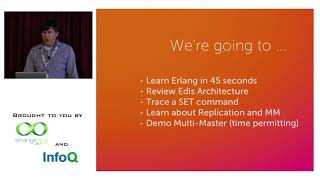
Building a Multi-Master Distributed Redis in Erlang
Explore the development of Edis, a highly available NoSQL database using Redis protocol and Erlang. Learn about multi-master architecture, paxos algorithm, and distributed computing concepts.
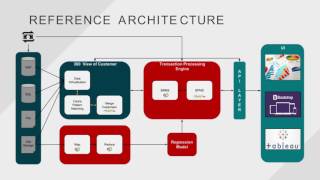
The Intersection of Business Rules Management and Big Data
Explore integrating JBoss BRMS with Hadoop for real-time decision-making in big data environments, focusing on anti-money laundering in financial services and retail applications.
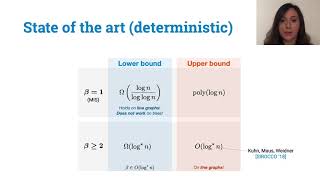
Distributed Lower Bounds for Ruling Sets
Explore deterministic and randomized algorithms for distributed ruling sets, focusing on lower bounds, round elimination techniques, and open questions in the field.
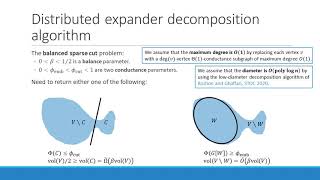
Deterministic Distributed Expander Decomposition Routing with Applications in Distributed Derandomization
Explore deterministic distributed algorithms for expander decompositions and routing, with applications in derandomization. Learn about balanced sparse cut algorithms and recursive techniques.
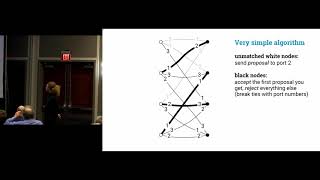
Lower Bounds for Maximal Matchings and Maximal Independent Sets
Explore lower bounds for maximal matchings and independent sets in distributed settings, using round elimination techniques and the LOCAL model.