
SIGCOMM 2020 - TEA - Enabling State Intensive Network Functions on Programmable Switches
Explore state-intensive network functions on programmable switches, covering DRAM availability, offloading, migration, and recompiling techniques for enhanced network performance.

How Hardware Timers Work in CPUs
Explore CPU hardware timers: their function, implementation, and role in controlling execution timing. Gain insights into low-level computer architecture and timing mechanisms.
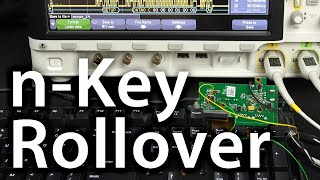
How N-Key Rollover Works in Keyboards
Explore the mechanics of n-key rollover in keyboards, including matrix scanning, ghosting prevention, and implementation techniques for improved typing accuracy and responsiveness.
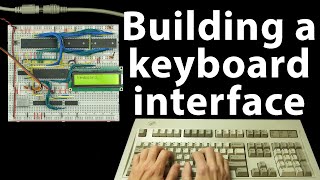
Keyboard Interface Hardware for 6502 Computers
Explore keyboard interface hardware design and implementation, focusing on key components, signal processing, and integration with computer systems.

PS/2 Keyboard Interface Explained
Explore the inner workings of PS/2 keyboard interfaces, including scancodes, communication protocols, and hardware interactions. Gain insights into computer engineering and peripheral device communication.
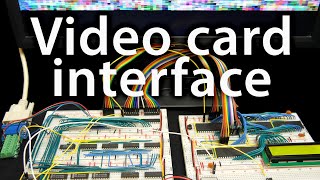
Installing the World's Worst Video Card
Explore the process of installing a rudimentary video card, delving into the intricacies of computer hardware and graphics technology.
Why Build an Entire Computer on Breadboards?
Explore the educational value and practical insights gained from constructing a computer using breadboards, emphasizing hands-on learning and deep understanding of computer architecture.
RAM and Bus Timing for 6502 Microprocessor - Part 6
Explore RAM and bus timing in 6502 microprocessors. Learn about schematics, datasheets, and hardware implementation for a deeper understanding of computer architecture.
What is a Stack and How Does It Work - 6502 Part 5
Explore the concept and functionality of stacks in computer architecture, focusing on their implementation and usage in the 6502 microprocessor.
Connecting an LCD to a 6502 Computer - Part 4
Learn to connect an LCD display to a 6502-based computer, exploring hardware interfacing and low-level programming techniques for embedded systems and retro computing enthusiasts.

How CPUs Read Machine Code - 6502 Part 2
Explore the inner workings of CPUs and machine code interpretation, focusing on the 6502 processor. Gain insights into low-level computer architecture and assembly language programming.

Building a Basic Computer with 6502 Microprocessor - Part 1: "Hello, World" from Scratch
Explore computer fundamentals by building and programming a basic 6502 microprocessor-based computer, starting with the first steps towards creating a "Hello, world" program from scratch.
8-Bit CPU Control Logic - Part 1
Explore the creation of a custom machine language and learn how control logic executes programs in an 8-bit CPU, providing insights into low-level computer architecture.
Subroutine Calls with RAM - 6502 Part 7
Explore subroutine calls and RAM usage in 6502 assembly programming. Learn advanced techniques for efficient memory management and code organization in retro computing.
RAM Module Build for 8-Bit Computer - Part 1
Detailed walkthrough of building a RAM module for an 8-bit computer, focusing on component selection and initial assembly steps.
Testing Computer Registers - 8-Bit Register Construction - Part 5
Explore 8-bit register testing and connection in computer building. Learn about A, B, and Instruction registers while gaining hands-on experience with electronic components.
PyTorch Datasets, DataLoaders and Transforms - GPU Series Part 3
Explore PyTorch's data handling tools: Datasets, DataLoaders, and Transforms. Learn to prepare, visualize, and optimize data for GPU-accelerated deep learning using Fashion-MNIST dataset.
Introduction to Tensors - PyTorch with GPU Series Part 2
Explore tensor initialization, GPU usage, operations, memory sharing, and profiling in PyTorch for efficient deep learning model development.
Scaling NumPy Applications from 1 CPU to Thousands of GPUs - IPAM at UCLA
Discover cuNumeric: a NumPy replacement enabling Python applications to scale across multiple nodes and leverage GPU acceleration for enhanced performance and dataset handling.
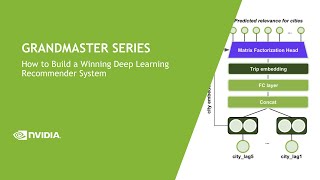
Building a Winning Deep Learning Recommender System - Grandmaster Series Episode 5
Learn how Kaggle Grandmasters built a winning Deep Learning Recommender System for Booking.com, using matrix factorization, ensemble models, and data augmentation techniques. Gain insights into GPU-accelerated recommender systems.
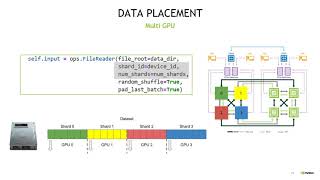
Efficient Data Loading Using DALI for Deep Learning Applications
Accelerate deep learning applications with efficient data loading pipelines using NVIDIA's DALI library. Explore augmentation, documentation, and performance optimization techniques.