Hacking the Game & Watch
Explore the process of hacking Nintendo's Game & Watch, from hardware analysis to running custom software and emulators. Learn about reverse engineering techniques and community efforts in this engaging talk.
Hashing Pico Berries - Quantum-Resistant Cryptography for Raspberry Pi Pico
Hashbasierte Signaturlösungen für Raspberry Pi Pico: Langfristige kryptographische Sicherheit für stromsparende Sensorik, auch gegen Quantencomputer. Vorstellung erster Prototypen einer Masterarbeit.
SPIFFS vs LITTLEFS for ESP32 & ESP8266
Explore using built-in flash storage on ESP8266 and ESP32 instead of SD cards. Learn about SPIFFS and its more resilient replacement LITTLEFS, with step-by-step guidance on setup, file uploading, and implementation.

Using EEPROM on ATMega328P
Learn to utilize EEPROM on ATMega328P microcontrollers, covering memory types, programming techniques, and practical applications, with guidance on avoiding common errors and issues.
Modernizing the NAND Framework - Architecture Overview and Planned Improvements
Explore NAND framework modernization, addressing limitations, and proposing solutions for improved code factorization and feature support in Linux embedded systems.
A Difference World: High-performance, NVM-invariant, Software-only Intermittent Computation
Explores innovative approach to intermittent computation for energy harvesting devices, introducing Camel system for efficient state management and improved performance on Flash-based platforms.
Software-Enabled Flash: Maximizing Value Through Developer Control and Innovation
Explore software-enabled flash technology's capabilities for maximizing data center storage value through developer control, tenant isolation, and customizable protocols in cloud-scale environments.

Cloud Storage Acceleration Layer (CSAL) - Optimizing Cloud Storage Performance with Intel Optane and QLC Flash
Discover how CSAL and Intel Optane technologies optimize cloud storage performance by combining QLC NAND flash with high-performance media tiers to address endurance challenges and workload demands.
What If Flash Was Software Defined - Revolutionizing Data Storage
Explore software-defined flash capabilities in modern data centers, examining industry challenges, benefits, and potential impacts on storage-host interactions.

Designing and Building a Custom AR Headset
Explore the journey of creating custom AR headsets, from initial development to final mechanics. Learn about microcontrollers, displays, optics, and the learning process behind this innovative project.
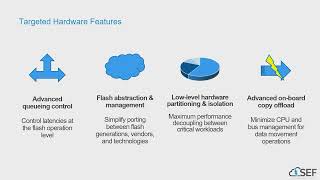
Software-Enabled Flash Capabilities and Demonstrations - Understanding Hardware Features and Implementation
Discover how Software-Enabled Flash™ technology revolutionizes flash memory usage through custom hardware, API integration, and advanced features like workload isolation and latency control for cloud applications.
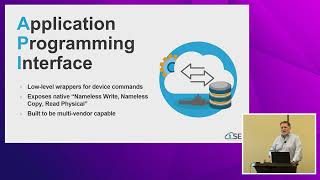
Building Flash-aware Applications with Software-Enabled Flash SDK
Dive into Software-Enabled Flash™ SDK development, exploring flash memory control, data placement optimization, and application building for cloud and enterprise systems through practical implementations and configuration options.
Trends in Storage and Data: New Directions for Industry Standards
Discover how SNIA adapts to evolving storage technologies, collaborates across industries, and drives standards development for managing complex data systems and emerging storage solutions.
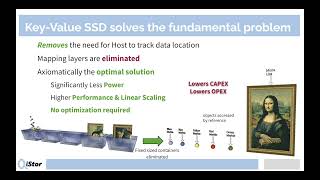
Key-Value SSD Storage: Why It Will Replace Zone Namespaces
Explore how Key-Value SSD technology revolutionizes storage solutions, offering improved efficiency, simplified management, and superior performance compared to Zone Namespaces for modern storage systems.
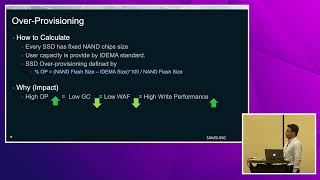
Impact Analysis of Flash Behavior on Quality of Service in Data Center and Enterprise SSDs
Delve into SSD performance metrics, NAND characteristics, and QoS optimization for enterprise storage systems, focusing on latency, throughput, and consistent performance analysis.
The Looming Need for Molecular Storage - Data Growth and Future Storage Solutions
Explore the future challenges of data storage capacity and discover how molecular storage, particularly DNA-based solutions, could address the impending storage crisis beyond 2030.

Software-Enabled Flash for Storage Developers - A New Storage Paradigm
Discover the revolutionary Software-Enabled Flash™ technology, a vendor-neutral Linux Foundation project that empowers developers with software-definable flash capabilities, enhanced data placement control, and optimized latency management.
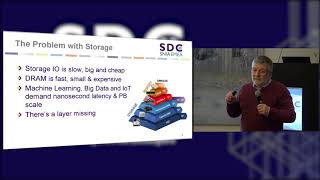
Introduction to Persistent Memory Technology - Lecture 5T112
Explore the revolutionary world of persistent memory technology, its hardware fundamentals, practical applications, and future impact on storage systems and application performance.
Why NAND Flash Breaks Down - Tutorial
Explore NAND flash reliability, cell operations, fault mechanisms, and mitigation strategies. Gain insights into future developments in embedded systems storage technology.
Flash Subsystems Status Update in Linux and U-Boot
Comprehensive update on Linux and U-Boot flash subsystems, covering improvements in SPI-NAND/NOR support, parallel NAND API, UBIFS enhancements, and notable bug discoveries.
Maximizing Mutual Information in Flash Memories
Explores optimizing Flash memory performance through mutual information maximization, focusing on LDPC codes and device longevity in the context of multi-bit cell storage and read operations.