
Functional Specificity in the Human Brain - What, Whether, and Why?
Explore the functional specificity of the human brain, examining key questions, methodologies, and findings in cognitive neuroscience with MIT researcher Nancy Kanwisher.
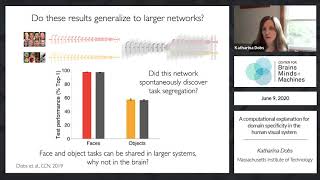
A Computational Explanation for Domain Specificity in the Human Visual System
Exploring how domain-specific organization in the brain emerges from computational optimization for face and object recognition tasks, using artificial neural networks to model cortical segregation.
Gravity Simulator: Binary Star System - Episode 2
Explore gravitational interactions in binary star systems using a simulator. Learn about energy calculations, angular momentum, and the fascinating patterns of orbital motion.
Calculating Expectation Values - A Journey through Modern Physics
Explore computational modeling of early 20th-century physics discoveries, focusing on wave functions and expectation values in quantum mechanics through practical examples and numerical integration.

A Unifying Framework for Memory and Abstraction
Explore the Tolman-Eichenbaum Machine, a computational model unifying memory and spatial navigation in the hippocampus. Learn about its architecture, performance, and implications for neuroscience.
Nonlocal Theories for Free Crack Propagation in Brittle Materials
Explora la teoría y modelado de la fractura dinámica en sólidos frágiles, desde enfoques clásicos hasta modelos no locales multiescala, abordando desafíos computacionales y simulaciones peridinámica.
Communication in the Service of Coordinated Action by Spotted Hyenas
Exploring vocal communication's role in coordinating collective actions among spotted hyenas, using advanced tracking technology to study complex social dynamics in wild animal groups.
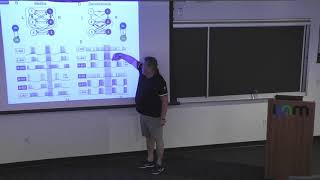
Reconstructed Rhythm-Generation by Neural Circuits in Two Sea Slugs
Explore biologically plausible models of swim center pattern generators in sea slugs, examining network-level bursting, stability mechanisms, and resilience to perturbations using dynamical systems and machine learning.
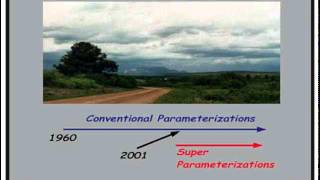
Bjerknes Lecture: Cloud System Resolving Models and Parameterization - AGU Fall Meeting 2001
Explore cloud parameterization and system-resolving models in climate science. Gain insights into innovative approaches for modeling complex atmospheric processes and their implications.
Physics Matters - Fluid Dynamics of Wildfires
Explore the fluid dynamics of wildfires, their environmental impact, and how Computational Fluid Dynamics can model and potentially prevent these destructive natural phenomena.
Projectiles 2 - Computational Simulation of Projectile Motion
Build a computational simulation for projectile motion, demonstrating physics principles through coding. Enhance understanding of trajectory, velocity, and gravitational effects using interactive programming techniques.
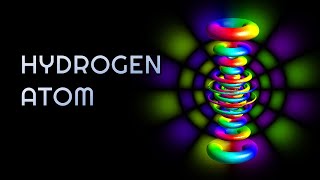
The Hydrogen Atom - A Journey through Modern Physics
Explore quantum mechanics and the hydrogen atom through computational modeling, gaining insights into early 20th-century physics discoveries that revolutionized our understanding of the universe.
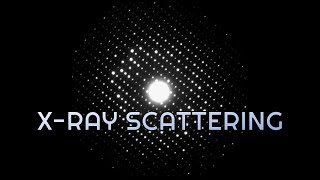
X-Ray Scattering - A Journey through Modern Physics
Explore x-ray diffraction to understand atomic structures in solids. Computational modeling demonstrates this key concept in modern physics, revolutionizing our understanding of materials.
Length Contraction and Time Dilation - A Journey Through Modern Physics - Lecture 1
Explore relativity through computational modeling, examining length contraction and time dilation as key concepts in modern physics. Gain insights into early 20th-century discoveries that revolutionized our understanding of the universe.
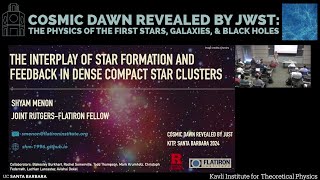
The Interplay of Feedback and Star Formation in Dense Compact Star Clusters
Explores the relationship between stellar feedback and star formation in dense compact star clusters, discussing implications for early galaxy formation and cosmic dawn observations from JWST.
Excavating the Architecture of Chromatin: From Nucleosomes to Chromosomes
Explore chromatin architecture from nucleosomes to chromosomes, unraveling its complex organization and role in gene regulation through interdisciplinary perspectives and cutting-edge research.
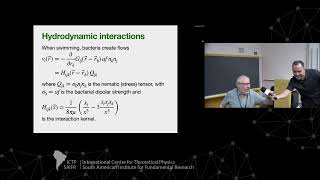
Computational Modeling of Active Systems - Class 4
Explore computational modeling techniques for active systems, focusing on advanced concepts and practical applications in the field of active matter.
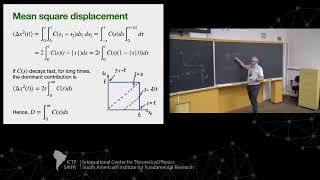
Computational Modeling of Active Systems - Class 3
Explore computational modeling techniques for active systems, focusing on advanced concepts and practical applications in the field of active matter.
Computational Modeling of Active Systems - Class 1
Explore computational modeling techniques for active systems, focusing on fundamental principles and practical applications in the field of active matter.
Chromatin Readers as Molecular Architects in Shaping Metabolic Landscape
Explore chromatin 'readers' as molecular architects shaping metabolic landscapes. Delve into interdisciplinary aspects of chromatin organization and gene regulation in this comprehensive lecture.
Unravelling the Cell-type Specific Roles of Disease-associated Mutations in Chromatin Organization and Gene Regulation
Explore cell-type specific impacts of disease-associated mutations on chromatin organization and gene regulation through interdisciplinary approaches and cutting-edge techniques.