Election Simulation 2: Voting in Multiple Dimensions
Explore multi-dimensional voting impact on voter satisfaction through code modification in this physics-based election simulation video.
Election Simulation - Why Are Voters Unhappy? - Part 1
Explore voter dissatisfaction through probability simulations, analyzing how voting decisions impact election outcomes and overall satisfaction levels.
Challenges in the Use of Virtual Populations for Oncology Drug Development
Explore challenges in using virtual populations for oncology drug development, focusing on mathematical modeling and optimization techniques.
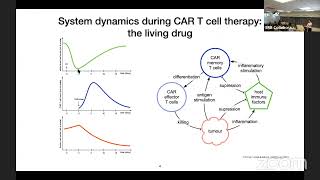
Quantifying CAR T Cells Activity Against AML - Model Selection Based on In Vitro Cytolytic Assays
Explore quantitative modeling of CAR T cell activity against AML through in vitro cytolytic assays, enhancing understanding of immunotherapy effectiveness.

Multi-scale Modeling of Structure and Properties Evolution in Nuclear Materials
Explore multi-scale modeling techniques for predicting material performance in nuclear energy applications, focusing on INL's approach using the MOOSE framework.
Reverse-Engineering Human Cooperation
Explore computational models of human cooperation, integrating Bayesian learning and game theory to understand social intelligence and design cooperative AI systems.
Reverse-Engineering Neural and Cognitive Representations with Multilevel Computational Theories
Explore reverse-engineering neural and cognitive representations using multilevel computational theories. Uncover algorithms behind cognitive abilities and neural object representations in the brain.
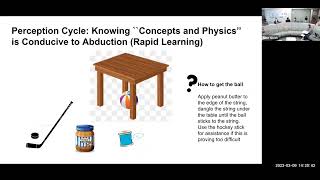
Cognitive Science Book Review
Explore key concepts and theories in cognitive science through an in-depth book review by Kaushik Roy, gaining insights into the interdisciplinary field of mind and cognition.

Predicting Heterogeneous Cellular Immune Memory Responses in COVID-19 - Modeling of Infectious Diseases
Explorez un modèle informatique de l'immunopathologie du COVID-19, identifiant les mécanismes clés des réponses immunitaires hétérogènes et l'importance des cellules T CD8+ mémoires pour une protection durable.

The Future of Natural Hazards Mitigation and Adaptation in the United States
Expertos discuten estrategias para mitigar impactos de desastres naturales, destacando investigación científica, coordinación con personal de emergencias y mejores prácticas para proteger vidas e infraestructura a nivel local.
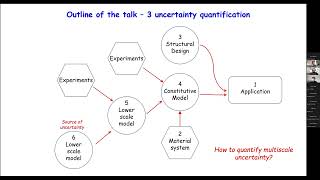
Learning-Based Multiscale Modelling: Computing, Data Science, and Uncertainty Quantification
Explore machine learning frameworks for multiscale modeling in materials science, including Fourier and recurrent neural operators, to accelerate computations and bridge scales across multiple physics levels.
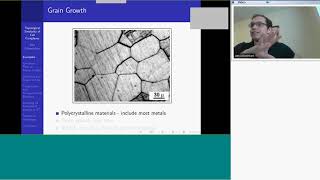
Benjamin Schweinhart - Statistical Topology of Random Cell Complexes, and Applications
Explore statistical topology of random cell complexes, covering curvature flow, grain growth, graph limits, and computational evidence for steady state hypothesis.
Mathematical and Computational Modelling to Explore Various Potential Cancer Treatments
Explore mathematical and computational modeling approaches for cancer research, covering topics from age-structured populations to machine learning techniques for understanding disease progression and treatment.

UQ for ML and ML for UQ - Uncertainty Quantification and Machine Learning in Physics-Based Modeling
Explore the interplay between Uncertainty Quantification and Machine Learning in physics-based modeling, examining their roles in solving complex computational challenges across various applications.

Beyond the Basics of Graphs and Networks
Explore advanced concepts in graph theory and network analysis, delving into complex structures and algorithms for deeper insights into interconnected systems.

Virtual Origami: Mathematical Modeling and Computational Realization
Explore virtual origami using Mathematica, focusing on traditional techniques with mathematical formalism. Learn about fold rules, classical folds, and create a flying crane model.

Monte Carlo Models for Pi Calculation and Buckling Structures - Lecture
Explore Monte Carlo methods for estimating pi and analyzing structural buckling, covering random number generation and statistical analysis techniques.
A Bayesian View of Inductive Learning in Humans and Machines - 2004
Explore how humans make successful generalizations from limited evidence through Bayesian inferences constrained by implicit domain theories, with applications to machine learning.
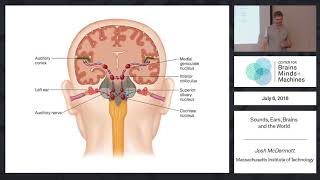
Sound, Ears, Brains and the World
Explore auditory processing, sound perception, and the brain's ability to distinguish multiple sound sources. Learn about computational modeling and the "Cocktail Party problem" in this insightful lecture by MIT Professor Josh McDermott.
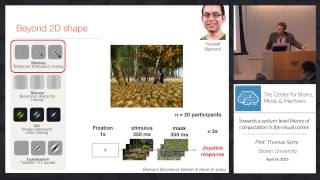
Towards a System-Level Theory of Computation in the Visual Cortex
Explore computational models of visual processing in primate cortex, combining neuroscience and AI to understand perception and develop advanced computer vision systems.
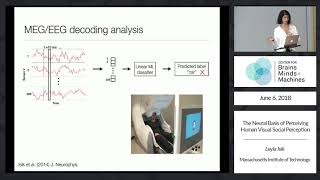
The Neural Basis of Perceiving Human Visual Social Perception
Explore neural mechanisms of visual object recognition and social perception using MEG, fMRI, and computational modeling. Discover how the brain processes visual scenes, objects, and social interactions over time.