Understanding Epigenetic Mechanisms Through the Engineering of Synthetic Chromatin
Explore epigenetic mechanisms through synthetic chromatin engineering. Gain insights into chromatin organization and gene regulation using interdisciplinary approaches and cutting-edge techniques.
Chromatin 'Readers' as Molecular Architects in Shaping Metabolic Landscape
Explore chromatin 'readers' as molecular architects shaping metabolic landscapes, delving into interdisciplinary aspects of chromatin organization and gene regulation.
AI-based Chromatin Imaging Biomarkers in Health and Disease
Explore AI-based chromatin imaging biomarkers and their applications in health and disease. Gain insights into cutting-edge techniques for analyzing chromatin organization and gene regulation.
On the Role of Polymerases in Driving the 4D Genome
Explore the impact of polymerases on 4D genome organization and gene regulation in this in-depth talk by Daniel Jost, part of a comprehensive chromatin research program.
Protein Search Processes Mediated by Chromatin Topology
Explore protein search processes influenced by chromatin topology, uncovering mechanisms of gene regulation and DNA-protein interactions in the cellular environment.
Super-silencer Perturbation by EZH2 and REST Inhibition Leads to Large Loss of Gene Repression
Explore chromatin organization and gene regulation through EZH2 and REST inhibition, focusing on super-silencer perturbation and its significant impacts.
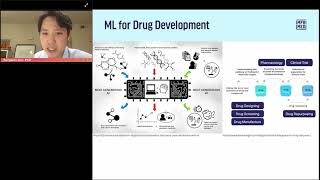
Moving Beyond Mutation - AI-driven Functional Precision Medicine for Cancer
Explore AI-driven functional precision medicine for cancer, combining live-cell assays, immune profiling, and machine learning to predict drug efficacy and improve treatment outcomes.
Rope Simulator: Adding Wind Control in Cut the Rope-Style Game - Episode 9
Explore air control in a Cut the Rope-style game simulation. Learn to implement wind effects and enhance gameplay mechanics in this physics-based coding tutorial.
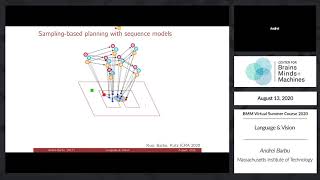
Language & Vision
Explore the intersection of language and vision in AI, covering deep networks, sampling-based planners, and multitasking models for advanced communication and perception.
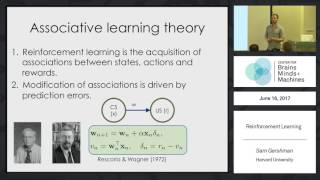
Reinforcement Learning
Explore reinforcement learning concepts and their applications in psychology and neuroscience. Hands-on exercises demonstrate how algorithms explain animal learning and dopamine neuron firing.
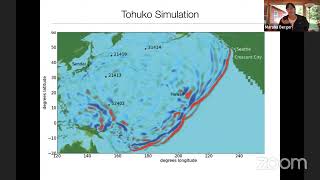
Marsha Berger - Towards Adaptive Simulations of Dispersive Tsunami Propagation
Explore adaptive simulations for tsunami propagation, focusing on shallow water equations, mesh refinement, and Boussinesq models. Learn about computational techniques for predicting tsunami impacts from various sources.
Solving for Climate: Chasing Hurricanes Through Computational Modeling
Computational modeling of hurricanes and natural hazards, exploring their response to atmospheric dynamics and climate change impacts on economic and social outcomes.
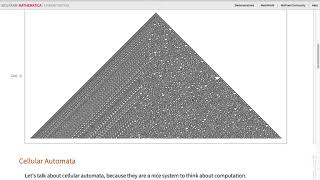
Cellular Automata: Algorithmic Information Dynamics in Living Systems
Explore cellular automata, a computational model for complex systems, and their applications in studying causality and living systems from networks to cells.
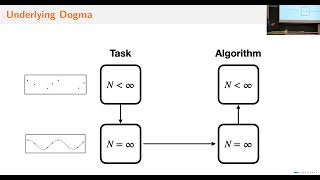
Continuum Attention for Neural Operators
Explore innovative Continuum Attention techniques for Neural Operators, enhancing machine learning applications in dynamical systems and expanding the field's capabilities.
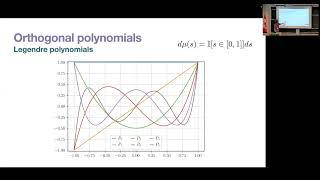
Anamnesic Neural Differential Equations with Orthogonal Polynomial Projections
Explore innovative neural differential equations using orthogonal polynomial projections for enhanced machine learning in dynamical systems.

Towards a Computational Model of Human Speech Recognition
Explore computational approaches to speech recognition based on distinctive features, incorporating statistical learning models guided by human speech production and perception.
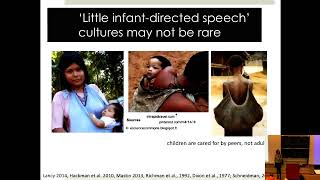
Diarization in the Wild: Challenges and Opportunities
Explore challenges and opportunities of diarization in daily life recordings, focusing on technical, ethical, and legal aspects for studying spontaneous language use and its applications.
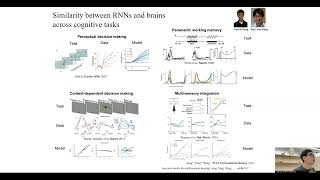
Towards Multi-system Neural Network Models of Brain Functions
Explore multi-system neural networks for cognitive neuroscience, combining modules for vision, audition, and more. Gain insights into brain functions through advanced computational modeling.

In Praise of Flawed Mathematical Models
Exploring the value of imperfect mathematical models in computing and their impact on decision-making, ethics, and societal implications in technology and data science.

The Ethics of Exponential Technologies
Exploring ethical challenges of emerging technologies, balancing innovation with responsible execution, and ensuring equitable access to advancements for societal benefit.

Mathematical Diseases in Climate Models and How to Cure Them
Explore innovative approaches to climate modeling using Julia and GPUs, aiming to improve accuracy and usability while overcoming computational limitations in simulating small-scale physics.