
How Do We Bridge the Gap in Medical Innovation? - Elazer Edelman - TED
Explore the paradoxes in medical innovation and learn why multidisciplinary thinking, not just specialized knowledge, is crucial for bridging gaps and advancing healthcare.
Empathy-Enabled Extended Reality
Explore empathy in Extended Reality: learn to incorporate contextualized empathy data into XR applications, improving user experience in healthcare and education domains through adaptive, two-way empathetic interactions.

Seeing, Sensing and Recognizing Laban Movement Qualities
Explore computational models of expressive movement using Laban Movement Analysis, combining multimodal sensors and expert knowledge to recognize and characterize movement qualities for interactive applications.
Information Structures and Consciousness
Exploring brain dynamics through evolving informational structures, linking to consciousness theories and providing insights into disorders of consciousness with high-precision classification.
Modeling a Slow Baseball Pitch
Explore the physics behind slow baseball pitches using Python programs, analyzing their trajectory and impact on gameplay.
Studying Mergers of Numerical Multiway Systems
Explore mergers of numerical multiway systems, examining characteristic properties and causal graphs through discrete number theoretical techniques.

Modelling Solution Chemistry for Transition Metal Complexes
Explore advanced techniques for modeling chemical reactions in solution, focusing on explicit solvent interactions and their impact on transition metal complexes and catalysis.
Modeling the Earth-Moon System with Python
Model the Earth-Moon system using Python to simulate orbital dynamics and explore celestial mechanics.
A Better Spring-Ball Model for Bouncing - Now with More Springs
Explore an improved spring-ball model for bouncing, featuring multiple interconnected balls and springs for enhanced simulation accuracy.
Computational Modelling of Growth and Response of Multicellular EMT6/Ro Spheroids to Multi-Fraction Irradiation
Explore computational modeling of EMT6/Ro spheroid growth and response to multi-fraction irradiation, enhancing understanding of cancer dynamics and potential therapeutic improvements.

CO2 Geological Storage Modeling with Machine Learning
Explore machine learning-based CO2 geological storage modeling, offering real-time insights and significant speedups compared to traditional simulations for efficient decarbonization strategies.
A Deep Computational Phenomenology of MPE as Metacognitive Free Energy Optimization
Explore the computational modeling of minimal phenomenal experience through Bayesian mechanics and free energy principles, examining belief dynamics and metacognitive processes.
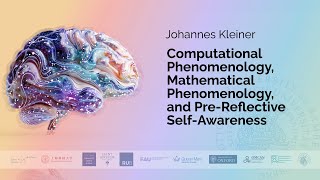
Computational Phenomenology, Mathematical Phenomenology and Pre-Reflective Self-Awareness
Explore the intersection of computational and mathematical phenomenology, examining methodological foundations and their application to pre-reflective self-awareness in consciousness studies.
Integrating AI and Wargaming: Opportunities and Challenges
Explore opportunities and challenges of integrating AI into wargaming, enhancing strategic decision-making and scenario analysis for defense and security applications.
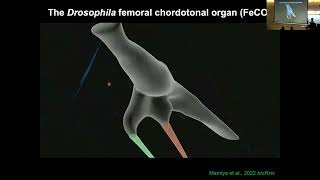
Neural Mechanisms of Limb Proprioception and Motor Control in Drosophila
Explore neural mechanisms of limb proprioception and motor control in fruit flies. Discover how proprioceptor subtypes encode joint position and movement, and examine computational models predicting leg proprioceptor activity during walking.
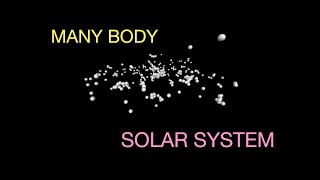
Modeling a Flat and Spinning Solar System Using Python
Model a flat, spinning solar system with 100 masses using Web VPython and Python code. Explore advanced simulation techniques for celestial mechanics.
Rupture Strength of Living Cell Monolayers
Explore the mechanical properties of epithelial monolayers, focusing on their ability to withstand stress and rupture. Gain insights into tissue strength, strain stiffening, and the role of keratin filaments.
An Architectural Approach to Metacognition - Metacognitive AI Series
Explore an architectural approach to metacognition in AI, focusing on integrating cognitive processes for enhanced machine reasoning and self-awareness.
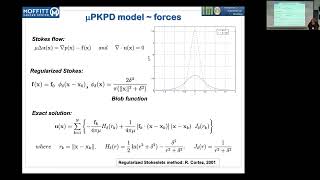
Computational Modeling of Tumor Microenvironment: A Cancer Hallmarks Perspective
Explore computational modeling of tumor microenvironments through cancer hallmarks, gaining insights into advanced oncology research techniques and their applications.
Active Matter Models of Mechanobiology - Lecture 1
Explore active matter models in mechanobiology, focusing on their applications and implications for understanding biological systems and processes.
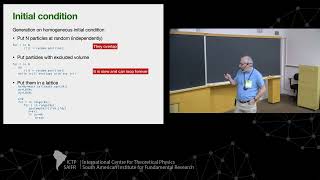
Computational Modeling of Active Systems - Class 2
Explore computational modeling techniques for active systems, focusing on advanced concepts and practical applications in the field of active matter.