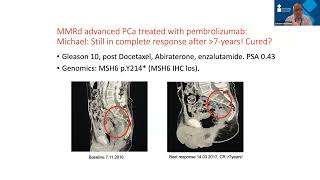
New Approaches to Treatment and Early Diagnosis of Prostate Cancer - Part 1
Explore cutting-edge research on prostate cancer biology, drug targets, and innovative approaches for early diagnosis and treatment with Professor Johann de Bono.
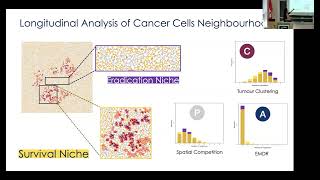
A Modelling-Informed Picture of Residual Disease in Environmentally Mediated Drug Resistance
Explore environmentally mediated drug resistance in cancer through mathematical modeling, focusing on residual disease and its implications for treatment strategies.
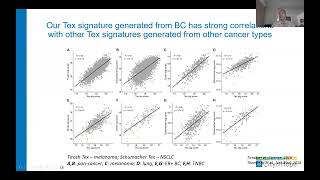
What Makes Tumors Hot? Insights from Experimental-Computational Integration
Explore experimental-computational integration to understand tumor characteristics and their impact on treatment effectiveness.

Liquid Biopsy in Head and Neck Cancer: From Diagnosis to Survivorship
Explore liquid biopsy applications in head and neck cancer, covering diagnosis through survivorship with Dr. Holsinger's expert insights.
Hodgkin's Disease - The Contributions of Stanford Investigators
Explore Stanford's contributions to Hodgkin's Disease research with expert insights on groundbreaking investigations and advancements in cancer biology.

Exhausted T Cells and Immune Checkpoints in Cancer - USMLE Guide
Explore the role of exhausted T cells and immune checkpoints in cancer, with insights relevant to USMLE preparation.
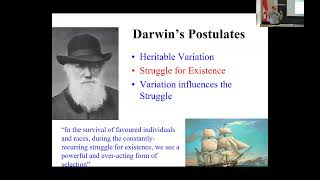
Evolutionary Therapies: Beating Cancer at Its Own Game
Explore revolutionary cancer therapies that outsmart tumor evolution, leveraging mathematical modeling to optimize treatment strategies and overcome resistance.
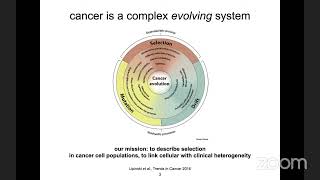
How Diversity Indices Help Understand Cancer Ecology and Evolution
Explore diversity indices and entropy to gain insights into cancer ecology and evolution, enhancing understanding of tumor dynamics and progression.
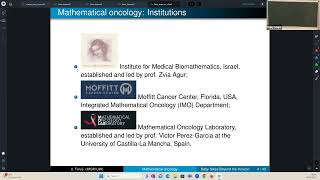
Mathematical Oncology: Insights into Cancer Treatment from a Mathematical Perspective
Explore mathematical models for cancer treatment, gaining insights into tumor growth, drug delivery, and therapeutic strategies from a quantitative perspective.
Tumor Phylogeny Inference from Single-cell Datasets - Lecture 2
Explore tumor evolution through single-cell data analysis. Learn advanced techniques for inferring phylogenetic relationships and understanding cancer progression at the cellular level.
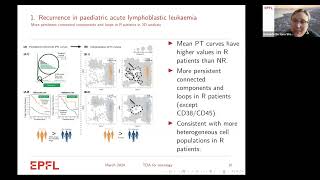
Applications of Topology to Oncology Data
Exploring Persistent Homology in oncology: predicting leukaemia relapse risk and analyzing tumor microenvironments using topological data analysis and machine learning techniques.
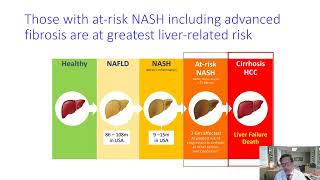
A Proteomics Signature of NASH - Non-Invasive Assessment of Nonalcoholic Fatty Liver Disease
Explore proteomics-based models for non-invasive assessment of nonalcoholic fatty liver disease, including diagnosis, prognosis, and monitoring of NASH progression and treatment efficacy.
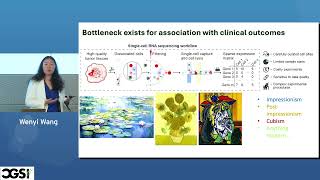
A Guide to Perform Transcriptomic Deconvolution in Cancer
Explore transcriptomic deconvolution techniques for cancer research, focusing on tumor cell mRNA expression estimation and improved analysis of cell-type ratios in complex tissue samples.
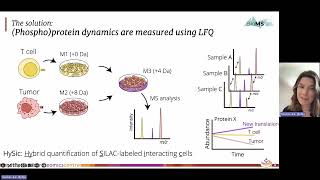
Mapping Communication Dynamics Between Physically Interacting Cells Using Hybrid Quantitative Proteomics
Explore cutting-edge proteomics techniques for mapping cell-to-cell communication in cancer immunology, focusing on immune checkpoints and their potential in immunotherapy.
Structural and Stochastic Modeling to Study the Dynamics of Tumor-Immune Interactions
Explore structural and stochastic modeling techniques to analyze tumor-immune interactions, enhancing understanding of cancer dynamics and potential treatment strategies.

The Hallmarks of Cancer - A Mathematical Perspective
Explore mathematical perspectives on cancer hallmarks, including proliferation, growth suppression, cell death, and metastasis, through differential equations and modeling techniques.
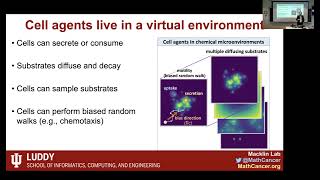
Progress and Next Steps in Agent-Based Modeling of the Hallmarks of Cancer
Explore advancements in agent-based modeling for cancer research, examining current progress and future directions in simulating cancer hallmarks and their interactions.
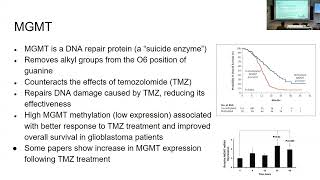
Mathematical Modelling of MGMT Dynamics in Glioblastoma - Influence of Methylation Status and Phenotypic Selection in Cell Death Resistance
Explore MGMT dynamics in glioblastoma through mathematical modeling, examining methylation status and phenotypic selection in cell death resistance.
Mathematical Modelling of Clonal Dynamics of Acute Myeloid Leukemia: Model-Based Approach to Understand Within-Tumour Heterogeneity
Explore mathematical models of acute myeloid leukemia's clonal dynamics to understand tumor heterogeneity using a model-based approach.
Mathematical Models and Tools for Personalized Medicine
Explore mathematical models for personalized medicine, focusing on glioblastoma and immunotherapy. Learn how these tools aid in optimizing individual cancer treatments and predicting tumor evolution.
Quantitative Modeling of Metastasis: Cancer at the Organism Scale
Explore mathematical models for metastasis development, including spontaneous spread, tumor interactions, and therapy effects. Gain insights into predictive tools for personalized oncology.