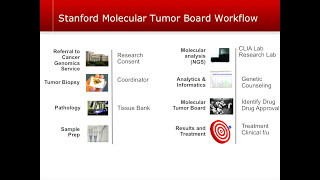
What's Happening with Cancer Genomics?
Explore clinical research in cancer genomics and its impact on treatment approaches, including personalized medicine, tumor profiling, and targeted therapies.
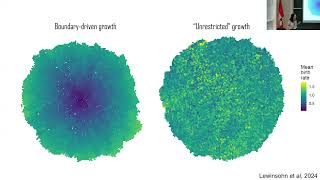
Decoding Evolutionary Information from Cancer Trees
Explore a 41-minute lecture on decoding evolutionary information from cancer trees, presented by Alison Feder from the University of Washington, Seattle. Delve into the intersection of oncology and evolutionary biology as part of the Thematic Program on…

Computational Methods for Inferring Tumor Evolution and Heterogeneity
Explore computational techniques for analyzing tumor evolution and heterogeneity, enhancing understanding of cancer progression and treatment strategies.
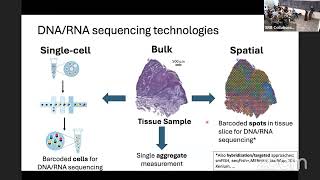
Quantifying Tumor Heterogeneity Across Space and Time
Explore advanced techniques for analyzing tumor heterogeneity spatially and temporally with Dr. Ben Raphael's in-depth presentation on cutting-edge mathematical oncology approaches.
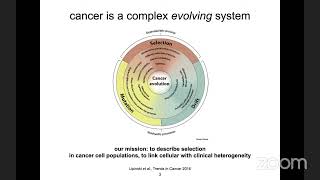
How Diversity Indices Help Understand Cancer Ecology and Evolution
Explore diversity indices and entropy to gain insights into cancer ecology and evolution, enhancing understanding of tumor dynamics and progression.
Tumor Phylogeny Inference from Single-cell Datasets - Lecture 2
Explore tumor evolution through single-cell data analysis. Learn advanced techniques for inferring phylogenetic relationships and understanding cancer progression at the cellular level.
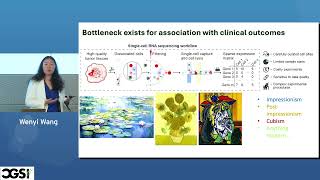
A Guide to Perform Transcriptomic Deconvolution in Cancer
Explore transcriptomic deconvolution techniques for cancer research, focusing on tumor cell mRNA expression estimation and improved analysis of cell-type ratios in complex tissue samples.
Mathematical Modelling of Clonal Dynamics of Acute Myeloid Leukemia: Model-Based Approach to Understand Within-Tumour Heterogeneity
Explore mathematical models of acute myeloid leukemia's clonal dynamics to understand tumor heterogeneity using a model-based approach.
A Systems Analysis of Temozolomide Response in a Model Glioblastoma Cell-line
Explore systems analysis of temozolomide response in glioblastoma, uncovering insights into cancer treatment through advanced modeling and data interpretation techniques.
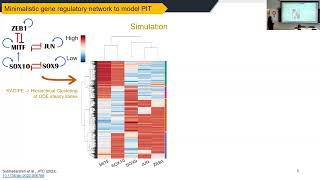
Dynamical Modeling of Proliferative-Invasive Plasticity and IFNγ Signaling in Melanoma - Mechanisms of PD-L1 Expression Heterogeneity
Explore melanoma dynamics through mathematical modeling, uncovering mechanisms behind PD-L1 expression heterogeneity and proliferative-invasive plasticity in cancer cells.
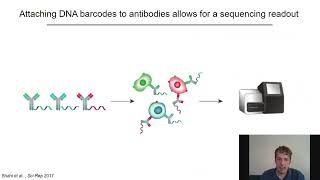
Cell Pathology Revealed by Single-Cell Genotype-Phenotype Mapping
Explore single-cell genotype-phenotype mapping to uncover cancer mutation effects and HIV latency mechanisms. Gain insights into tumor heterogeneity and disease progression using advanced genomic methods.
Overcoming Challenges of Somatic RNA Variant Calling in Solid Tumors
Explore techniques for accurate somatic RNA variant calling in solid tumors, addressing key challenges and improving cancer genomics analysis.
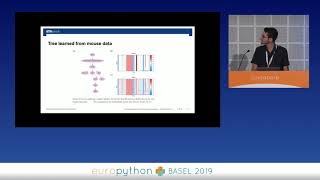
Bioinformatics Pipeline for Revealing Tumour Heterogeneity
Explore a Python-based bioinformatics pipeline for analyzing single-cell DNA sequencing data to reveal tumor heterogeneity and inform personalized cancer treatments.
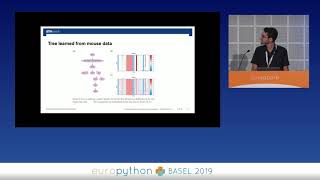
Bioinformatics Pipeline for Revealing Tumour Heterogeneity
Explore a Python-based bioinformatics pipeline for analyzing single-cell DNA sequencing data to reveal tumor heterogeneity, aiding in personalized cancer treatment decisions.

Computational Deconvolution of Cancer Genomes and Transcriptomes - CGSI 2022
Explore computational methods for deconvoluting cancer genomes and transcriptomes. Learn advanced techniques to analyze tumor heterogeneity and uncover molecular phenotypes shaping clinical outcomes in cancer research.
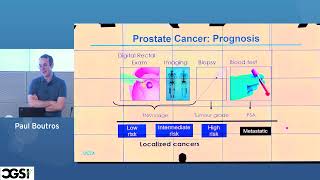
Computational Methods to Quantify Lethal Cancer Evolution
Explore computational methods for quantifying lethal cancer evolution. Gain insights into driver mutations, evolutionary history, and genomic correlates of prostate cancer's epigenetic landscape.