
Immunotherapy for Gynecological Cancers
Explore current immunotherapy progress for gynecological cancers, including clinical trial data and promising new approaches for ovarian, endometrial, and cervical cancer treatment.

Dr. Oliver Dorigo on Ovarian Cancer - Current & Novel Treatment Strategies
Explore advancements in ovarian cancer diagnosis and treatment, including specialized approaches based on cancer location and cellular anatomy, with insights from Dr. Oliver Dorigo of Stanford University.
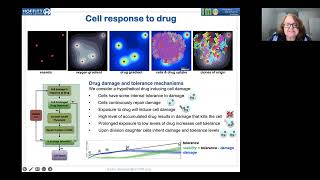
Ecological Niches for the Development of Drug-Induced Resistance
Explore the concept of ecological niches in the context of drug-induced resistance in cancer treatment through this 26-minute lecture by Kasia Rejniak from Moffitt Cancer Center. Delve into the intersection of ecology, evolution, and oncology as part of…
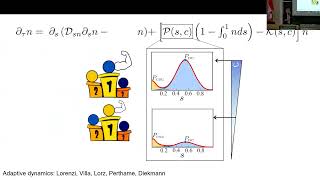
Modelling the Impact of Intra-Tumour Heterogeneity on Radiotherapy Outcomes
Explore a 39-minute lecture on the impact of intra-tumour heterogeneity on radiotherapy outcomes, delivered by Giulia Celora from University College London. Delve into the complex world of mathematical oncology as part of the Fields Institute's Thematic…
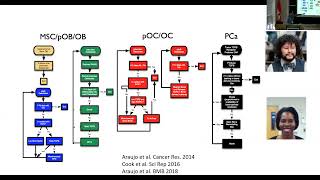
Defining Selection in Somatic Evolution by Modeling Tumor-Stromal Interactions
Explore the complex dynamics of tumor-stromal interactions and their role in somatic evolution through a 35-minute lecture by David Basanta from Moffitt Cancer Center. Delve into the fascinating field of mathematical oncology as part of the Thematic Prog…
Can Gut Reactor Models Play a Role in Mathematical Oncology?
Explore the potential role of gut reactor models in mathematical oncology through Hermann Eberl's seminar on innovative approaches to cancer research.
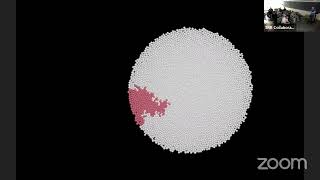
A Top-Down-Bottom-Up Approach to Evolution-Based Therapies in Compact Populations
Explore evolution-based therapies in compact populations through a top-down-bottom-up approach with Dr. Jona Kayser's seminar on mathematical oncology.
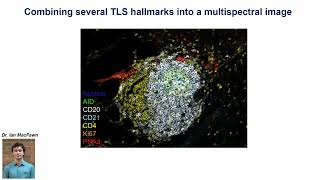
Tertiary Lymphoid Structures in Immunotherapy: Functions and Potential
Explore the role of tertiary lymphoid structures in tumor immunity, their correlation with improved prognosis, and their impact on immunotherapy response through in-depth spatial imaging analysis.
Extracellular Vesicles as Communicators Between Cells - A Role in Cancer Dissemination
Explore the role of tumor-derived extracellular vesicles in cancer metastasis and pre-metastatic niche formation through cutting-edge research on melanoma and neuroblastoma models.
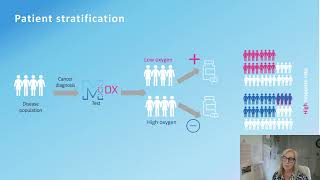
Hypoxia Biomarkers - Personalizing Cancer Treatments by Targeting Hypoxia
Explore hypoxia biomarkers for personalized cancer treatments. Learn about tumor microenvironments, prognosis impacts, and treatment resistance. Gain insights into targeting hypoxia for improved patient outcomes.
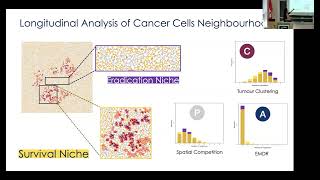
A Modelling-Informed Picture of Residual Disease in Environmentally Mediated Drug Resistance
Explore environmentally mediated drug resistance in cancer through mathematical modeling, focusing on residual disease and its implications for treatment strategies.
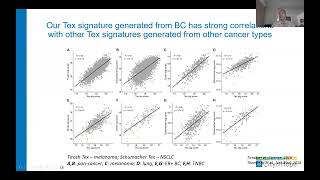
What Makes Tumors Hot? Insights from Experimental-Computational Integration
Explore experimental-computational integration to understand tumor characteristics and their impact on treatment effectiveness.

Exhausted T Cells and Immune Checkpoints in Cancer - USMLE Guide
Explore the role of exhausted T cells and immune checkpoints in cancer, with insights relevant to USMLE preparation.
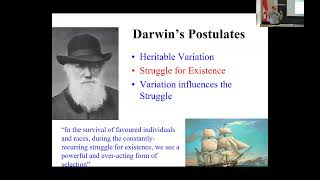
Evolutionary Therapies: Beating Cancer at Its Own Game
Explore revolutionary cancer therapies that outsmart tumor evolution, leveraging mathematical modeling to optimize treatment strategies and overcome resistance.
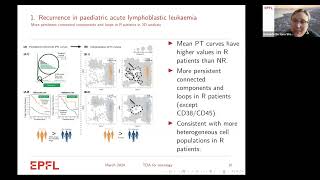
Applications of Topology to Oncology Data
Exploring Persistent Homology in oncology: predicting leukaemia relapse risk and analyzing tumor microenvironments using topological data analysis and machine learning techniques.
A Guide to Perform Transcriptomic Deconvolution in Cancer
Explore transcriptomic deconvolution techniques for cancer research, focusing on tumor cell mRNA expression estimation and improved analysis of cell-type ratios in complex tissue samples.
The Hallmarks of Cancer - A Mathematical Perspective
Explore mathematical perspectives on cancer hallmarks, including proliferation, growth suppression, cell death, and metastasis, through differential equations and modeling techniques.
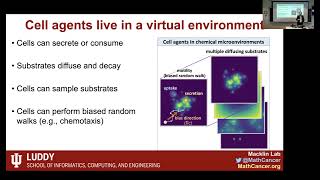
Progress and Next Steps in Agent-Based Modeling of the Hallmarks of Cancer
Explore advancements in agent-based modeling for cancer research, examining current progress and future directions in simulating cancer hallmarks and their interactions.
Mathematical Models and Tools for Personalized Medicine
Explore mathematical models for personalized medicine, focusing on glioblastoma and immunotherapy. Learn how these tools aid in optimizing individual cancer treatments and predicting tumor evolution.
Novel Pan-Lysyl Oxidase Inhibitor PXS-5505 for Improving Pancreatic Cancer Treatment
Discover groundbreaking research on PXS-5505, a novel inhibitor that enhances chemotherapy effectiveness in pancreatic cancer treatment through innovative tumor microenvironment modification.
Biophysics of Cancer Invasion
Explore the biophysical mechanisms driving cancer invasion, examining cellular processes and interactions that contribute to tumor progression and metastasis.