Novel Pan-Lysyl Oxidase Inhibitor PXS-5505 for Improving Pancreatic Cancer Treatment
Discover groundbreaking research on PXS-5505, a novel inhibitor that enhances chemotherapy effectiveness in pancreatic cancer treatment through innovative tumor microenvironment modification.

Clonal Reproduction Is Not an Evolutionary Dead End
Explore clonal reproduction's evolutionary potential, somatic genetic variation, and its impact on adaptation in modular species. Gain insights into detecting positive selection and comparing somatic and recombinant variation.
Dormancy Phenomena in Cancer Progression
Explore dormancy mechanisms in cancer progression, their role in therapy resistance and metastasis, and mathematical models used to study these phenomena. Gain insights into open questions and potential research directions.
Talking Science - When Good Cells Go Bad
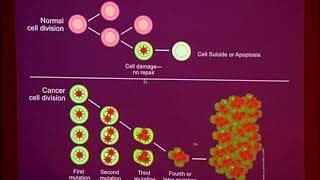
Explore cancer biology, cell cycles, and genetic factors in disease development. Learn about oncogenes, tumor suppressors, and groundbreaking research in this comprehensive lecture for high school students.
Pancreatic Cancer
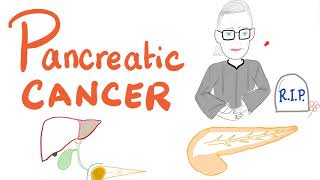
Explore pancreatic adenocarcinoma, its aggressive nature, and metastasis patterns. Learn about its impact as the 4th leading cause of cancer-related deaths in the US.

Types of Mutations in DNA Genetics - Part 2
Explore various types of mutations, their origins, and effects on DNA genetics. Learn about somatic and germinal mutations, spontaneous and induced mutations, and their impact on organisms.

Mutation and Types of Mutations in DNA Genetics - Part 1
Comprehensive exploration of mutation types, including somatic and germinal mutations, spontaneous and induced mutations, and their effects on DNA and genetics.
Chromatin Microenvironments Affect Transcriptional Dynamics - Lecture 3
Explore how chromatin microenvironments influence transcriptional dynamics in cancer progression, offering insights into potential therapeutic approaches and disease understanding.
A Systems Analysis of Temozolomide Response in a Model Glioblastoma Cell-line
Explore systems analysis of temozolomide response in glioblastoma, uncovering insights into cancer treatment through advanced modeling and data interpretation techniques.
Morphogenesis in Cancer
Explore morphogenesis in cancer with Ramray Bhat, examining fundamental principles and theoretical approaches to understanding cancer progression and potential treatment strategies.
To Live or Not to Live - Decision Making in Single Cancer Cells - Lecture 1
Explore decision-making processes in individual cancer cells, examining factors influencing cell survival and death. Gain insights into cellular behavior and its implications for cancer progression and treatment.
Chance and Necessity: Decision Making in Single Cancer Cells - Lecture 2
Explore decision-making processes in individual cancer cells, examining the interplay between randomness and determinism in cellular behavior and its implications for cancer progression.
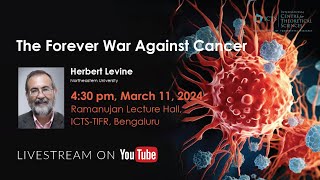
Know the Enemy and Know Yourself - Why Has It Proven to Be So Hard to Beat Cancer? by Herbert Levine
Explore advancements in cancer research and immune defenses through computational modeling. Learn how improved understanding of cancer biology can lead to better treatment strategies.
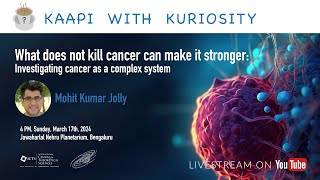
What Does Not Kill Cancer Can Make It Stronger - Investigating Cancer as a Complex System
Explore how mathematical models and interdisciplinary approaches can enhance our understanding of cancer progression, metastasis, and treatment resistance, potentially leading to new therapeutic strategies.
Proteolytic and Non-Proteolytic Roles of MMP9 in Cancer Invasion
Explore MMP9's diverse roles in cancer invasion, including proteolytic and non-proteolytic functions, and their implications for understanding tumor progression and developing targeted therapies.
Biophysics of Cancer Invasion
Explore the biophysical mechanisms driving cancer invasion, examining cellular processes and interactions that contribute to tumor progression and metastasis.
Cancer Evolution and Metastasis Under Immune Selection
Explore cancer evolution and metastasis, focusing on immune system interactions and their impact on tumor progression and spread.
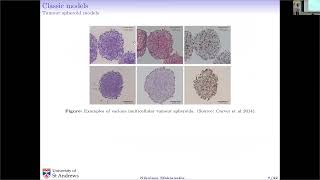
The Mathematical Hallmarks of Cancer - Yesterday, Today, and Tomorrow
Explore the mathematical modeling of cancer's key characteristics, examining past approaches, current methodologies, and future directions in oncology research.
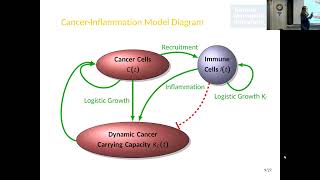
Modelling Inflammation in Cancer
Explore mathematical models of inflammation's role in cancer progression, examining key mechanisms and potential therapeutic targets.
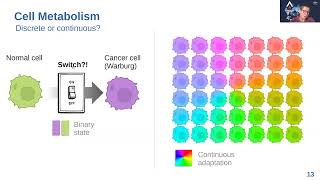
Is Tumour Metabolism Abnormal? Investigation Through a Multiscale Model
Explore tumor metabolism abnormalities through multiscale modeling, uncovering insights into cancer biology and potential therapeutic targets.
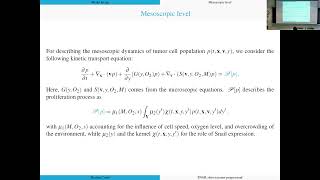
Multiscale Modeling of Tumor Invasion
Explore advanced mathematical techniques for modeling tumor invasion across multiple scales, enhancing understanding of cancer progression and potential treatment strategies.