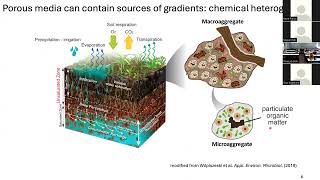
Microbial Behavior in Porous Media: Hydrodynamics Control on Bacterial Chemotaxis and Biofilm Morphogenesis
Explore microbial behavior in porous media, focusing on bacterial chemotaxis and biofilm formation. Discover how fluid flow and chemical landscapes impact microbial life and applications in bioremediation and biomineralization.
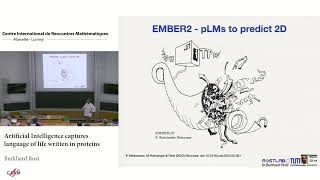
Artificial Intelligence Captures Language of Life Written in Proteins
Explore AI's role in decoding protein language, unveiling insights into life's fundamental processes and potential applications in genomics and biology.
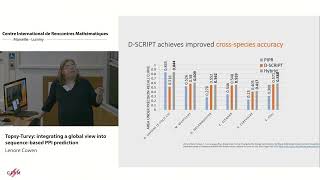
Topsy-Turvy: Integrating a Global View into Sequence-Based PPI Prediction
Explore innovative approaches to protein-protein interaction prediction by integrating global perspectives with sequence-based methods.
A New Vision and Role for the NIH Center for Information Technology (CIT)
Explore the evolving vision and role of NIH's Center for Information Technology in advancing genomic research and healthcare innovation.
Overcome Challenges in Cancer Research with xGen NGS Solutions for Oncology and MRD Research
Explore advanced NGS solutions for cancer and MRD research, enhancing library complexity and offering customizable hybridization capture approaches.
A Scalable, Cost-Efficient Method for Targeted Enrichment of Long Fragments for Third-Gen Sequencing
Discover a scalable targeted enrichment protocol for long DNA fragments, demonstrated with a custom blood group panel and highly multiplexed enrichment pool of 16 samples.
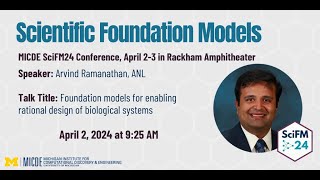
Foundation Models for Enabling Rational Design of Biological Systems - Lecture 3
Explore foundation models for rational design of biological systems with Arvind Ramanathan, advancing understanding in computational biology and system engineering.
Introduction to Tokenizing Scientific Data - Omics - Tutorial 2
Explore tokenization techniques for scientific data in omics, focusing on applications in genomics and bioinformatics.
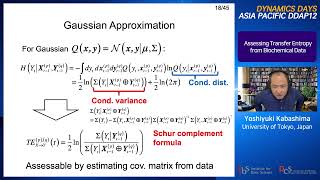
Assessing Transfer Entropy from Biochemical Data
Develop a method to evaluate transfer entropy from biochemical reactions, applying it to the ERBB-RAS-MAPK system for insights into cell fate decisions.
Wandering Through Sequence Space
Explore protein sequence space and its implications for evolution, structure, and function with insights from statistical physics and machine learning.
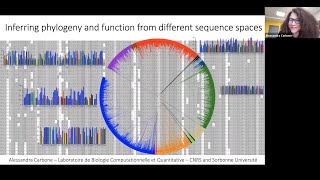
Inferring Phylogeny and Function from Different Sequence Spaces
Explore phylogeny and function inference using diverse sequence spaces, led by Alessandra Carbone from CNRS and Sorbonne Université.
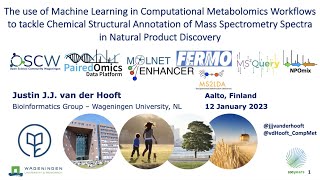
The Use of Machine Learning in Computational Metabolomics Workflows
Explore machine learning applications in computational metabolomics for metabolite structure analysis. Learn about tools like MS2LDA, MotifDB, Spec2Vec, and MS2DeepScore for improved metabolite discovery and characterization.
Probabilistic Machine Learning in Bioinformatics
Explore probabilistic machine learning applications in bioinformatics, focusing on cutting-edge techniques and their impact on biological data analysis.
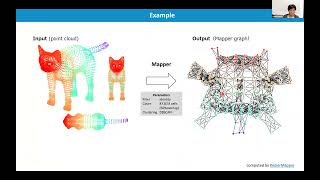
Single-cell Trajectory Analysis with V-Mapper
Explore V-Mapper, an innovative method for analyzing single-cell gene expression data. Learn how it extracts topology and flow of cell differentiation, enhancing trajectory inference in high-dimensional spaces.
Image Analysis in Neurodegenerative Disease
Explore AI-powered image analysis for neurodegenerative diseases, focusing on software that detects shape differences in diseased brain cells, with insights from PhD research.
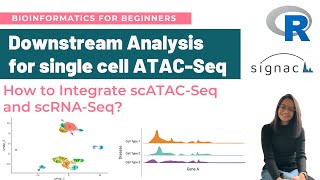
Comprehensive Guide to Downstream Analysis for Single-Cell ATAC-Seq in R - scATAC-Seq Workflow
Comprehensive guide for downstream analysis of single-cell ATAC-Seq data using R and Signac. Covers integration with RNA-Seq, differential accessibility analysis, and visualization of genomic regions.
On Clustering scRNA-seq Data
Explore challenges and strategies in clustering single-cell RNA sequencing data, focusing on the k-cluster method's effectiveness for analyzing neuronal datasets in fruit flies.
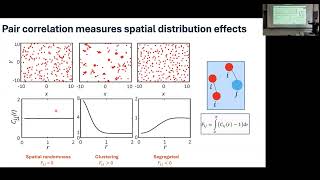
Targeting Macrophages to Improve Glioblastoma Treatment Outcomes
Explore innovative strategies for enhancing glioblastoma treatment by focusing on macrophage targeting, presented by Morgan Craig from Sainte-Justine Hospital and Université de Montréal.
Me-LLaMA - Medical Foundation Large Language Models for Comprehensive Text Analysis and Beyond
Discover how Me-LLaMA, a suite of medical language models trained on vast biomedical datasets, outperforms existing LLMs in medical text analysis tasks, advancing healthcare AI applications through improved accuracy and accessibility.

Discriminative Classification with Incomplete Data - Lecture
Explore advanced discriminative classification techniques for structured data with missing information, focusing on maximum entropy principles and large margin methods for robust decision-making.
Single-Cell Analysis in the Age of Large Language Models
Explore how biological systems communicate like language, focusing on LLM applications in single-cell analysis, cytokine interactions, and cellular behavior prediction through innovative computational approaches.