Understanding and Improving Code Generation in Spark
Explore Spark's code generation techniques, challenges with large queries, and Workday's improvements for handling whole-stage codegen, enhancing performance in production workloads.
From Python to PySpark and Back Again - Unifying Single-Host and Distributed Deep Learning with Maggy
Unifying single-host and distributed deep learning with Maggy framework, enabling seamless transition from laptop to cluster for efficient model development and training using TensorFlow and PySpark.
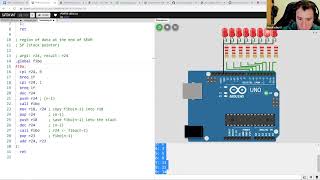
HackadayU - AVR - Architecture, Assembly & Reverse Engineering
Explore AVR assembly programming, focusing on stack operations, compiler optimizations, and debugging techniques. Gain insights into Fibonacci implementation and assembly listing analysis.
Building a Non-Blocking Multi-Processes Web Server - Node JS Fork Example
Learn to build a non-blocking multi-process web server using Node.js fork, handling expensive requests efficiently while keeping the main process free. Explore pros, cons, and implementation details.
Use-Case 2.0 - The Hub of Modern Software Development
Explore modern software development with Use-Case 2.0, a lean and agile approach that combines the benefits of user stories and traditional use cases for scalable requirements management across diverse systems.
Master Using SQL with Python - Introducing PostgreSQL - Lesson 8
Comprehensive exploration of PostgreSQL's features, strengths, and weaknesses, with insights from professional experience and practical demonstrations for Python developers.
EC2 Auto Scaling and Elastic Load Balancer - AWS in Action
Learn to implement EC2 Auto Scaling and Elastic Load Balancer for efficient traffic distribution and horizontal scaling in AWS, ensuring optimal performance during high-demand periods.
Angular 2 Complete Course
Comprehensive introduction to Angular 2, covering architecture, project structure, dependencies, and components. Learn to build and initialize multiple components with templates.
Laravel PHP Build a Social Network - Signup Controller & Model
Create a signup controller and model for a Laravel 5.2 social network, including database setup and form implementation for user registration.
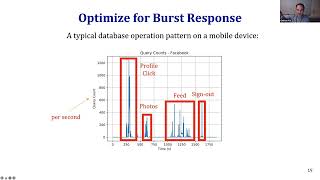
Workload Modeling for Security and Privacy in Databases
Explore database security through workload modeling, focusing on performance metrics, behavioral patterns, and insider threat detection techniques.
Getting Swifty - A Tale from the Front Lines of Breaking Changes and Legacy Code
Explore the challenges and benefits of integrating Swift into existing Objective-C projects, focusing on interoperability, migration strategies, and evolving coding practices.
The Swift Melting Pot - Embracing Multiple Programming Paradigms
Swift's multi-paradigm approach: functional, OO, and protocol-oriented programming. Explore code examples to write more readable, idiomatic Swift by incorporating aspects of these paradigms.
The World of Swift 3 - Lecture 32
Explore Swift 3's evolution, community involvement, and key changes. Learn about idiomatic Swift, design principles, and the reasoning behind language choices.
Modern C++ for Fun and Profit: This Isn't Your Old C++ - Lecture 11
Discover modern C++'s evolution, featuring improved performance, maintainability, and design. Learn about new features that simplify coding and enhance cross-platform development.
Demystifying Stream Processing with Apache Kafka
Demystifying stream processing with Apache Kafka, exploring key features, benefits, and challenges. Introduces Kafka Streams library, highlighting its unique design decisions and tradeoffs in the stream processing landscape.
Transforming Enterprise Development With Clojure
Explore Clojure's approach to modularity and composability in enterprise development, with live demos showcasing loose coupling and reusable code practices.
FP vs OOP - Choose Two: Bridging the Divide in Programming Paradigms
Explore the false dichotomy between Functional and Object-Oriented Programming, challenging industry divisions and promoting a more inclusive approach to software development.
GitHub's GraphQL Future - Implementing a New API
Explore GitHub's transition to GraphQL API, its implementation process, and production use. Learn about GraphQL's advantages, challenges, and impact on API development.
The End of General Purpose Languages: Rubinius 3.0 and the Next 10 Million Programs
Explore the future of programming languages and system development through Rubinius 3.0, emphasizing specialized languages, interoperability, and building reliable systems from unreliable components.
Core.async - Concurrency without Callbacks - Philly ETE 2015
Explore core.async for concurrency without callbacks in Clojure. Learn to decouple producers and consumers using channels, go blocks, and alts, culminating in callback-free UI development.
Developing Event-Driven Microservices with Event Sourcing and CQRS - Philly ETE 2015
Explore event-driven microservices architecture using event sourcing and CQRS. Learn to solve distributed data management problems, maintain consistency, and build scalable cloud-native applications.