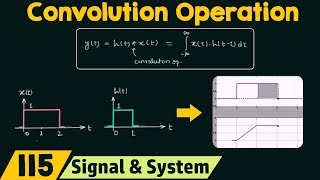
Introduction to Convolution Operation
Comprehensive guide to convolution operation in signal processing, covering definition, formula, steps, and animated examples for practical understanding.
SSH and the Command Line
Master SSH and essential command-line skills for efficient server management, process monitoring, and file operations in Linux environments.
Guider - Automated Performance Monitoring Daemon for Embedded Systems
Automated performance monitoring daemon for embedded systems in Software Defined Vehicles. Monitors, analyzes, and reports issues based on predefined thresholds, enhancing efficiency in complex development cycles.
Clinical Troubleshooting: Diagnose Production Issues - Conf42 SRE 2024
Learn systematic approaches to diagnose production issues efficiently, enhancing your troubleshooting skills for improved site reliability engineering.
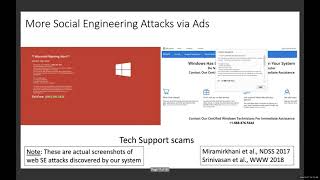
What You See Is Not What You Get - Discovering-Tracking Ad-Driven Social Engineering Attack Campaigns
Explore techniques for uncovering and monitoring social engineering attacks driven by online advertisements, with insights on ad networks, tracking methods, and measurement strategies.
Linearization of Nonlinear ODEs, 2x2 Systems, Phase Portraits
Explore linearization techniques for nonlinear ODEs, analyze 2x2 systems, and visualize phase portraits in this advanced engineering mathematics lecture.

Observability vs. Performance Monitoring in DevOps
Explore the differences between observability and performance monitoring in DevOps, gaining insights to enhance system reliability and troubleshooting capabilities.
Ergodicity in Smooth Dynamics 1
Explore ergodicity in smooth dynamics, covering introductory concepts, examples, proofs, and higher dimensions with experts Jana Rodriguez-Hertz and Amie Wilkinson.
RTLA - Real-time Linux Analysis Toolset
Explore the Real-time Linux Analysis Toolset (RTLA) for optimizing system performance and responsiveness in time-critical applications.
The Linux Performance Counter API Made Easy
Discover how to simplify and leverage the Linux Performance Counter API for efficient system monitoring and optimization in this insightful presentation.
Leveraging KVM as a Debugging Platform
Explore KVM's potential as a powerful debugging platform for efficient software development and troubleshooting in virtualized environments.
Debugging Real-Time Linux Scheduling Latency with rtla timerlat - Mentorship Session
Explore rtla timerlat tool for debugging real-time Linux scheduling latency, integrating measurements with kernel tracing and providing user-friendly analysis for complex latency issues.

How to Think About Instrumentation Overhead
Explore instrumentation overhead in observability, its causes, measurement challenges, and practical coping strategies for understanding and managing performance impact in your environment.
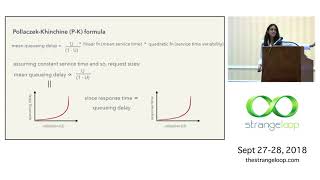
A Practical Look at Performance Theory
Explore performance theory for system tuning and capacity planning. Learn Little's Law, Universal Scalability Law, and real-world applications from companies like Facebook.
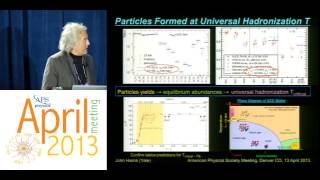
Creating the Primordial Quark-Gluon Plasma at the LHC
Explore the creation of quark-gluon plasma in heavy ion collisions at LHC and RHIC. Learn about QCD behavior, particle formation, and probing hot QCD matter with hard probes.
Kernel Tracing With EBPF
Explore Linux kernel tracing with eBPF: learn practical uses, dynamic instrumentation techniques, and insights into system workings. Gain knowledge to monitor actions and reveal process secrets efficiently.
Pushing Security from the Outside
Explore strategies for implementing security measures from external perspectives, enhancing organizational resilience against cyber threats and vulnerabilities.
Functional Resonance Analysis - Diagramming Your System
Explore the Functional Resonance Analysis Method to model complex systems, understand their interactions, and identify sources of success and risks in constantly changing environments.
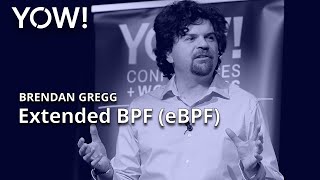
eBPF - Fueling New Flame Graphs & More
Explore eBPF's transformative impact on operating systems, performance tools, and flame graphs. Learn about its applications in major tech companies and its potential for solving complex performance issues.
Burning Down the Haystack to Find the Needle
Explore network flow pattern analysis to detect and prevent contemporary threats, and learn how to build a security analytics program for enhanced threat visibility and response.

Designing Security for Systems That Are Bigger on the Inside
Explore innovative security design strategies for complex, expansive systems, focusing on scalable solutions and adaptive frameworks for evolving technological landscapes.