Building Scalable and Effective Data Pipelines with Argo for Large-Scale Metadata Processing
Discover how to build high-performance data pipelines using Argo's parallelization techniques, achieving massive scale with 450% faster processing times and efficient metadata ingestion for large-scale data operations.
How We Streamlined Our SDLC with Observability - From GitHub via Jenkins, Harbor, Argo to K8s
Discover how to optimize software delivery lifecycles through cloud-native observability, tracking value flows, identifying bottlenecks, and implementing continuous improvements across development tools and processes.
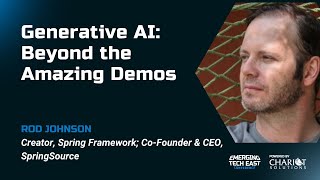
Generative AI: Beyond the Amazing Demos - From Demos to Business Applications
Explore the practical implications of Generative AI for software developers, covering integration strategies, architectural considerations, and real-world applications with Java and Python code examples.

The Art of Omnichannel - Building Blocks for Crafting Connected Experiences
Discover how to architect seamless omnichannel experiences through real-time data collection, AI-driven decisioning, and multi-channel distribution strategies for creating personalized customer interactions.
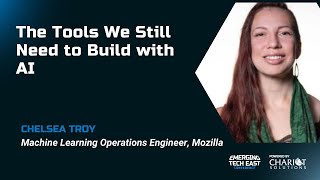
The Tools We Still Need to Build with AI
Explore the critical challenges and opportunities in AI development, focusing on data provenance, compensation, and infrastructure needs while building towards an ethical and sustainable AI-powered future.
Outsmarting the Genie - Smart Architecture Decisions for Generative AI Applications
Master architectural best practices for building reliable, safe, and performant generative AI applications through real-world use cases and practical implementation strategies.
High Availability Kubernetes Deployment Guide for Power-Interrupted Environments
Master high-availability Kubernetes deployment strategies for power-interrupted environments using k0s and Tailscale. Learn practical configurations for maintaining application uptime on bare metal servers despite unstable power conditions.

Building Advanced Permission Systems - From RBAC to ABAC Implementation
Master advanced permission systems implementation, from basic role-based access control (RBAC) to sophisticated attribute-based access control (ABAC), with practical examples and real-world applications.
Decoupling in Practice - How Good Software Engineering Can Save Your Sanity
Discover practical techniques for reducing software coupling in LabVIEW, improving build times, and creating more maintainable code through effective module dependency management and cleaner architecture design.

Modularity - From Software Design Principles to Community Organization
Explore how modularity principles extend beyond software development to reshape organizational structures, with insights into LabVIEW community's evolution and future adaptability.
The Art of Delivering Value - FSGD Framework for Shipping Software
Discover practical tools and processes for delivering software value through FSGD methodology, focusing on frequent, small, good, and decoupled implementations for improved team performance.

DIZK: A Distributed Zero Knowledge Proof System
Discover how DIZK revolutionizes zero knowledge proof systems through distributed computing, enabling 100x larger computations and faster processing for enhanced blockchain security and privacy applications.

Distribu-ready with the Modular Monolith - Designing Future-Proof Applications
Discover how to design and implement a modular monolith architecture that's ready for future distribution, minimizing complexity while maintaining scalability potential for your applications.
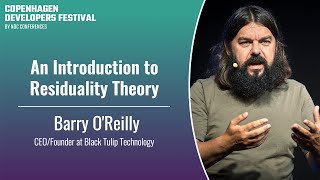
An Introduction to Residuality Theory
Discover a revolutionary approach to software design through Residuality Theory, using complexity science to better manage uncertainty in business systems and interconnected components.
Learning Libraries of Programmatic Policies
Discover how artificial agents can learn and maintain libraries of reusable behaviors for solving sequential decision-making problems through programming and neural network approaches.
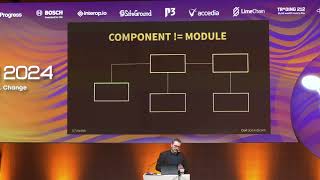
Turning Complexity Into Modularity - Strategies for Sustainable Software Architecture
Discover strategies for designing modular software systems by understanding the forces that drive architectural complexity and learning practical approaches to create maintainable, adaptable solutions.
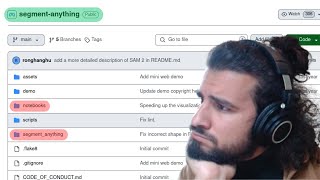
A Systematic Approach to Reading Deep Learning Codebases
Master a systematic approach to understanding complex deep learning codebases, from initial paper review to mapping structure and components, with practical examples using SAM1.
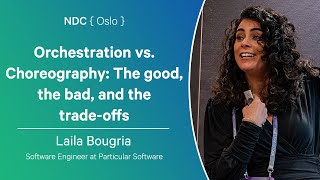
Orchestration vs. Choreography: The Good, the Bad, and the Trade-offs
Explore microservice coordination patterns through practical banking examples, learning to choose between orchestration and choreography for optimal system design and interservice communication.

The Grand Unified Theory of Clean Architecture and Test Pyramid
Discover a practical approach to combining Clean Architecture and Test Pyramid principles through real-world API examples, offering clear solutions for modern software development challenges.
Leveraging GenAI for Seamless Developer Experiences in Backstage
Discover how to enhance Backstage's capabilities by integrating ChatGPT and other LLMs, optimizing prompts, and automating development workflows for improved productivity.
Design Patterns for Running AI/ML and Big Data Workloads on Kubernetes
Explore essential design patterns and solutions for deploying AI/ML and big data workloads on Kubernetes, addressing challenges in container management, data handling, and system optimization.