Base Porting of Linux Kernel on RISC-V Architecture
Explore RISC-V architecture base porting for Linux kernel, covering minimal support, initial addressing, hardware interaction macros, and controller initialization for successful board bringup.
Hardware and Software Support for Managed Languages in Data Centers
Exploring hardware and software support for managed languages in data centers, focusing on distributed applications, custom hardware, and open-source opportunities for improved performance and efficiency.
The Future of Linux on RISC-V
Explore the potential of RISC-V architecture in Linux systems with insights from an embedded developer on future trends, challenges, and opportunities in open-source hardware.
Performance on RISC-V: The Past, Present, and Future
Explore RISC-V performance analysis: past developments, current status, and future prospects in Linux systems, covering specifications, implementations, and upcoming enhancements.
How the Fastest Growing Open Hardware Project Leverages Visibility for Industry Adoption
Explore RISC-V's rapid growth through strategic visibility, community engagement, and industry adoption, highlighting key metrics, messaging, and inclusive initiatives.
Growing Diversity in Open Hardware - A Task for All of Us
Explore strategies for fostering inclusivity and diversity in open hardware development, emphasizing collective responsibility and actionable steps for positive change in the industry.
Building a Low-key XIP-enabled RISC-V Linux System
Explore building a RISC-V Linux system with XIP capabilities, comparing it to ARM and discussing advantages, challenges, and current status for embedded development.
Forging a New Open Source Hardware Contributor Model
Explore RISC-V's innovative approach to open source hardware development, focusing on collaborative models and community-driven contributions in the semiconductor industry.
Xvisor: Embedded Hypervisor for RISC-V
Explore Xvisor, an open-source embedded hypervisor for RISC-V. Learn about its architecture, features, and benefits for embedded systems, including memory footprint and performance.
The State of Software Development Tools for RISC-V
Explore the current landscape of software development tools for RISC-V, covering emulators, compilers, operating systems, and more. Learn about challenges and opportunities in this emerging architecture.
Linux on Open Source Hardware with RISC-V
Explore RISC-V architecture and its implementation in open-source hardware, focusing on Linux compatibility and the BeagleBoard platform's innovations in this emerging field.
Open Hardware and RISC-V - Birds of a Feather Session
Explore open hardware and RISC-V architecture in this discussion led by experts from BeagleBoard.org Foundation and The Linux Foundation.
Delivering the Future of Automotive Innovation with RISC-V
Explore RISC-V's role in revolutionizing automotive innovation, from simplifying development to enabling collaboration and fostering individual opportunities across the supply chain.

Uncertainty-Tracking Computation Hardware for Processing Data from the Physical World
Explore innovative processor architecture for tracking uncertainty in computations, enhancing accuracy and efficiency in various domains from quantum algorithms to sensor data processing.

Banana Pi BPI-F3 - Octa-Core RISC-V SBC Review and Bianbu OS Demo
Explore the Banana Pi BPI-F3, an octa-core RISC-V single-board computer, featuring Bianbu OS demonstrations, specifications review, and insights into the future of RISC-V computing.
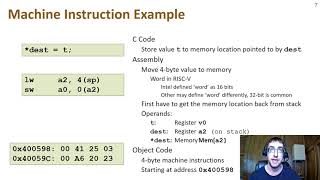
Computer Organization and Design with RISC-V
Learn RISC-V assembly programming, processor design, and cache concepts. Explore pipelining, hazard detection, and practical implementations using QtRVSim simulator.
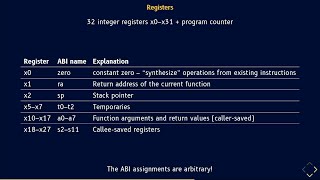
RISC-V - The Only Architecture You'll Ever Need
Explore RISC-V, the open-source processor architecture revolutionizing computing. Learn its technical aspects, applications, and significance in this comprehensive overview.
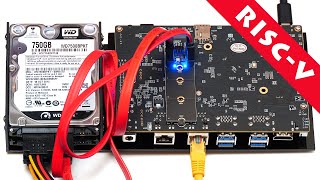
RISC-V NAS: Building a RAID System with BPI-F3 and OpenMediaVault
Build a RAID RISC-V NAS using Banana Pi BPI-F3 and OpenMediaVault. Learn hardware setup, Bianbu OS installation, RAID configuration, and performance testing for a DIY network-attached storage solution.
RISC-V and RISE Project: Current State and Open Source Initiatives
Explore the current state of RISC-V, an open instruction set revolutionizing hardware design, and learn about the RISE Project supporting its software ecosystem.
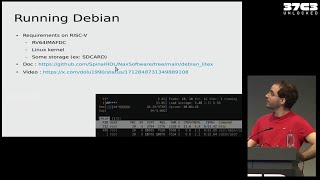
Open CPU and SoC Design: From RISC-V to Debian - 37C3 Lecture
Explore RISC-V CPU design, from hardware description to running Debian on FPGA. Covers out-of-order execution, multi-core systems, security, and Linux requirements using the open-source NaxRiscv core.
Enabling New Security Frontiers - Deep-Dive Into Implementing Confidential Computing on RISC-V
Explore RISC-V Confidential Computing implementation, covering ISA extensions, SoC requirements, and open-source activities. Gain insights into cross-architectural aspects and future roadmap.