iOS Apps Reverse - iPwn Apps
Explore iOS app reverse engineering techniques and tools to uncover hidden information and potential vulnerabilities in AppStore applications.
Obfuscation in Javascript
Explore techniques for obfuscating JavaScript code to protect intellectual property and enhance security in web applications.
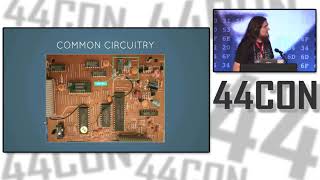
Saving Nostalgia - Modding an Old Z80 Computer
Explore the process of reverse engineering and modding a vintage VTech computer to add save functionality, preserving childhood nostalgia while enhancing its capabilities.

Holy Smokes, How to Vape Yourself to Root
Explore how e-cigarettes can be transformed into covert exploit platforms, including firmware decryption, custom functionality, and system penetration techniques.
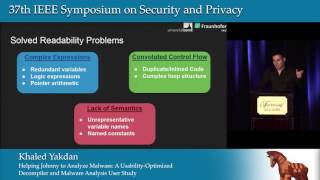
Helping Johnny to Analyze Malware - A Usability-Optimized Decompiler and Malware Analysis User Study
Explore a usability-optimized decompiler for malware analysis, featuring readability improvements that significantly enhance analysts' ability to understand and combat complex malicious software.

CSI NN - Reverse Engineering of Neural Network Architectures Through Electromagnetic Side Channel
Reverse engineering neural networks through electromagnetic side channels, revealing architecture details like activation functions, layers, neurons, and weights using non-invasive techniques on ARM Cortex-M3 microcontrollers.
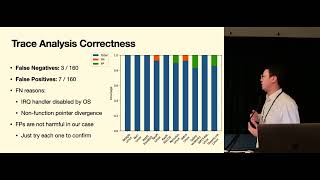
IRQDebloat - Reducing Driver Attack Surface in Embedded Devices
Explore techniques to reduce attack surfaces in embedded device drivers through IRQ debloating, binary analysis, and fuzzing. Learn about challenges, implementation, and evaluation methods.
RIDL - Rogue In-Flight Data Load
Unveiling RIDL: a new class of speculative execution attacks that leak arbitrary data across boundaries, bypassing existing mitigations and posing significant security risks for modern processors.
Exploiting Correcting Codes on the Effectiveness of ECC Memory Against Rowhammer Attacks
Investigates ECC memory's vulnerability to Rowhammer attacks, revealing limitations in its protective capabilities through reverse engineering and a novel attack method called ECCploit.

Happer - Unpacking Android Apps via a Hardware-Assisted Approach
Explore a hardware-assisted approach for unpacking Android apps, enhancing security analysis and malware detection through innovative techniques and methodologies.

OSPREY - Recovery of Variable and Data Structure via Probabilistic Analysis for Stripped Binary
Explore probabilistic analysis techniques for recovering variables and data structures from stripped binaries, enhancing reverse engineering capabilities.
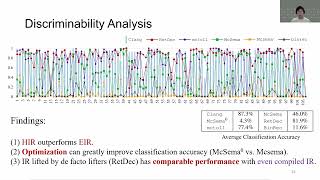
SoK - Demystifying Binary Lifters Through the Lens of Downstream Applications
Explore binary lifters and their impact on downstream applications, analyzing their effectiveness and limitations in various contexts of binary analysis and reverse engineering.

Cybersecurity Zero to Hero with CyberChef
Learn to perform complex cybersecurity tasks using CyberChef, a user-friendly web app that simplifies malware analysis and streamlines workflows for both beginners and experienced analysts.
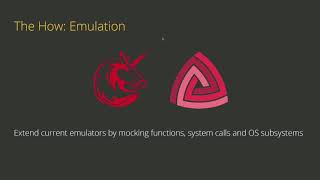
Binee - Complete Emulation of Advanced Malware
Explore advanced malware emulation with Binee, a Windows Process emulator. Learn to create detailed memory models, mimic OS kernels, and gather dynamic analysis data for reverse engineering and vulnerability research.

REDIScovering HeadCrab - A Technical Analysis of a Novel Malware and the Mind Behind It
Uncover the secrets of HeadCrab, an advanced malware utilizing Redis Modules. Explore its sophisticated techniques, worldwide infiltration, and the mind of its creator in this technical analysis.
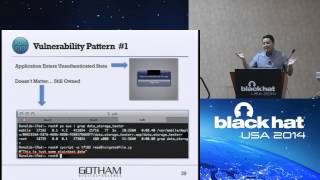
Unwrapping the Truth - Analysis of Mobile Application Wrapping Solutions
Explore mobile application wrapping solutions for BYOD, analyzing their security claims, implementation, and vulnerabilities in iOS and Android environments.

Reverse-Engineering the Supra iBox - Exploitation of a Hardened MSP430-Based Device
Detailed walkthrough of reverse-engineering and exploiting a hardened MSP430-based key storage device, covering firmware extraction, crypto analysis, and various attack techniques.
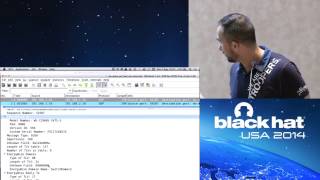
When the Lights Go Out - Hacking Cisco EnergyWise
Explore Cisco EnergyWise vulnerabilities and potential for large-scale blackouts. Learn reverse-engineered protocol details, attack methods, and defense strategies in IP-based energy management systems.

Hacking the Wireless World with Software Defined Radio - 2.0
Explore wireless hacking using software-defined radio. Learn to analyze, reverse engineer, and exploit RF signals in various systems, from pagers to satellites, using open-source tools and affordable hardware.
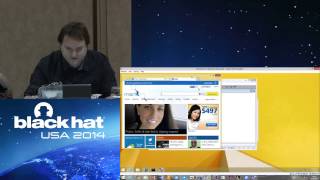
Digging for IE11 Sandbox Escapes Part 1
Explore IE11 sandbox vulnerabilities, focusing on logic bugs and Enhanced Protected Mode. Learn techniques to investigate, analyze, and exploit sandbox weaknesses in Windows 8.1.
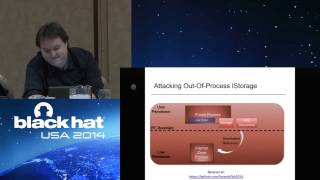
Digging for IE11 Sandbox Escapes Part 2
Explore IE11 sandbox vulnerabilities, focusing on logic bugs and Enhanced Protected Mode. Learn to investigate, analyze, and exploit sandbox escapes discovered during a bug bounty program.