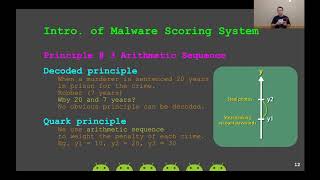
Quark Engine
Innovative Android malware analysis engine using criminal law principles. Develops a scoring system with five stages to assess malicious activities, overcoming obfuscation techniques through a specialized Dalvik bytecode loader.
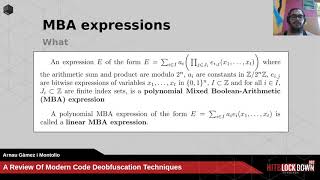
A Review of Modern Code Deobfuscation Techniques
Explore modern code deobfuscation techniques, from basic analysis to advanced semantic-based methods. Learn limitations of syntactic approaches and discover state-of-the-art program synthesis techniques.
The Trails of WINDSHIFT APT
Explore WINDSHIFT APT's unique cyber espionage tactics, including advanced spear phishing, macOS malware, and surveillance techniques. Learn about their focus on specific individuals and hard-to-attribute methods.
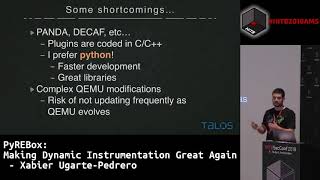
PyREBox - Making Dynamic Instrumentation Great Again
Explore PyREBox, an open-source reverse engineering tool for QEMU VM inspection, memory modification, and Python-based execution instrumentation. Learn its applications in malware analysis and debugging.
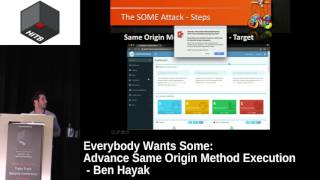
Everybody Wants SOME - Advance Same Origin Method Execution
Explore advanced Same Origin Method Execution attacks, demonstrating real-world vulnerabilities and new approaches to exploit callback endpoints across major platforms.
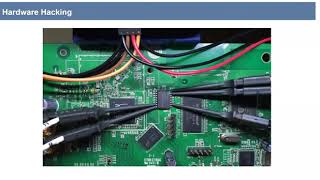
Qiling Framework - Build a Fuzzer Based on a 1day Bug
Learn to build a fuzzer using Qiling Framework, exploring cross-platform binary analysis and leveraging 1day bugs to potentially uncover 0day vulnerabilities. Hands-on lab covers installation, fundamentals, and advanced techniques.
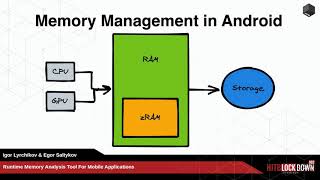
Runtime Memory Analysis Tool for Mobile Apps
Runtime memory analysis tool for mobile apps, automating common checks during penetration testing. Simplifies reverse engineering of obfuscated code for iOS and Android, tracking app behavior changes in real-time.
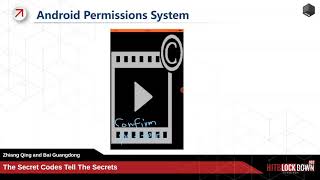
The Secret Codes Tell the Secrets
Exploración de códigos secretos en dispositivos Android, revelando vulnerabilidades de seguridad y métodos de bypass en teléfonos de principales fabricantes. Incluye demostraciones prácticas y herramientas de fuzzing.

How Hardware Boundaries Define Platform Security
Exploring how hardware component boundaries impact platform security, focusing on outsourced components, supply chain risks, and threat modeling gaps in modern hardware architectures.
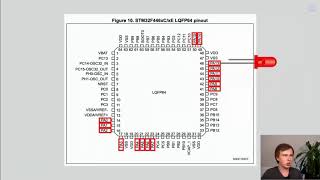
Firmware Hacking With Ghidra
Hands-on firmware hacking workshop using Ghidra for reverse engineering ARM Cortex-M architecture, followed by live demonstration of hardware glitching attacks on microcontrollers.
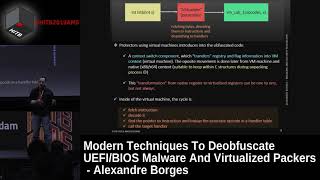
Deobfuscate UEFI - BIOS Malware and Virtualized Packers
Practical approach to reverse engineering obfuscated BIOS/UEFI malware and virtualized packers, using tools and techniques for code simplification and threat analysis.
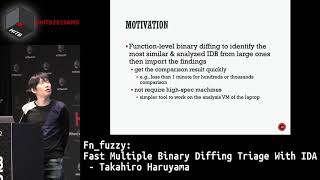
fn_fuzzy - Fast Multiple Binary Diffing Triage With IDA
Efficient binary diffing tool for IDA Pro, using fuzzy hashes to quickly compare and import function data from multiple IDBs, enhancing malware analysis productivity.
Reversing Mobile Malware
Explore live malware reversing techniques for Windows and Android, focusing on methodology and essential tools for identifying and analyzing malicious software samples.
Might As Well JUMP - Exploit Development For Java Serialization
Explore Java serialization exploit development, including 0day custom exploits, reverse engineering, and ROP techniques. Learn to break HMAC/MAC and create Python exploits for educational purposes.
Exploiting Hardcore Pool Corruptions in MS Windows Kernel
Exploración de técnicas avanzadas para explotar corrupciones del pool del kernel en Windows, cubriendo desde NT 4.0 hasta Windows 8, con énfasis en métodos confiables para diversos escenarios de corrupción.
Finding the Weak Link in Binaries
Comprehensive review of binary defenses across formats, OSs, and compilers. Learn to detect and understand modern protective mechanisms without source code access.
Attacking Software Tokens
Exploring vulnerabilities in software OTP tokens, demonstrating reverse engineering techniques and exploits for major vendors' tokens, and assessing obfuscation effectiveness.
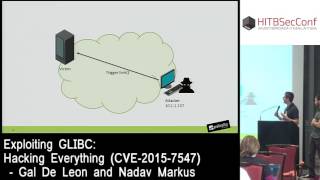
Exploiting GLIBC - Hacking Everything
Exploración detallada de la vulnerabilidad CVE-2015-7547 en glibc, demostrando técnicas de explotación remota y su impacto en diversos productos de software compilados con versiones antiguas.

Implementing Your Own Generic Unpacker
Detailed guide on creating a stealthy, efficient generic unpacker for Windows, covering kernel mechanisms, memory management, and PE loading. Includes implementation details and results on real-world samples.
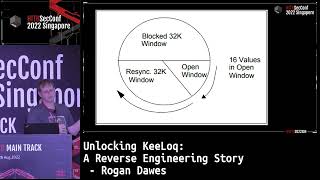
Unlocking KeeLoq - A Reverse Engineering Story
Reverse engineering KeeLoq systems: extracting firmware, decrypting transmissions, and integrating with home automation. Practical approach to exploiting known vulnerabilities in remote keyless entry systems.
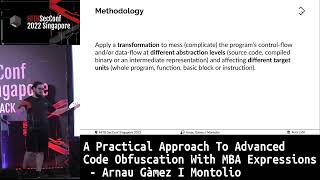
Advanced Code Obfuscation With MBA Expressions
Explore advanced code obfuscation techniques using Mixed Boolean-Arithmetic expressions to increase data-flow complexity and conceal sensitive data, with practical applications in building robust obfuscation primitives.