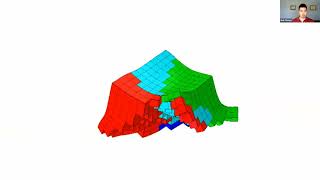
Embodiment Without Situatedness - An Embodied Perspective on Neural Architecture Search
Explore embodied perspectives on neural architecture search with Nick Cheney, examining the intersection of neurorobotics and complex systems in AI development and intelligence research.
Language Comprehension Requires Affordances
Explore how language comprehension is grounded in physical interactions with the world, challenging traditional views of cognition and offering insights into embodied intelligence.
Why Intelligent Reasoning Must Be Embodied
Explore the philosophical perspective on embodied intelligence and its implications for AI, presented by Lisa Miracchi from the University of Pennsylvania's GRASP Lab and MindCORE.
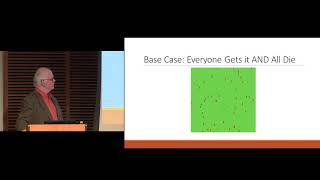
Frontiers of Computational Social Science - Agent-Based Modeling and Artificial Societies
Explore agent-based modeling in computational social science, from playground simulations to global epidemic models, with insights on future developments in neuro-cognitive agents and their applications.
Moving Beyond the Brain in a Jar - The Promise and Challenge of Studying Interacting Brains
Explores how social interactions shape human thought and behavior, presenting studies on mental model alignment through conversation and its impact on real-world social networks.
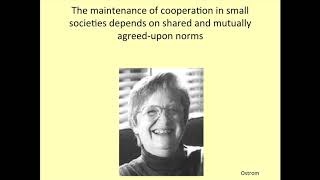
The Ecology of Society - Complex Adaptive Systems in Nature and Human Societies
Explore ecological and economic systems as complex adaptive systems, examining emergent behaviors, critical transitions, and evolutionary forces shaping resource allocation and cooperation.
Turing Test for Free Will - Determinism and Unpredictability in Decision-Making
Explore the interplay of determinism, randomness, and free will in decision-making processes. Discover a proposed 'Turing test' for free will and its implications for human and artificial intelligence.
The Physics of Brain Network Architecture, Function, and Control
Explore brain network architecture and dynamics using advanced imaging and computational tools. Discover control points, activity trajectories, and network evolution from childhood to adulthood.
The Peculiar Logic of Human Values
Explore the conceptualization of human value systems, including types, subjectivity vs. objectivity, and their impact on behavior and social interactions.
A Cooperative Species: Why Policies Designed for "Wicked Men" Fail - Part 3
Explore how ethical dispositions and cooperative motivations impact societal challenges, challenging Machiavelli's approach and examining the interplay between policy and human behavior.

A Cooperative Species - Altruism, Parochialism, and War
Explore how war and hostility may have shaped human morality through computer simulations of alternative historical trajectories, challenging our understanding of altruism and cooperation.
A Cooperative Species - Evolutionary Origins of Human Altruism - Lecture 1
Explore the evolutionary origins of altruistic cooperation, challenging traditional notions of 'selfish genes' and Homo economicus through archaeological, genetic, and climatic evidence.
The Rise of the Speaking Machine - Human Language Evolution
Explore the fascinating journey of human language evolution, from its origins to modern complexities, with insights into cognitive development and cultural impacts.

Appealing to Intuitions - The Necessity and Limitations in Mathematics and Ethics
Explore the role of intuitions in reasoning and decision-making, from mathematics to ethics. Discover why we can't eliminate intuitions despite their limitations and paradoxes.

Wild and Domesticated Religions - How the Machinery of Religion Evolved
Explore the evolution of religions as cultural survivors, examining their design, adaptations, and challenges in a rapidly changing world.

Devil or Angel - Genetic Conflicts in Brain and Behavior
Explore genetic conflicts in the brain, self-defeating behaviors, and evolutionary clashes between maternal and paternal genes influencing decision-making and behavioral patterns.
The Most Human Human - What Artificial Intelligence Teaches Us About Being Alive
Explore the intriguing intersection of AI and human nature, examining what our interactions with machines reveal about our own humanity and consciousness.

How Interaction of Mind and Environment Shapes Social Judgments
Explore how the interplay between cognitive processes and environmental factors influences our social perceptions and decision-making in this insightful lecture.

Eating Our Words: What the Language of Food Reveals About History and Culture
Explore how language in food reveals insights on history, economics, and culture. From ketchup's origins to menu linguistics, uncover surprising connections between words and cuisine.
Why We Kill - Violence as Socialization
Explores the "violentization" model of criminologist Lonnie Athens, examining how individuals can be socialized into committing violent acts through a four-stage process, challenging common assumptions about violence.
Is Free Will an Illusion? What Can Cognitive Science Tell Us?
Explore the philosophical debate on free will, determinism, and moral responsibility with Daniel Dennett. Examine cognitive science insights and their implications for our understanding of human agency and ethics.