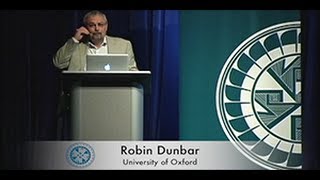
Why the Internet Won't Get You Any More Friends
Explore the biological limits of human social networks and why digital connections don't expand our meaningful relationships beyond our brain's cognitive capacity.
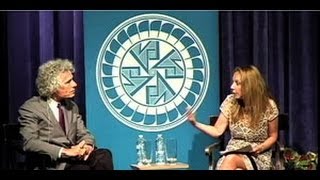
On Moral Progress - Is the Human Conscience Led by the Head or the Heart?
Explore the role of reason and emotion in moral progress with Steven Pinker and Rebecca Newberger Goldstein, examining historical advancements in human rights and societal ethics.
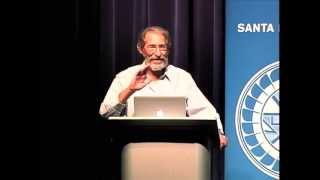
The Minds of Children - Understanding Infant Intelligence and Consciousness
Explore how children's prolonged dependency fosters unique human consciousness, learning abilities, and moral understanding, challenging traditional views on infant cognition and development.
Keystone Individuals in Animal Societies - Pros and Cons
Explore the impact of influential individuals in animal societies, focusing on social spiders in African deserts. Learn about their effects on group dynamics and adaptability.
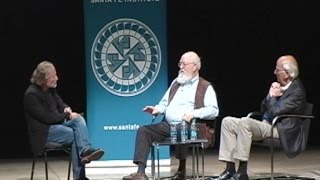
Caught in the Pulpit: From Religion to Reason - A Play and Discussion
Exploring clergy's journey from belief to atheism through a play based on interviews, followed by a discussion on brain-mind mechanisms in religious belief and societal implications.
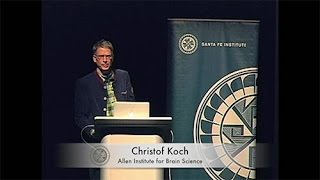
Consciousness in Biological and Artificial Brains
Exploration of consciousness in biological and artificial brains, discussing Integrated Information Theory and why digital systems may never truly experience consciousness like humans do.
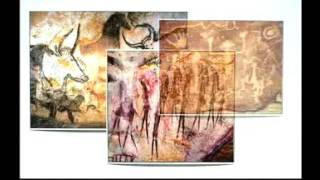
All Watched Over by Machines of Loving Grace - The Future of Biological Intelligence
Explore the future of biological intelligence in a world of distributed machine intelligence and potential cultural mechanisms surpassing human analytical capabilities.
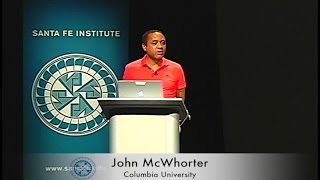
The Language Hoax: Debunking Linguistic Determinism
Debunking the myth that language shapes worldview, John McWhorter explores how this belief can lead to dangerous cultural assumptions and emphasizes our shared human experiences.

Smart Machines and What They Can Still Learn from People
Cognitive scientist Gary Marcus explores AI's progress, challenges, and potential lessons from human cognition, offering insights into the future of machine intelligence.

Touching a Nerve: The Self as Brain
Explore the biological basis of consciousness, identity, and decision-making with neurophilosopher Patricia Churchland as she examines how brain activity shapes our thoughts, feelings, and experiences.

Questioning the Science of Gender Difference - A New Perspective
Explores how cultural beliefs influence gender research, challenging long-held assumptions about biological differences between sexes and offering a fresh perspective on gender in society.

Quantifying Resilience in Complex Systems - From Humans to Ecosystems
Explore quantitative methods for measuring resilience in diverse systems, from ecosystems to human psychology, using critical slowing down and probabilistic approaches to understand tipping points and recovery.
Gene-Culture Co-Inheritance of Behavioral Traits: A Price Equation Approach
Explores gene-culture co-inheritance of behavioral traits using a Price equation model, examining how cultural selection can overcome genetic selection and modify genetic selection pressures for complex phenotypes like altruism.
Evolutionary Theory and Human Decision-Making: Reconciling Rationality with Biological Constraints
Exploring how evolutionary theory can explain human decision-making, challenging traditional views of rationality and offering insights into behavioral economics anomalies.

Complexity and the Future of Learning and Education
Explore principles of complexity in life, scale, and civilization, and their impact on future learning and education with experts from leading institutions.
Coarse-Graining, Renormalization and Universality - Lecture 1
Explore coarse-graining, renormalization, and universality in complex systems. Learn key concepts and applications in mathematical, biological, cognitive, and social sciences.
Why We Come to the Aid of Our Friends - An Evolutionary Puzzle
Explore the evolutionary puzzle of unconditional friendship, its benefits, and how humans avoid exploitation. Discover the origins, cultural variations, and comparisons to social ties in other species.
Computation in Natural Systems - Mesoscopic Theories and Information Processing
Explore computation in natural systems, from primate behavior to physics, examining how information processing occurs across scales and the implications for understanding complex systems.
Steps Toward a Cognitive Science of Prehistory
Exploring cognitive science in prehistory through metaphors, cultural evolution, and archaeological evidence from Mesa Verde society, pottery, and linguistic patterns.
The Evolution of Behavior Within and Between Groups
Explore the dynamics of behavioral evolution within and between groups, examining how social interactions shape collective outcomes and adaptive strategies.
Parables from Complex Systems and Their Possible Meanings for Our Lives - Lecture 1
Explore complex systems through parables, uncovering insights into human life and society. Gain a unique perspective on interconnectedness and emergent behaviors in various systems.