Mercury Transit 2016 Live Hangout - Part 1
Experts discuss Mercury's 2016 solar transit, covering its rarity, observation methods, scientific importance, and related space missions in this live hangout by Europlanet.
The Search for Habitable Worlds by Anand Narayanan
Explore techniques for detecting exoplanets, extracting data from observations, and searching for biomarkers in exoplanet atmospheres. Learn about the quest for habitable worlds beyond our solar system.
What White Dwarfs Reveal About Rocky Exoplanets and Exo-asteroids - JJ Hermes
Explore white dwarfs as cosmic laboratories, revealing insights into exoplanets, stellar evolution, and the composition of rocky bodies in the universe. Learn about recent discoveries and their implications for astrophysics.

Solar System Tour
Embark on a captivating journey through our solar system, exploring planets, moons, and dwarf planets. Ideal for young astronomers eager to discover the wonders of space.
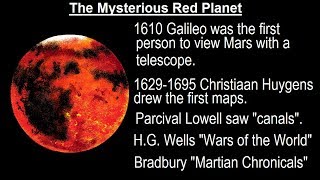
Astronomy - Mars
Explore Mars' mysteries, from its wet history to modern missions. Learn about surface features, atmosphere, moons, and the search for life on the Red Planet.
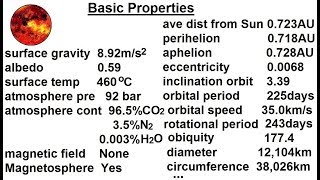
Astronomy - Venus
Comprehensive exploration of Venus, covering its properties, geography, atmosphere, and exploration history. Includes detailed calculations and explanations of planetary phenomena.
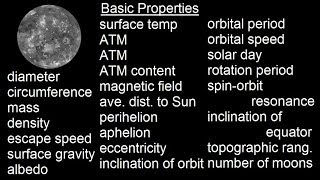
Astronomy - Mercury
Comprehensive exploration of Mercury's properties, orbit, geology, atmosphere, and space missions, including detailed analysis of Mariner 10 and MESSENGER missions and their discoveries.
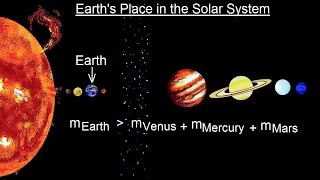
Astronomy - Earth as a Planet
Explore Earth's unique features, interior structure, plate tectonics, atmosphere, and place in the solar system through comprehensive lectures on planetary science and geology.
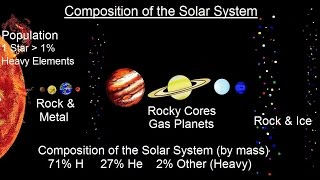
Astronomy - Origin of the Solar System
Explore the formation and evolution of our solar system, from its composition and age to planetary development and detection methods for exoplanets.
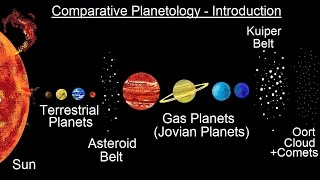
Astronomy - The Solar System - Comparative Planetology
Comprehensive exploration of solar system planets, comparing their physical properties, orbits, atmospheres, and compositions. Includes discussions on moons, asteroids, comets, and water distribution.
Astronomy - The Solar System
Comprehensive exploration of the solar system, covering planetary characteristics, orbits, composition, and celestial bodies. Gain in-depth knowledge of comparative planetology and astronomical phenomena.
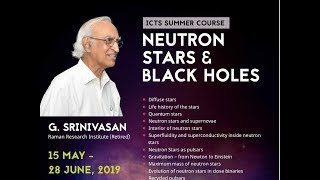
Neutron Stars and Black Holes - Lecture 6: Pulsars and Their Properties
Explore pulsars, neutron stars, and their remarkable properties. Delve into the Crab Nebula's history, pulsar discovery, and radiation mechanisms. Gain insights into magnetospheres and electrodynamics of these fascinating cosmic objects.
Pulsars: Properties, Radiation, and Discovery - Lecture 8
Explore pulsars, neutron stars, and their remarkable properties in this comprehensive lecture. Learn about their discovery, radiation mechanisms, and role in astrophysics.
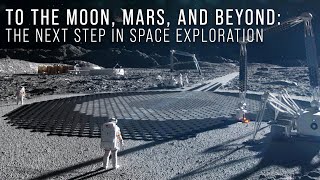
To the Moon, Mars, and Beyond - The Next Step in Space Exploration
Explore the Artemis mission and its role in future lunar and Mars expeditions with NASA's Thomas Zurbuchen and MIT's Dava Newman, moderated by Brian Greene. Discover the latest in space exploration advancements.
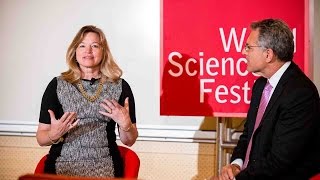
Pioneers in Science - Ellen Stofan, NASA Chief Scientist and Planetary Geologist
Engage with NASA chief scientist Ellen Stofan as she discusses her career, inspirations, and NASA's science programs, offering insights into planetary geology and space exploration.
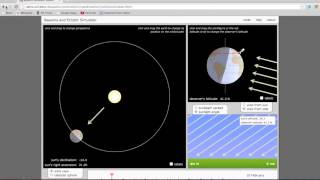
Introductory Astronomy - Causes of the Seasons
Explore Earth's seasonal changes through an in-depth examination of astronomical factors, utilizing interactive simulations and expert insights to enhance understanding of this natural phenomenon.
Origins of Life - Earth's Early Atmosphere
Explore Earth's early atmosphere, the young Sun problem, and theories on life's origins, including hydrothermal vents and surface environments.
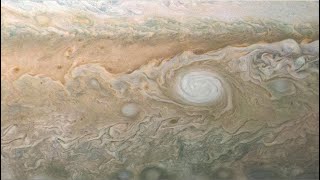
Get to Know a Scientist - Geophysicist Jon Aurnou
Explore fluid dynamics of Earth's core and planetary bodies with UCLA geophysicist Jon Aurnou. Visit the Spin Lab for fascinating demonstrations and insights into cutting-edge research techniques.
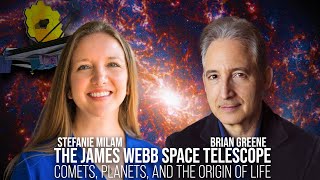
James Webb Space Telescope - Comets, Planets, and the Origin of Life
Explore JWST's groundbreaking discoveries about comets, planets, and Earth's water origins. Join Brian Greene and lead scientist Stefanie Milam for cutting-edge insights into our cosmic neighborhood.
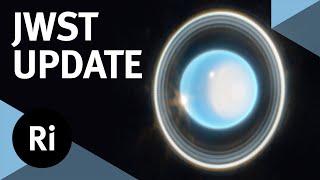
What Has the James Webb Space Telescope Discovered in Its First Year? – With Naomi Rowe-Gurney
Explore the James Webb Space Telescope's groundbreaking discoveries in our Solar System, from Mars to the Kuiper Belt, and learn about its unique capabilities, launch, and future missions in this comprehensive presentation.
Exoplanets and the Search for Life in the Universe - With Chris Impey
Explore the fascinating world of exoplanets and the search for extraterrestrial life. Learn about habitability, space exploration, and the potential for discovering Earth-like planets in our vast universe.