ALSEP Program and Analysis of the Apollo Seismic Data by Yosio Nakamura
Explore Apollo's seismic experiments on the Moon, analyzing data to understand lunar structure and seismology. Gain insights into pioneering lunar geophysics research.
Multi-Messenger Observations of Decihertz GW Sources by Enrico Cappellaro
Explore multi-messenger observations of decihertz gravitational wave sources, focusing on lunar detection methods and their potential for breakthrough discoveries in astrophysics.
Observing EM Counterparts to Decihertz GW Sources by Varun Bhalerao
Exploring electromagnetic counterparts to decihertz gravitational wave sources, covering infrared to high-energy observations, mission comparisons, and challenges in detecting various astrophysical phenomena.
LION - Laser Interferometer on the Moon by Marie-Sophie Hartig and Pau Amaro Seoane
Explore lunar gravitational-wave detection concepts, technologies, and scientific potential. Discuss mission ideas, payload innovations, and implications for multi-messenger astronomy and lunar geophysics.
GW Signals from Tidal Disruption Events in the Decihertz Regime by Martina Toscani
Explore gravitational wave signals from tidal disruption events in the decihertz regime, focusing on lunar detection methods and their potential for breakthrough observations in astrophysics.
Lunar Surface Composition by Shyama Narendranath
Explore lunar surface composition and its implications for gravitational-wave detection on the Moon. Learn about cutting-edge research and mission concepts in lunar exploration and astrophysics.
The Lunar South Pole Landing Mission - Joint Program of JAXA-ISRO by Dai Asoh
Explore Japan and India's joint lunar mission, focusing on the South Pole landing. Learn about spacecraft design, mission objectives, and international collaborations in lunar exploration.
Moon- Science and Exploration at ESA by Luigi Cacciapuoti
Explore ESA's lunar science and exploration initiatives, focusing on gravitational-wave detection opportunities and breakthrough multi-messenger observations in the decihertz band.
Mineral Mapping & Volatiles at the Lunar Poles
Explore lunar mineral mapping and volatiles at the poles in this talk on gravitational-wave detection missions, discussing technological advancements and scientific opportunities for breakthrough observations.
Radar Observations of the Lunar Poles by Sriram Saran Bhiravarasu
Explore radar observations of lunar poles, discussing techniques, findings, and implications for future lunar missions and scientific understanding of Earth's celestial neighbor.
Digital Elevation Model of Lunar Poles with Cameras On-Board Chandrayaan-2 by Amitabh
Explore lunar pole topography using Chandrayaan-2 cameras to create digital elevation models, advancing our understanding of the Moon's polar regions.
Overview of the Indian Lunar Exploration Program by Tirtha Pratim Das
Explore India's lunar missions, their scientific objectives, and future plans. Gain insights into the country's space exploration efforts and contributions to lunar research.
LGWA Science White Paper by Silvia Piranomonte and Andrea Melandri
Explores lunar gravitational-wave detection concepts, technologies, and scientific opportunities in the decihertz band, discussing mission planning and potential breakthroughs in multi-messenger astronomy.
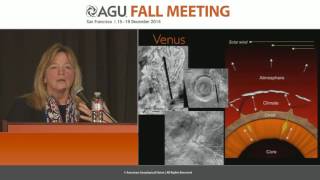
Searching for Earth-like Planets in Our Solar System and Beyond
Explore Earth-like planets in our solar system and beyond, comparing climates of Mars, Venus, and Titan to Earth's. Learn about exoplanet detection and future space missions.
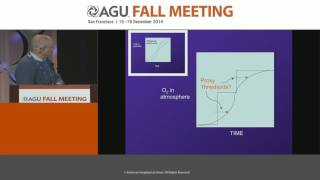
Ocean Ridges and Oxygen - Consequences for Planetary Habitability
Explore the connection between ocean ridges and oxygen, examining their role in planetary habitability and the Great Oxygenation Event through mass balance and thought experiments.
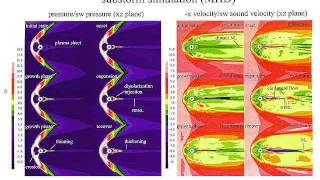
Van Allen Lecture - Exploring Space Physics
Explore magnetospheric physics with A. Nishida's Van Allen Lecture from the 2000 AGU Spring Meeting, offering insights into space science research and discoveries.
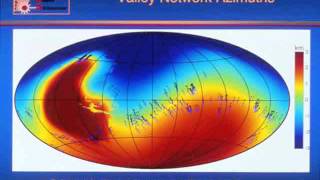
Exploring Planetary Surfaces - Carl Sagan Lecture
Explore planetary science insights with Maria T. Zuber's Carl Sagan Lecture, offering valuable perspectives on space exploration and celestial bodies despite the video's age.
Dawn Science Update: Ceres Composition and Features - Press Conference
Scientists discuss new findings on Ceres' composition and intriguing features from NASA's Dawn spacecraft, including impact craters, water ice, and cold traps.
Defending the Home Planet: Assessing and Mitigating Asteroid and Comet Impacts
Researchers discuss latest advances in assessing asteroid and comet impact dangers, including land vs. sea impacts, and potential defense strategies against these cosmic threats.
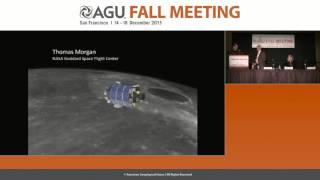
Fluctuations Within the Lunar Dust Cloud - LADEE Mission Findings
NASA researchers discuss observations from the LADEE mission, exploring the moon's exosphere and its interactions with the lunar surface, solar rays, and asteroids, providing insights for future planetary exploration.
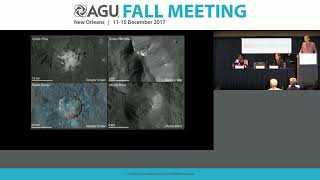
New Dawn Findings at Ceres - Bright Regions and Occator Crater
Explore NASA's Dawn mission findings on Ceres, including the discovery of over 300 bright patches and the intriguing Occator crater. Learn about the formation of surface features and their implications.