
Why Did the Earth Totally Freeze for 100 Million Years? - The Snowball Earth Hypothesis
Explore the fascinating 100-million-year global freeze event, its causes, and Earth's eventual thaw. Uncover evidence, theories, and the profound impact on our planet's evolution and life.
Earth's Magnetic Field: Origins, Function, and Future Challenges
Explore Earth's magnetic field: its origin, importance for life, and potential future weakening. Learn about solar flares, geomagnetic reversals, and their impacts on our planet and civilization.

What Would Earth Be Like Without Life?
Explore Earth's evolution without life, examining atmospheric composition, geological processes, and planetary dynamics in this thought-provoking scientific journey.
The Weird and Wonderful World of Sedimentology
Explore diverse sedimentary structures from ice to deserts, Earth's largest formations, and even exoplanets in this captivating journey through the fascinating field of sedimentology.
Earth Science - The Jovian Planets and Small Solar System Bodies
Explore Jupiter, Saturn, Uranus, Neptune, and smaller celestial bodies in our solar system, including moons, asteroids, comets, and dwarf planets like Pluto.
Earth Science - The Terrestrial Planets
Explore the fascinating geology and unique characteristics of Mercury, Venus, Mars, and the Moon, including their surfaces, volcanic activity, and tectonic processes.

Building New Worlds in Protoplanetary Disks
Explore planet formation in protoplanetary disks, examining theories and observations linking exoplanets to their natal environments. Dive into the mystery of how diverse worlds emerge from cosmic dust.

Terra Sapiens: The Human Chapter in the History of the Earth
Explore Earth's geological history and humanity's impact through the lens of planetary science. Gain insights into our current era and its implications for intelligent life and civilization's future.

Exoplanets - A Search for New Worlds
Explore the fascinating world of exoplanets, their discovery methods, and what they reveal about our place in the universe. Learn about planetary formation, composition, and the search for habitable worlds.

Star Formation in Orion
Explore star formation in Orion through observations from space telescopes, uncovering the birth of stars and enhancing our understanding of stellar origins and evolution.

Webb in Three Acts - The Telescope, The Science, The Legacy
Explore the James Webb Space Telescope's groundbreaking capabilities in infrared astronomy, from observing distant galaxies to studying exoplanets, and its potential impact on our understanding of the universe.

Dawn: A Journey to the Early Solar System
Explore the Dawn mission's journey to Vesta and Ceres, uncovering secrets of the early solar system through advanced spacecraft technology and scientific instruments.
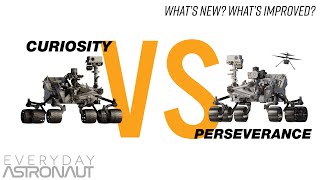
NASA's Perseverance Mars Rover vs Curiosity - What's New? What's Improved?
Detailed comparison of NASA's Perseverance and Curiosity Mars rovers, exploring their designs, instruments, and missions. Includes launch, transit, and landing information for Perseverance.
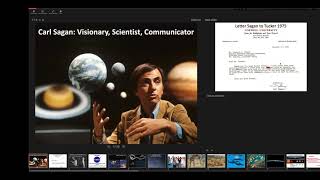
Carl Sagan Lecture Series - Introduction to Planetary and Earth Science
Explore planetary science through Carl Sagan's vision, covering NASA missions, Earth's atmosphere, climate change, and space exploration. Gain insights from a NASA scientist on Sagan's enduring influence.
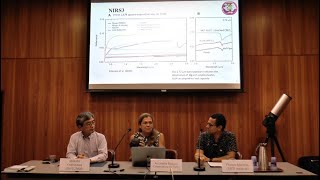
Mission Hayabusa2 and SETI Research - Press Conference Highlights
Explore Hayabusa2's impact experiment, Ryugu's surface variations, and Lucy mission's target occultation. Gain insights into asteroid exploration and SETI research from leading experts.
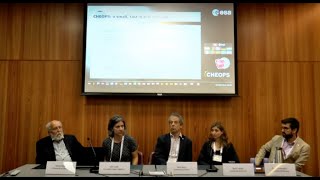
Cheops Mission Update - Exoplanets in Context
Explore the Cheops exoplanet mission's status, science goals, and context within space exploration through expert presentations and discussions on cutting-edge planetary research.
Volcanism on Mars - History, Features, and Significance
Explore Mars' volcanic history, from massive shield volcanoes to explosive eruptions, and their impact on the planet's surface. Gain insights into Martian geology and potential for past life.
Back to the Moon: Scientific Themes and European Exploration Opportunities
Explore the new era of lunar exploration, scientific themes, and Europe's role in future missions. Insights on recent discoveries, upcoming projects, and the Moon's potential for human activities.
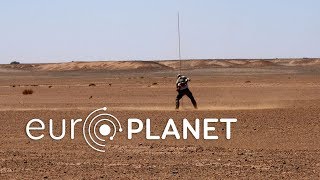
Chasing the Devil - What Dust Devils on Earth Tell Us About Mars
Explore dust devils on Earth and Mars, their formation, characteristics, and impact on planetary atmospheres. Learn about field research methods and equipment used in studying these phenomena.
Sounds of the Earth's Magnetosphere in Electroacoustic Music - Inspired by Cosmic Space
Explore the universe through sound, from Earth's magnetosphere to cosmic phenomena, in this captivating lecture blending astronomy and electroacoustic music.
Mercury Transit 2016 - Expert Panel Discussion Part 2
Experts discuss Mercury's 2016 transit across the Sun, exploring its significance, safety measures, and scientific insights. Learn about Mercury's atmosphere, missions, and unique characteristics.