Earth Science - A Tour of the Solar System
Explore the diverse worlds of our solar system, from rocky terrestrials to gas giants, examining their unique features, interiors, atmospheres, and geological activities.
Retaining an Atmosphere - Planetary Conditions and Atmospheric Dynamics
Explore planetary atmospheres, escape velocity, and molecular dynamics. Understand why some planets retain atmospheres while others don't, and learn about atmospheric temperature profiles.
Ciencia Planetaria y Carreras - Condiciones Ambientales en Marte
Explora las condiciones meteorológicas de Marte y la misión Mars 2020 con el Dr. Germán Martínez. Descubre cómo se maneja un rover en otro planeta y las oportunidades en ciencia planetaria.
Exoplanetas: Atmosferas e Habitabilidade
Explore exoplanets, their atmospheres, and potential habitability with insights from expert Adriana Valio in this engaging research presentation.
General Astronomy - An Introduction to Planetary Atmospheres
Explore planetary atmospheres, their composition, and effects like atmospheric pressure and the greenhouse effect. Compare Earth's atmosphere with other planets.

Star Formation in Orion
Explore star formation in Orion through observations from space telescopes, uncovering the birth of stars and enhancing our understanding of stellar origins and evolution.

Webb in Three Acts - The Telescope, The Science, The Legacy
Explore the James Webb Space Telescope's groundbreaking capabilities in infrared astronomy, from observing distant galaxies to studying exoplanets, and its potential impact on our understanding of the universe.
Mercury Transit 2016 - Expert Panel Discussion Part 2
Experts discuss Mercury's 2016 transit across the Sun, exploring its significance, safety measures, and scientific insights. Learn about Mercury's atmosphere, missions, and unique characteristics.
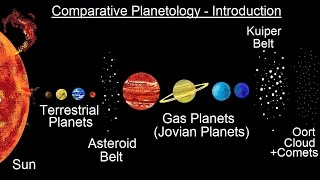
Astronomy - The Solar System - Comparative Planetology
Comprehensive exploration of solar system planets, comparing their physical properties, orbits, atmospheres, and compositions. Includes discussions on moons, asteroids, comets, and water distribution.
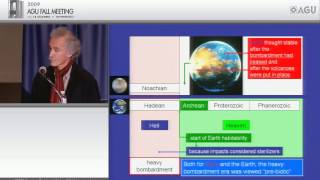
Mars Exploration: Bridging Our Past and Future
Explore Mars's geological history and its potential for hosting life through cutting-edge space missions and scientific discoveries, bridging our understanding of the Red Planet's past and future.
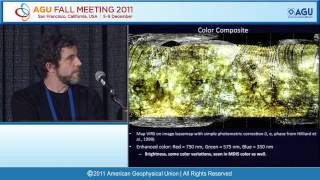
Mercury - The View from Orbit II
Explore the latest findings from Mercury's orbit, including new data and insights from recent space missions. Discover the planet's unique features and geological history.
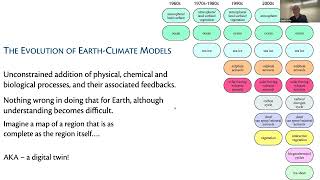
Planetary Climates and Paleoclimates - Old Problems and New Approaches
Explore planetary climates and paleoclimates, examining longstanding issues and innovative solutions with Professor Geoffrey Vallis from the University of Exeter.

Latest NASA Juno Mission Science Results
Latest findings from NASA's Juno mission on Jupiter's polar cyclones, magnetosphere, Great Red Spot, atmosphere, and interior. Highlights scientific and aesthetic contributions of citizen scientists to the mission.
Disappearing Solar Wind - New Results from NASA MAVEN Mission
Explore MAVEN's groundbreaking observations of Mars' atmospheric expansion due to a solar wind disappearance, and its implications for understanding Sun-Mars interactions and planetary evolution.
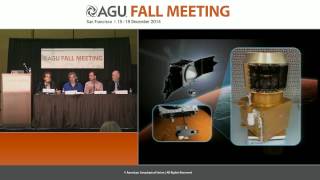
Early Results from the MAVEN Mission - Fall 2014
Early findings from MAVEN mission exploring Mars' upper atmosphere, including composition changes, solar interactions, and atmospheric loss processes.
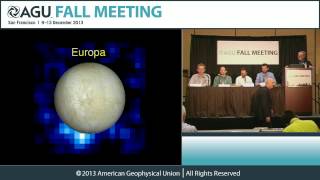
New Observations of Europa from the Hubble Space Telescope
Explore groundbreaking Hubble observations of Europa, revealing unexpected insights into its icy shell and subsurface ocean, challenging previous understanding of Jupiter's intriguing moon.

Pluto and Charon in the Rear View - 2017 Fall Meeting
Explore the latest findings on Pluto and Charon from the New Horizons mission, and preview the upcoming flyby of Kuiper Belt Object MU69, in this comprehensive planetary science session.
The Wonders of Atmospheres Across the Solar System
Explore the fascinating atmospheres of planets and moons in our Solar System, uncovering their unique characteristics and scientific significance.
Modeling Planetary-Scale Fluid Flows in the Laboratory
Explore planetary-scale fluid dynamics through laboratory experiments, from Rossby waves to exoplanet atmospheres. Gain insights into climate transitions and extreme weather patterns.
The Dynamics of Oceanic Vortices
Explore mesoscale vortices in Earth's oceans, their connections to regional currents and submesoscale structures, using observations and models. Compare with other planetary atmospheres.

Getting Beyond Earth - Exploring the Solar System
Explore the solar system through expert presentations on past and present missions, gaining insights into planetary bodies and Earth while understanding the importance of continued space exploration.