Arguments for the Existence of the Soul - Free Will and Near-Death Experiences
Explore philosophical arguments for the soul's existence, focusing on free will, near-death experiences, and Cartesian dualism. Examine the compatibility of determinism and free will in this thought-provoking lecture.
Plato's Arguments for the Immortality of the Soul - Part 3 - Lecture 8
Explore Plato's argument for soul immortality through simplicity, examining objections and analogies. Delve into philosophical reasoning on the nature of the soul and its potential indestructibility.
Personal Identity Across Space and Time - The Soul Theory - Lecture 10
Explore the philosophical concept of personal identity across time and space, examining the soul theory and its challenges in understanding what makes us the same person over time.
The Nature of Death and Believing in One's Mortality - Lecture 15
Explores the concept of death, challenging beliefs about mortality through philosophical analysis and literary examples like Tolstoy's Ivan Ilych. Examines the definition of death and our psychological resistance to accepting it.

Fear of Death - Emotional Responses and Philosophical Perspectives
Explore philosophical perspectives on death's impact on life, examining fear, anger, and sorrow as emotional responses, and considering how contemplating mortality can shape our behavior and outlook.
Other Bad Aspects of Death - Part II
Explores death's ubiquity, impact on life's value, and whether contemplating mortality enhances or hinders living. Examines the human condition and potential benefits of confronting or avoiding thoughts about death.

Plato's Arguments for the Immortality of the Soul - Part II
Explore Plato's arguments for the soul's immortality, including the nature of forms, recycling, and recollection. Delve into philosophical reasoning on non-physical entities and their implications.

Arguments for the Existence of the Soul - Part I
Explore philosophical arguments for the soul's existence through inferences to best explanation, examining physicalist and dualist perspectives on the mind and potential evidence for the soul.
The Value of Life and Bad Aspects of Death - Lecture 20
Explores philosophical theories on the value of life and examines aspects contributing to the badness of death, including inevitability, variability, and unpredictability.

Introduction to Plato's Phaedo - Arguments for the Existence of the Soul, Part II
Explore arguments for the soul's existence, focusing on free will as a key defense. Delve into dualism vs. physicalism and examine consciousness, emotions, and creativity in machines.
Plato's Arguments for the Immortality of the Soul - Part 4
Explore Plato's arguments for soul immortality, including simplicity, essential properties, and responses to counterarguments. Gain insights into philosophical perspectives on the nature of the soul and its potential indestructibility.
The Value of Life and Immortality - Part 1
Explores the desirability of immortality and theories of well-being, challenging hedonism through thought experiments to understand what makes life worth living and meaningful.

The Badness of Death - Dying Alone and Value Theory - Lecture 16
Explores the concept of dying alone, challenges common beliefs about mortality, and introduces value theory to examine if death is inherently bad. Offers philosophical perspectives on confronting one's own mortality.
Personal Identity: Body Theory and Personality Theory - Part II
Explores philosophical theories of personal identity: body view and personality view. Examines implications of equating identity with physical body or unique set of beliefs, memories, and goals.

Dante's Divine Comedy: Purgatory Cantos X-XII and XVI-XVII - Lecture 12
Explore Dante's Divine Comedy through theological and artistic lenses, examining pride, wrath, and human imagination in Purgatory cantos X-XII and XVI-XVII.

Dante's Paradise: Justice, Contemplation, and Vision - Cantos XVIII, XIX, XXI, XXII
Exploración de la justicia divina, la alteridad y la contemplación en el Paraíso de Dante, examinando las fronteras entre culturas y tradiciones espirituales.
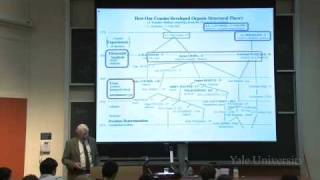
Berzelius, Gay-Lussac, and Davy - Advances in Chemistry from 1805-1832 - Lecture 21
Explore key developments in early 19th-century chemistry, including electrolysis, dualism, and the radical theory, through the work of Berzelius, Gay-Lussac, Davy, Wöhler, and Liebig.

Marx's Theory of Capitalism - Foundations and Labor Theory of Value
Explore Marx's theory of capitalism, focusing on wealth creation, labor theory of value, exploitation, and surplus value. Gain insights into the foundations of Marxist economic thought.
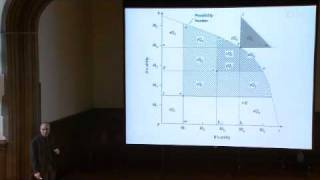
From Classical to Neoclassical Utilitarianism - Moral Foundations of Politics
Explore neoclassical utilitarianism's economic foundations, comparing it with classical utilitarianism. Examine key concepts like Pareto principle and indifference curves, and their implications for redistribution and status quo.

Moral Foundations of Politics - The Trial of Adolf Eichmann and Government Legitimacy
Explore the moral complexities of the Eichmann trial, examining governmental legitimacy and the ethical foundations of political systems through critical analysis and discussion.
Moral Foundations of Politics - Introduction and Course Overview
Introduction to political philosophy course exploring government legitimacy through Enlightenment traditions, anti-Enlightenment thinking, and democratic theory. Covers key concepts and course structure.