The Public Philosopher - Healthcare Policy and the American Dream
Explore healthcare policy, social welfare, and the American Dream in a lively debate led by philosopher Michael Sandel, engaging diverse perspectives on economic and social issues.

The Writer and the Critic - Marilynne Robinson and James Wood in Conversation
Pulitzer Prize-winning author Marilynne Robinson engages in a thought-provoking dialogue with literary critic James Wood, exploring literature, religion, and contemporary issues in American culture.
The Political Ethics of the Strike
Explore the ethical and historical foundations of workers' right to strike, examining its significance, challenges, and implications for workplace dynamics and social justice.
Jerusalem: What Sharing a City Means
Explore Jerusalem's complexities through a thought-provoking dialogue between Sari Nusseibeh and Homi Bhabha, delving into the challenges and possibilities of sharing this historic city.
Feeling the Way to Truth - Rethinking Modern Philosophy's Development
Exploring the overlooked contributions of women in modern philosophy's development, challenging assumptions and advocating for a more inclusive understanding of philosophical history.
Going Beyond the Here and Now - Counterfactual Simulation in Human Cognition
Explore how counterfactual simulation shapes human understanding of causality, responsibility, and decision-making in physical and psychological domains through innovative cognitive research.

Safety and Liveness of Robot Behaviors
Explore formal methods for designing robots, guaranteeing behavior, and identifying potential issues. Learn about safety and liveness properties in robotic systems, including multi-robot and human-robot interactions.
The Machineries of Doubt & Disinformation
Explore the machinery of doubt and disinformation in science and politics, from tobacco to climate change. Learn about tactics used to spread misinformation and challenges in maintaining informed skepticism in the digital age.
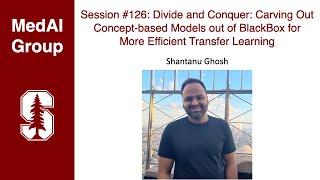
Divide and Conquer - Concept-based Models for Efficient Transfer Learning
Exploring concept-based interpretable AI models for efficient transfer learning in healthcare, focusing on generalizability and minimal data requirements for domain adaptation in medical imaging.
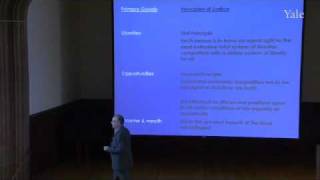
Distributive Justice and the Welfare State - Moral Foundations of Politics
Explore Rawls's difference principle and its implications for distributive justice, examining critiques and comparisons with other philosophical approaches to wealth distribution.

The Burkean Outlook - Edmund Burke's Anti-Enlightenment Philosophy
Explore Edmund Burke's conservative philosophy, emphasizing cautious social change, traditional values, and rejection of Enlightenment ideals in political thought and societal progress.
Contemporary Communitarianism - Moral Foundations of Politics - Lecture 20
Explore contemporary communitarianism and MacIntyre's critique of Enlightenment philosophy, examining emotivism, instrumentalism, and the concepts of practices and virtues in moral foundations.
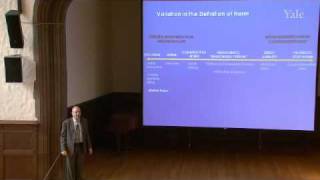
Limits of the Neoclassical Synthesis - Moral Foundations of Politics
Explores ambiguities in Mill's harm principle through examples like prostitution, free trade, and discrimination, revealing how defining and calculating harm involves political choices, challenging the Enlightenment ideal.

Flourishing and Attachment in Human Nature - Philosophy and Science
Explores the impact of social proximity on moral behavior and the crucial role of attachment and social relationships in human development and well-being, drawing from psychological studies and cross-cultural research.

Philosophy and the Science of Human Nature - Introduction
Interdisciplinary exploration of human nature, examining happiness, morality, and political philosophy through philosophy, psychology, economics, and literature. Includes thought-provoking examples and unique insights.

Introduction to Freshman Organic Chemistry - How Do You Know?
Explore the foundations of scientific inquiry through experimentation and logic, using historical examples to illustrate key principles in organic chemistry and scientific thinking.

Marx and Schumpeter on Capitalism's Dynamic Nature - Lecture 4
Explore Marx and Schumpeter's theories on capitalism's constant evolution, critiquing Marxist ideas and examining creative destruction through historical examples of technological revolutions.

The Logic of Science - Principles of Evolution, Ecology and Behavior
Explore the evolution of scientific thought, including falsifiability, revolutions, and creativity. Learn how philosophy influences modern scientific approaches and the boundaries of scientific knowledge.

The Known World by Edward P. Jones - Narrative Techniques and Historical Knowledge
Explore Edward P. Jones's "The Known World" through its narrative structure, historical context, and unique approach to storytelling, examining the novel's portrayal of knowledge and truth in American literature.
The Miltonic Smile - Exploring Similes in Paradise Lost
Explore Milton's use of similes in Paradise Lost, examining their role in depicting Satan and addressing themes of free will and divine providence. Gain insights from critical perspectives on Milton's poetic techniques.

Paradise Lost: Books XI-XII - Justification, Providence, and Free Will
Explore Milton's Paradise Lost finale, examining the expulsion from Eden, Milton's theology, and the interplay of providence and free will in this insightful literary analysis.