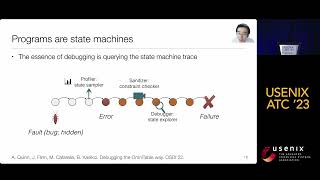
The Hitchhiker's Guide to Operating Systems
Innovative approach to teaching operating systems using state transition systems, featuring a minimal OS model with nine system calls and tools for exploring system behaviors.
LLFree - Scalable and Optionally-Persistent Page-Frame Allocation
Innovative page-frame allocator design for improved scalability, memory efficiency, and optional persistence in operating systems. Outperforms Linux's allocator in multi-core systems and heterogeneous memory environments.
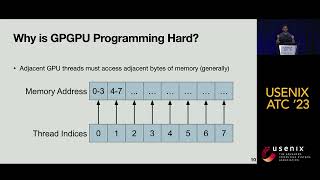
VectorVisor - A Binary Translation Scheme for Throughput-Oriented GPU Acceleration
Explore VectorVisor, a novel GPU acceleration approach for server-side applications, offering improved throughput and cost-efficiency through vectorized binary translation and CPU thread emulation.
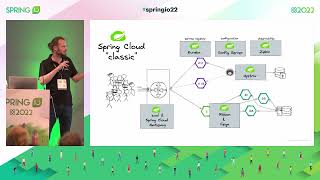
Distributed Systems Patterns with Spring Cloud, Service Meshes and eBPF
Exploring distributed systems patterns using Spring Cloud, Service Meshes, and eBPF. Compares approaches for service discovery, routing, load-balancing, and resilience in microservice architectures, with theoretical insights and live demonstrations.
Live Hacking Cloud Architectures
Live demonstration of cloud architecture attacks and defenses, showcasing real-world security challenges and mitigation strategies using modern open-source tools in Kubernetes environments.
Linux User - Kernel ABI - The Realities of How C and C++ Programs Really Talk to the OS
Explore the intricacies of Linux system calls, signal handlers, pthreads, and ptrace. Gain insights into low-level interactions between C/C++ programs and the operating system for advanced debugging and optimization.
Kotlin - Native – Embracing Existing Ecosystems
Explore Kotlin/Native's potential for native app development, focusing on its interoperability with existing platforms and advantages over C in terms of conciseness and readability.
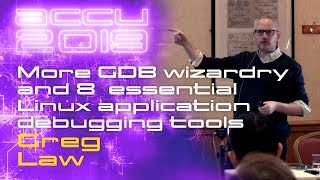
More GDB Wizardry and 8 Other Essential Linux Application Debugging Tools
Practical demonstration of advanced GDB features and essential Linux debugging tools, enhancing programming effectiveness through live demos of powerful techniques and utilities.
PowerShell for the Curious
Explore PowerShell's versatility as a cross-platform shell and scripting language, leveraging .Net Core for object-based pipelines and offering solutions for both administrators and developers.
A Year in a Rainforest - Engineering for Survival
Explore engineering techniques for creating resilient programs that run indefinitely in remote environments, focusing on practical coding strategies to ensure longevity and reliability.
Asynchronous I/O and Coroutines for Smooth Data Streaming
Explore asynchronous I/O with io_uring and C++20 coroutines for enhanced program responsiveness. Learn to write efficient, parallel-like code without threading complexities.

Emacs Should Become a Wayland Compositor
Explore the potential of Emacs as a Wayland compositor in this Q&A session, discussing implications for user interface, system integration, and future development of the versatile text editor.
Creating Ubuntu and Debian Container Base Images - The Old and Simple Way
Learn to create custom Ubuntu and Debian container base images using simple tools like debootstrap and multistrap, gaining insights into container building and debugging.
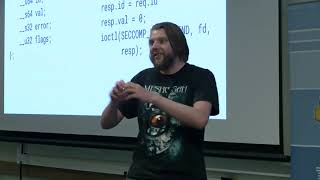
Forwarding Syscalls to Userspace
Explore syscall forwarding to userspace for enhanced container capabilities, enabling safe kernel module loading and filesystem mounting while maintaining security boundaries.
Kernel Security Is Cool Again
Explore recent developments in Linux kernel security, including hardening efforts, new access controls, and infrastructure changes. Learn about integrity, TPMs, and future trends in this field.
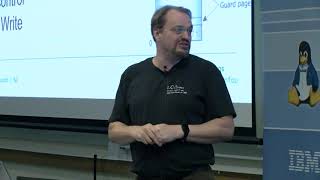
Introduction to Memory Management
Explore Linux memory management basics, including paging, hardware mechanisms, and process memory usage. Learn to control overcommit, set limits, and use system calls for effective memory management.
The Tragedy of systemd
Explore the history, controversy, and impact of systemd, delving into bootstrap processes, init systems, and the evolving landscape of Unix-like operating systems.
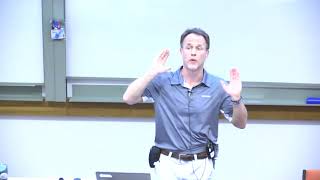
See What Your Computer Is Doing With Ftrace Utilities
Explore Linux kernel's Ftrace utilities to monitor system behavior, debug performance issues, and gain insights into application interactions and system events.

Hardware Hacking 101 - There Is Plenty of Room at the Bottom
Live demonstration of hacking an SD card's embedded processor, turning it into a covert mini-computer. Explores hardware capabilities, security breaches, and potential applications in network penetration and automation scenarios.

The Kernel Report
Comprehensive overview of Linux kernel development, covering recent updates, challenges, and future directions. Explores hardware vulnerabilities, stable kernels, testing initiatives, and mobile Linux progress.
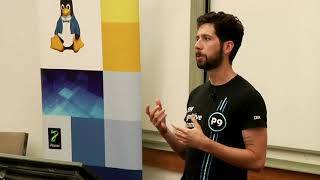
Petitboot - Linux in the Bootloader
Explore Petitboot, a Linux-based bootloader for OpenPOWER systems. Learn its components, usage, advantages, and future prospects in server applications and beyond.