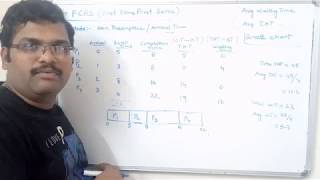
Operating System - FCFS Scheduling Algorithm
Learn about the First Come First Serve (FCFS) scheduling algorithm in operating systems, including its non-preemptive nature and arrival time considerations.
2017 - The Year of Linux Video Codec Drivers
Explore recent V4L2 additions enabling standard Linux kernel API support for video codecs, eliminating the need for proprietary solutions in embedded systems.
Implementing Network Protocols in Zephyr Project
Explore network protocol implementation in Zephyr RTOS, focusing on DNS, HTTP, MQTT, and NATS. Learn optimization techniques for constrained devices in IoT and legacy networks.
IOMMUFD Integration in QEMU
Explore IOMMUFD integration in QEMU, covering new user API for IOMMU control, redesign challenges, backward compatibility, and impact on management layers like libvirt.
Fixing Real-Time Scheduler Throttling in the Linux Kernel
Explore real-time scheduler throttling issues in Linux, their impact on Android and ChromeOS, and potential solutions. Gain insights into RT throttling internals and system protection mechanisms.
Run Fast! Catch Performance Regressions in eBPF with Rust
Learn to prevent performance regressions in eBPF programs using Rust, continuous benchmarking, and open-source tools. Maximize and maintain project performance through practical examples and CI implementation.
How to Backdoor the Linux Kernel and Fail - Security Measures in Kernel Development
Explore potential Linux kernel backdoor methods and existing security measures. Investigate weak points in the trust chain and learn about kernel release protection strategies.
HotBPF++ - A More Powerful Memory Protection for the Linux Kernel
Explore HotBPF++, an advanced Linux kernel memory protection system. Learn about its automatic deployment, on-the-fly enabling, and lightweight design for preventing and detecting various memory corruptions beyond heap exploitation.
Controlling Script Execution in Linux - Security Mechanisms and Challenges
Explore kernel-managed script execution control in Linux, addressing challenges and implementation approaches for a consistent global policy.
Hypervisor-Enforced Kernel Integrity for Linux with KVM
Explore hypervisor-enforced kernel integrity for Linux using KVM. Learn about advanced protection mechanisms against kernel vulnerabilities and their implementation through virtualization.
MPK/PKS Linux Kernel Compartmentalization
Explore Intel's PKS-based kernel compartmentalization strategy to enhance security, reduce attack surfaces, and mitigate vulnerabilities in Linux systems.

Linux Security Module (LSM) Maintainers Panel Discussion
Panel discussion on recent Linux Security Module developments, featuring insights from key maintainers on significant security advancements in LSMs and the Linux Kernel, with audience Q&A.
Reducing the Kernel's Slab Allocators - Progress Report
Progress report on reducing Linux kernel slab allocators to SLUB, discussing differences, benefits, and potential challenges in accommodating workloads currently performing better with SLAB.
Performance Insights into eBPF Step by Step
Explore eBPF performance analysis techniques, including metrics collection, profiling, and common pitfalls. Learn to optimize eBPF programs for improved system visibility and efficiency.

More Science Fiction than Fairy Tale - A Discussion of the Linux Kernel Memory Model
Explore the Linux Kernel Memory Model's complexities, optimizations, and abstractions across architectures. Learn its practical applications and potential improvements for concurrent kernel development.
Exploring Runtime Security and Forensics Using eBPF
Discover how eBPF enhances runtime security and forensic analysis, offering advanced threat detection and system monitoring capabilities for improved cybersecurity.
Unravelling How Firmware Interacts with the Linux Subsystem
Explore the intricate relationship between firmware and the Linux subsystem, gaining insights into their interaction and its implications for system performance and functionality.
Trust and the Linux Kernel Development Model
Explore the trust model and development process behind the Linux kernel with insights from a leading maintainer on community collaboration and reliability.
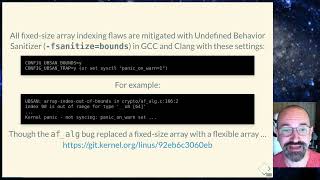
Meaningful Bounds Checking in the Linux Kernel - Addressing Buffer Overflows
Exploring buffer overflow vulnerabilities in the Linux kernel and innovative solutions for enhanced security through improved bounds checking and compiler optimizations.
Implementing Container Privilege Escalation Detection Using eBPF for Cloud Native Security
Explore eBPF-based techniques for detecting and preventing container privilege escalation in cloud environments, with practical implementation examples and real-world applications.

Monitoring Energy Consumption and Building Energy Efficient Systems the Cloud Native Way
Explore Kubernetes-based Efficient Power Level Exporter (Kepler) for container-level energy consumption metrics, enabling energy-efficient cloud systems through observability and sustainable cluster management.