
QEMU Virtual Machine Features and Usage
Explore QEMU's features for virtualization, including kernel and InitRD setup, to enhance your understanding of virtual machine technology and operating system development.

Build a Minimal Linux System with Busybox in 45 Minutes
Learn to create a minimalistic Linux system using only Busybox, exploring the essentials of operating system construction in just 45 minutes.

GNU Bison Integration with Flex Lexer - Operating System Development
Integrate a Parser (Bison) with a Lexer (Flex) to enhance your custom operating system development skills.
AST Helper Classes for Operating System Development
Explore helper classes for representing Abstract Syntax Trees (AST) on the heap, enhancing your understanding of compiler design and memory management.

Build a Linux From Scratch System - Kernel and Boot - Part 11
Build and install the Linux Kernel and bootloader, culminating in booting your custom-built operating system from scratch.
Build a Linux From Scratch System - Part 10: Systemd and Network Configuration
Configure systemd and network settings for a custom Linux system, including DHCP, hostname, device handling, and keyboard layout.

Build a Linux From Scratch System - Bootscripts - Part 12
Explore LFS boot-scripts and their role in system initialization, enhancing your understanding of Linux startup processes and customization options.

Linux Kernel Programming - Writing a Simple Character Device Driver
Learn to create a simple character-device driver and communicate with it from userspace in Linux kernel programming, enhancing your OS development skills.

Build a Linux From Scratch System - Part 9: Discussing Packages and Compiling
Explore package selection and compilation processes for creating a custom Linux system, with in-depth discussions on package choices and hands-on compilation demonstrations.
Build a Linux From Scratch System - Part 5: Chroot Environment and Linux Internals
Enter the chroot environment and explore Linux internals while compiling essential components, advancing your journey in building a custom operating system from scratch.

Build a LinuxFromScratch System - Compiling the Auxiliary Toolchain
Learn to compile the auxiliary toolchain for LinuxFromScratch, a crucial step in creating your own operating system from the ground up.
Address Resolution Protocol (ARP) in Operating System Development - Lecture 2
Learn to implement Address Resolution Protocol (ARP) for network communication between computers, enabling IP address discovery and response in operating system development.
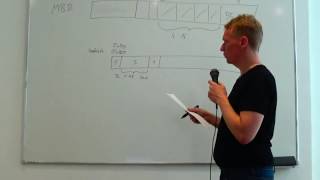
Write Your Own Operating System - Partition Table and Master Boot Record
Learn about the structure of the master boot record (MBR) and MS-DOS partition table, essential components for understanding and implementing operating system boot processes.
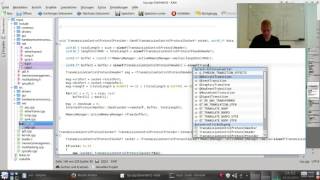
Write Your Own Operating System - Transmission Control Protocol (TCP) Implementation - Lecture 7
Implement TCP send-method and checksum for the operating system's TCP handler, enhancing network communication capabilities.
User Datagram Protocol (UDP) Implementation - Write Your Own Operating System A05
Implement UDP communication in a custom operating system, enabling data exchange with external networks and devices.
Promoting Linux - An End-User Manifesto for Increasing Adoption
Strategies for promoting Linux adoption: advocacy, tolerance, acknowledging limitations, highlighting improvements, separating from FOSS ideology, campaigning for applications, and contributing to the community.

Energy Observability Using Kepler - Revolutionizing Cloud Efficiency
Explore Kepler, an innovative framework for monitoring power consumption in Kubernetes environments, enhancing cloud efficiency through advanced observability techniques and machine learning.

Linux for Beginners - Full Course
Comprehensive introduction to Linux, covering installation, terminal usage, file systems, permissions, and shell scripting. Ideal for beginners seeking practical skills in Linux administration and command-line operations.
APRON: Authenticated and Progressive System Image Renovation
Innovative approach to secure OS recovery, minimizing downtime through progressive block repair and verification. Outperforms conventional methods, enabling swift system restoration with minimal performance impact.
Cilium Cluster Mesh: The eBPF-Powered Multicluster Solution for Kubernetes
Explore Cilium Cluster Mesh, an eBPF-powered solution for connecting multiple Kubernetes clusters across regions and clouds. Learn its benefits, setup process, and real-world applications for distributed systems.
A Paradigm Shift in 5G Deployment - The Promise of eBPF for Open-Source Core Performance and Security
Explore eBPF's potential to revolutionize 5G Core deployments on Kubernetes, enhancing network performance and security. Includes real-world demonstration of LTERAN deployment and end-to-end communication.