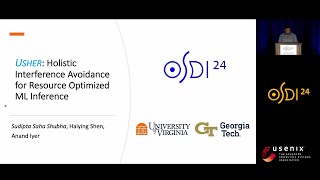
USHER: Holistic Interference Avoidance for Resource Optimized ML Inference
Optimizes ML inference systems by maximizing GPU resource utilization and minimizing interference, resulting in higher goodput and cost-efficiency for deep learning model deployment.
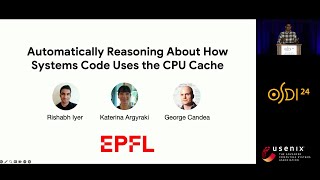
Automatically Reasoning About How Systems Code Uses the CPU Cache
Technique for automatic analysis of CPU cache usage in systems code. Enables developers to identify performance issues and security vulnerabilities without extensive benchmarking.

Validating the eBPF Verifier via State Embedding
Innovative technique for validating eBPF verifier correctness using state embedding, uncovering critical Linux kernel security bugs and improving overall system reliability.
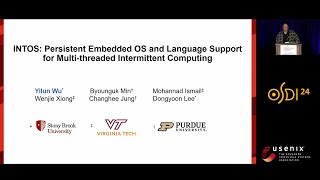
IntOS: Persistent Embedded Operating System for Multi-threaded Intermittent Computing
Innovative embedded OS for battery-less devices, enabling efficient multi-threaded computing with crash consistency and simplified programming through novel replay-and-bypass approach.
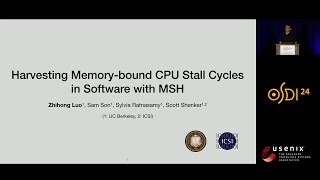
Harvesting Memory-bound CPU Stall Cycles in Software with MSH
Innovative software system for efficiently harvesting memory-bound CPU stall cycles, offering configurable latency and high concurrency to improve datacenter workload performance.

Every Mapping Counts in Large Amounts - Folio Accounting
Innovative folio accounting technique for Linux enhances memory management, improving performance in fork and unmap operations. Demonstrates significant speedup in fork-intensive workloads like Redis.
ALPS: An Adaptive Learning, Priority OS Scheduler for Serverless Functions
Innovative OS scheduler for serverless functions, combining SRPT and proportional-share scheduling to optimize performance of short-lived tasks while preventing starvation of longer functions.
FBMM: Making Memory Management Extensible With Filesystems
Innovative approach using filesystems for extensible memory management, enabling diverse memory configurations and policies with minimal code and competitive performance.
FlexMem - Adaptive Page Profiling and Migration for Tiered Memory
Adaptive page profiling and migration system for tiered memory, improving performance through dynamic decision-making and combining profiling methods for enhanced memory management.
Scalable and Effective Page-table and TLB Management on NUMA Systems
Innovative approach to page-table management in NUMA systems, enhancing performance through on-demand replication and reduced TLB shootdowns, benefiting highly threaded applications.
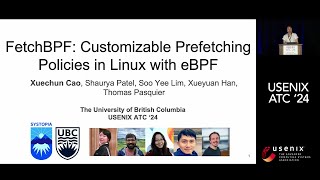
FetchBPF - Customizable Prefetching Policies in Linux with eBPF
Explore FetchBPF, a framework for customizing Linux memory prefetching policies using eBPF, enabling performance optimization without kernel modifications.
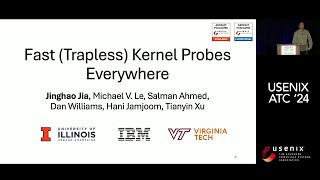
Fast Trapless Kernel Probes Everywhere - USENIX ATC '24
Efficient trapless kernel probing mechanism for Linux, improving performance 10x over standard Kprobe while covering 96% of kernel code. Enhances debugging, security, and monitoring capabilities.

StreamCache - Revisiting Page Cache for File Scanning on Fast Storage Devices
StreamCache: A new page cache system for fast storage devices, improving I/O performance through stream tracking, efficient reclaiming, and accelerated page allocation. Enhances scientific apps and large language model operations.
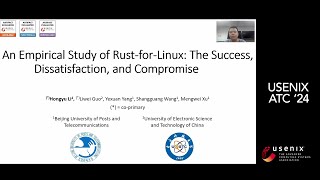
Empirical Study of Rust-for-Linux: Success, Dissatisfaction, and Compromise
Empirical study on Rust-for-Linux project, analyzing its impact on kernel safety and performance. Explores successes, challenges, and compromises in integrating Rust into the Linux ecosystem.
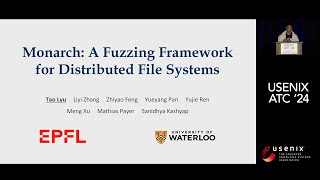
Monarch: A Fuzzing Framework for Distributed File Systems
Innovative fuzzing framework for distributed file systems, addressing complexity and scalability challenges through multi-node architecture, fault injection, and semantic checking.
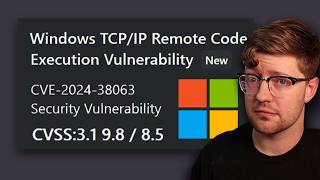
Windows Has a Major IPv6 Problem - Patch Tuesday Security Update
Explore a critical IPv6 vulnerability in Windows, its implications for system security, and the importance of timely patching in today's cybersecurity landscape.
Regular Expressions in Linux - Introduction to GREP and RegEx
Explore regular expressions in Linux: learn pattern matching, metacharacters, and quantifiers with practical demos. Enhance text processing skills for system administration and productivity.

NPM for Absolute Beginners - Introduction to Package Management
Learn npm basics: installation, command line navigation, package management, dependencies, scripts, and version control. Ideal for beginners looking to understand npm's role in web development.
Running Out of TCP Source Ports - Troubleshooting and Solutions
Explore a real-world bug where a web server exhausted ephemeral ports, causing system failure. Learn about system architecture, troubleshooting, and the intricacies of TCP source ports.

Combined I/O Enhancement in PostgreSQL 17
Explore PostgreSQL 17's game-changing feature: combined I/Os for faster database operations. Learn about optimized page reads, vectorized I/O, and potential performance impacts.

From Core Memory to the Internet - Amazing History of the PDP-11
Explore the fascinating evolution from core memory to PDP-11 computers, tracing DEC's history and the PDP-11's impact on early internet technology in this engaging tech retrospective.