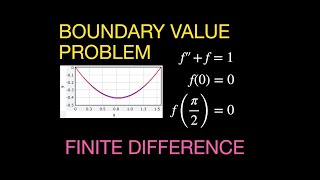
Solving a Boundary Value Problem with the Finite Difference Method - Python
Implement finite difference method in Python to solve boundary value problems for differential equations. Learn practical numerical techniques.
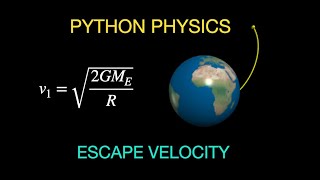
Python Physics: Escape Velocity from Earth
Calculate Earth's escape velocity using Python, exploring gravitational concepts and orbital mechanics.
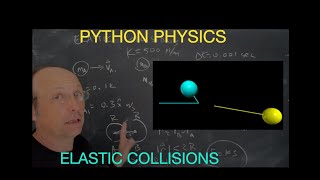
Python Physics: Modeling Elastic Collisions With Springs
Model elastic collisions using Python, simulating spring forces between overlapping objects for accurate physics simulations.
Approximation of Dirac Operators with Delta-Shell Potentials
Explore approximation of 2D Dirac operators with δ-shell potentials using squeezed potentials. Analyze convergence in norm resolvent sense for specific interaction strengths.
Numerical Evaluation of the Casimir-Polder Interaction at Finite Temperature
Explore numerical evaluation of Casimir-Polder interaction at finite temperature, focusing on DGTD method for complex setups including nonlocal materials and finite temperatures.
A New Derivative-Free Method Using an Improved Under-Determined Quadratic Interpolation Model
Explore a novel derivative-free optimization method using improved under-determined quadratic interpolation, considering trust-region iteration properties and model optimality.

Using Timers, Numerical Integration, and Other Programming Tips - HW_01
Explore timers, numerical integration, and coding tips while learning about error fixing, Linux, and numerical modeling techniques.
SpeedyWeather.jl - Reinventing Atmospheric Models
Innovative Julia-based atmospheric modeling tool offering interactive, user-friendly simulations for climate research, overcoming traditional Fortran constraints with flexible, extensible components.
Rotation Estimation Gives Clues About L - Quantum Computer Programming Lesson 86
Explore how Rotation Estimation generates clues about mystery cycle length L through random fractions, aiding quantum computer programming understanding.

Monte Carlo Pi Methods: Technical Editing - Lecture ME3256
Enhance technical writing skills for Monte Carlo pi methods. Learn effective editing techniques to improve clarity and precision in scientific reports.

ME3255 - Timing Function Calls and Comparing Numerical Results
Learn to time function calls and compare numerical results in ME3255, enhancing your computational skills for mechanical engineering applications.

CO2 Geological Storage Modeling with Machine Learning
Explore machine learning-based CO2 geological storage modeling, offering real-time insights and significant speedups compared to traditional simulations for efficient decarbonization strategies.
Set-limited Functions and Polynomial-time Interior-point Methods
Explore polynomial-time interior-point methods and set-limited functions with Yurri Nesterov, delving into advanced optimization techniques and mathematical theory.
Nonconvex Stochastic Programs - Deterministic Constraints
Explore nonconvex stochastic programs with deterministic constraints, presented by Jong-Shi Pang from USC. Gain insights into advanced mathematical concepts and their applications.
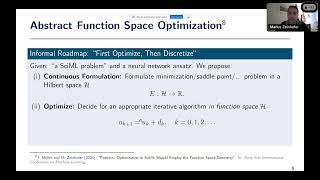
Infinite Dimensional Optimization for Scientific Machine Learning
Explore advanced optimization techniques in scientific machine learning, focusing on infinite-dimensional perspectives and the "first optimize, then discretize" paradigm for neural network applications.
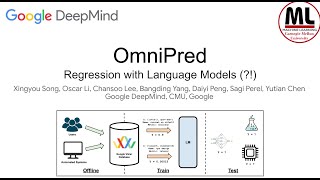
OmniPred - Towards Universal Regressors with Language Models
Explore groundbreaking research on OmniPred's innovative approach to using language models as universal regressors, demonstrating superior performance over traditional regression methods across diverse experiments.
Matrix Computation in Wolfram Language
Explore advanced linear algebra capabilities in Mathematica and Wolfram Language, including recent additions and future developments.
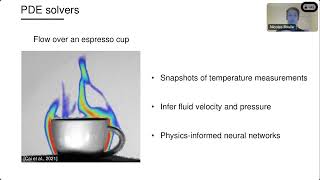
Elliptic PDE Learning: Provably Data-Efficient Techniques
Explore data-efficient PDE learning techniques, combining deep learning with physics and mathematics to discover properties of unknown physical systems from limited experimental data.
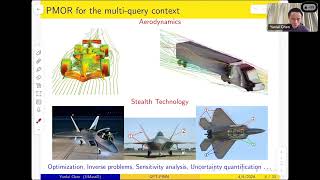
GPT-PINN and TGPT-PINN: Advanced Physics-Informed Neural Networks for Parametric PDEs
Explore GPT-PINN and TGPT-PINN for efficient parametric PDE solutions. Learn meta-learning techniques to reduce training time and network complexity while maintaining accuracy across parameter domains.
Multi-Precision Optimization Algorithm: Decreasing Computational Cost and Controlling Computational Error
Explore multi-precision optimization algorithms to reduce computational costs and control errors in smooth, non-convex function minimization, with applications in deep neural network training.
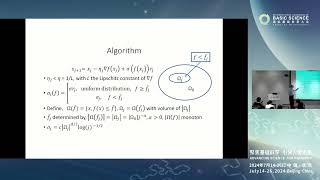
Global Convergence in Stochastic Optimization - ICBS 2024
Explore stochastic optimization algorithms with adaptive variance for non-convex functions, featuring provable convergence rates and numerical examples.