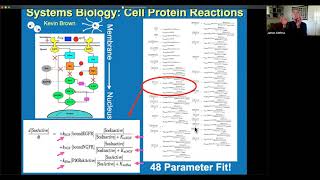
Sloppy Models, Differential Geometry, and Why Science Works
Explore how complex systems can be modeled despite parameter uncertainties, using differential geometry to understand 'sloppiness' and its implications for scientific comprehension and prediction.
Sparsifying Suprema of Gaussian Processes
Explore a 49-minute lecture on approximating the supremum of centered Gaussian processes using finite-dimensional Gaussian processes. Delve into the proof that shows how the approximation's dimension depends solely on the target error. Discover the corol…
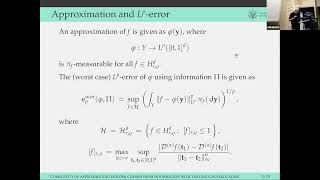
Complexity of Approximating Holder Classes from Information with Varying Gaussian Noise
Explore approximation complexity for Holder classes with varying Gaussian noise, focusing on mathematical applications and information theory concepts.

Un Enfoque Alternativo para la Aproximación Pseudoinversa Tensorial y su Aplicación en el Procesamiento de Imágenes
Explora un enfoque alternativo para la aproximación pseudoinversa tensorial y su aplicación en el procesamiento de imágenes.
ADSI Summer Workshop- Algorithmic Foundations of Learning and Control, Pablo Parrilo
Explore advanced Gaussian kernel factorization techniques and their applications in machine learning and control systems, with insights from approximation theory.
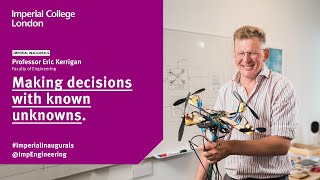
Making Decisions with Known Unknowns - Professor Eric Kerrigan's Inaugural Lecture
Explore decision-making under uncertainty, covering aerodynamics, electrical engineering, and energy systems. Learn optimization techniques for real-world problem-solving.
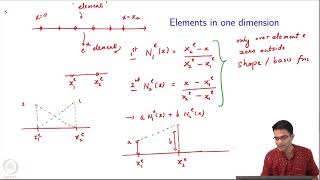
Introduction to the Finite Element Method: 1D Basis Functions
Explore 1D basis functions in finite element method. Learn key concepts and applications for numerical analysis and engineering problem-solving.
Approximation of Vertex Transitive Graphs by Nilpotent Groups and Applications to Probability
Delve into advanced mathematical concepts exploring vertex-transitive graphs, their approximation through nilpotent groups, and probabilistic applications in topological dynamics.
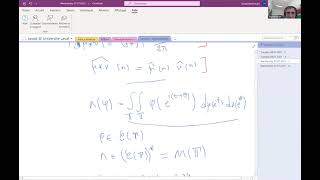
Mini-course on Hardy Spaces - Part 3
Explore Hardy spaces with a focus on rotation, generalization, and approximate identities. Delve into uniform boundedness, Poisson PR constructions, and harmonic functions.
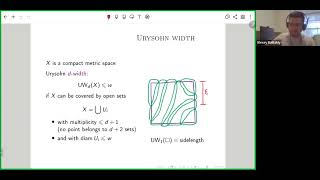
Urysohn Width
Explore the 100-year history and applications of Urysohn width, a metric invariant quantifying space approximation by simplicial complexes. Discover its role in dimension theory and modern geometric challenges.
Quadrature Rules on Manifolds - Useful Results - Lecture 3
Explore advanced quadrature techniques for manifolds, focusing on key results and applications in harmonic analysis. Gain insights into cutting-edge mathematical approaches.
Quadrature Rules on Manifolds - Designs - Lecture 1
Explore quadrature rules on manifolds and designs in harmonic analysis. Learn about cutting-edge mathematical techniques for solving complex problems in geometry and analysis.
More Bases of Polynomial Spaces - Lecture 21
Explore advanced polynomial bases: Lagrange, Chebyshev, Bernstein, and Spread. Learn their properties, applications in approximation, and relationships, enhancing understanding of polynomial spaces in linear algebra.
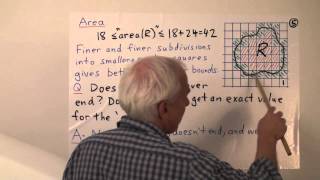
Real Numbers and Cauchy Sequences of Rationals - Math Foundations 112
Explores the concept of real numbers, challenging their existence and examining how quantities like length, area, and function values are inherently approximate rather than exact 'real' values.
Approximately Hadamard Matrices and Random Frames
Explore approximately Hadamard matrices and random frames with Mark Rudelson, delving into advanced mathematical concepts and their applications in signal processing and data analysis.
Optimality of Algorithms for Approximation and Computation - Rothschild Lecture
Explore optimality in approximation and computation algorithms with Prof. Ronald DeVore's in-depth analysis of mathematical techniques and their applications in data science.
Image Compression with Differential Equations
Explore innovative image compression techniques using partial differential equations, combining mathematical modeling, optimization, and numerical methods for efficient data encoding and reconstruction.

Bridging the Divide: From Matrix to Tensor Algebra for Optimal Approximation and Compression
Explore tensor algebra and its advantages over matrix-based approaches for data compression and analysis. Learn about novel tensor-tensor products and their applications in various fields.
Polynomially Convex Embeddings of Real Manifolds in C^n
Explore geometric embeddings of real manifolds in complex spaces, focusing on polynomial convexity and its connections to approximation theory and diverse mathematical areas.
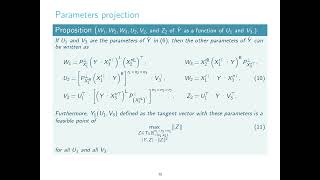
An Approximate Projection onto the Tangent Cone to the Variety of Third Order Tensors of Bounded Rank
Explore approximate projection techniques for third-order tensors with bounded rank, focusing on tangent cone analysis and applications in tensor decomposition.
The Stone-Weierstrass Theorem
Explore the Stone-Weierstrass theorem, a fundamental result in functional analysis and approximation theory.