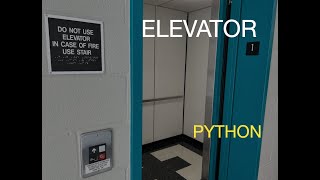
Python Physics: Finding the Height of an Elevator From Acceleration
Estimate elevator height using smartphone acceleration data and Python for numerical integration. Learn practical physics application.
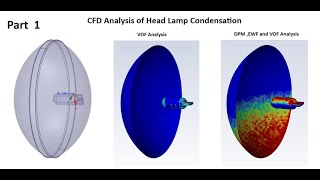
CFD Analysis of Head Lamp Condensation - VOF Approach
Explore condensation in headlamps using VOF evaporation-condensation approach in CFD analysis. Learn advanced techniques for automotive lighting design.
Subglacial Water Flow Simulations on GPUs - JuliaCon 2024
Explore GPU-accelerated subglacial water flow simulations using Julia, enabling large-scale modeling of glacier dynamics and sea level rise predictions.
Doubling the Order of Approximation via the Randomized Product Formula in Quantum Computing
Discover how randomized corrections in Hamiltonian simulation can double error order accuracy from 2k to 4k+1, with practical applications in quantum chemistry using Pauli strings.
Implementation and Synthesis of Math Library Functions
Explore MegaLibm, a domain-specific language for implementing, testing, and tuning math library functions. Learn how it enhances safety, modularity, and tunability in mathematical software development.
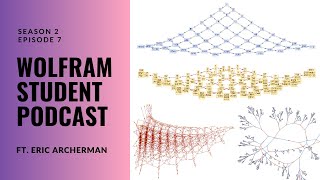
Studying Mergers of Numerical Multiway Systems
Explore mergers of numerical multiway systems, examining characteristic properties and causal graphs through discrete number theoretical techniques.
Use of Mathematica in Studies of Structural Dynamics
Explore structural dynamics modules implemented for academic studies, advancing knowledge and leading to scientific publications.
A Quantum Computing Algorithm to Speed Up Metropolis Sampling
Explore a quantum algorithm for accelerating Metropolis sampling in multidimensional systems, leveraging wave function collapses for non-local configuration space moves.
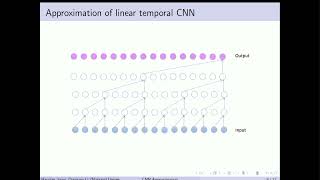
Forward and Inverse Approximation Theory for Linear Temporal Convolutional Networks
Explore approximation theory for linear temporal convolutional networks, examining forward and inverse approaches to enhance understanding of network behavior and capabilities.
Quantum Python: Numerical Integration to Normalize a Wave Function
Explore numerical integration techniques to normalize wave functions in quantum mechanics using Python, enhancing understanding of computational approaches in physics.
Python Lists for Physics: Creating, Manipulating, and Visualizing Data
Explore Python lists for physics applications, covering creation, manipulation, and visualization of data, including integration and animated graphing.
Python: Numpy Arrays vs. Lists
Explore numpy arrays and lists in Python, comparing their functionalities for physics calculations and data visualization through practical examples and coding exercises.
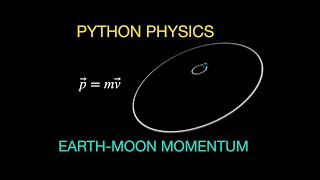
Python Physics: Conservation of Momentum for the Earth-Moon System
Explore conservation of momentum in the Earth-moon system using Python, enhancing understanding of fundamental physics concepts.
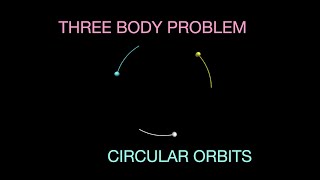
How to Achieve Circular Orbits in the Three-Body Problem
Explore stable circular orbits for three equal-mass planets using Python simulations and gravitational calculations.
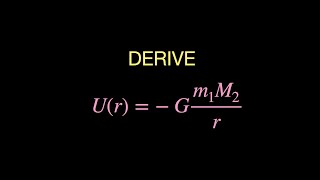
Derivation of the Gravitational Potential Energy - Plus Numerical Integrals with Python
Derive gravitational potential energy through work calculations and explore numerical integration using Python for practical applications.
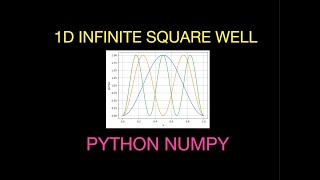
Solving Schrödinger's Equation as an Eigenvalue Problem with Numpy
Explore numerical solutions to the 1D infinite square well using Python's NumPy library and the finite difference method for Schrödinger's equation.
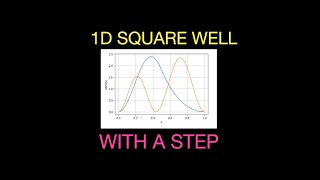
1D Square Well with Step Potential - Finite Difference Solution
Explore numerical solutions for 1D square well with step potential using finite difference method in Python. Learn eigenvalue problem solving and result normalization.
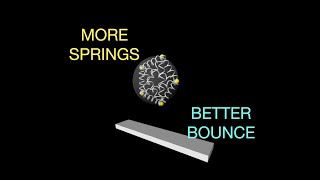
A Better Spring-Ball Model for Bouncing - Now with More Springs
Explore an improved spring-ball model for bouncing, featuring multiple interconnected balls and springs for enhanced simulation accuracy.
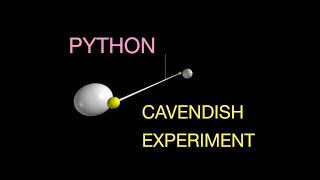
Modeling the Cavendish Experiment with Python
Model the Cavendish experiment using Python to explore gravitational forces between masses. Learn to simulate and analyze this classic physics experiment through coding.
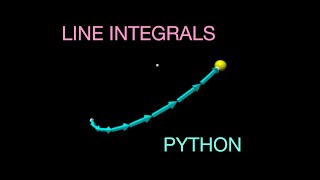
Numerical Line Integrals with Python
Explore numerical line integrals using Python to calculate work done in force fields. Gain practical coding skills for solving complex physics problems.
Finding the Value of Pi from a Random Walk Using Python
Explore Python coding to calculate pi using random walks, from 1D to 3D simulations. Enhance mathematical understanding through practical programming.