Bypassing Port-Security In 2018 - Defeating MacSEC and 802.1x-2010
Explore novel techniques for bypassing 802.1x-2010 and MacSEC, discussing weaknesses in EAP and demonstrating improved methods for network penetration using the open-source tool Silent Bridge.

So You Want to Hack Radios
Explore Software Defined Radio for hacking IoT devices. Learn digital signal processing basics and a reverse engineering workflow to recover and inject packets in proprietary wireless systems.

Burning Down the Haystack to Find the Needle
Explore network flow pattern analysis to detect and prevent contemporary threats, and learn how to build a security analytics program for enhanced threat visibility and response.
Mobile Landscape - The Security of Wearables
Explore the security challenges of wearable devices, including device, application, and network security. Learn about potential threats and considerations for developing secure wearable applications.
The Self Healing Cloud - Protecting Applications and Infrastructure with Automated Virtual Patching
Explore automated virtual patching for cloud security, protecting apps and infrastructure through innovative techniques like web application firewalls and network intrusion detection.

Emerging Threats in Mobile Computing
Explore emerging threats in mobile computing, covering device security, data protection, attack surfaces, and interception techniques. Learn about risks and mitigation strategies for smartphones and cellular networks.
Office Equipment - The Front Door To Persistence On Enterprise Networks
Explore vulnerabilities in office equipment and their potential for network persistence, uncovering risks and mitigation strategies for enterprise security.
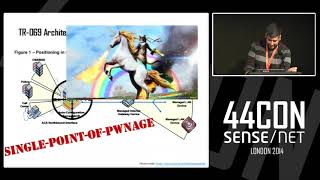
I Hunt TR-069 Admins - Pwning ISPs Like a Boss
Exploring TR-069/CWMP vulnerabilities in residential gateways and ACS software, demonstrating potential for mass exploitation of consumer devices through ISP management systems.
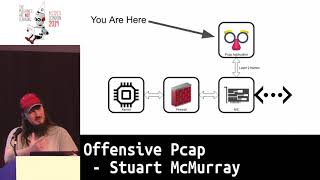
Offensive Pcap
Explore libpcap for offensive security: bypass firewalls, intercept traffic, manipulate network connections, and evade detection. Hands-on techniques with source code provided.

The Green Padlock of Doom, or Why No One Trusts Us Anymore
Exploring trust issues in technology, focusing on DNS and HTTPS/TLS systems. Analyzes how security measures often fail to protect average users, proposing ways to improve online safety for all.

The Insider - Users
Explore insider threats and vulnerabilities in network domains, revealing how standard users can potentially gain full admin access and compromise security within organizations.
LoRa the Explorer - Attacking and Defending LoRa Systems
Explore LoRa security: limitations, attacks, and defensive strategies for smart city and IoT networks. Learn to build secure LoRa solutions for industrial and domestic applications.
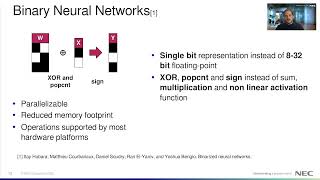
Re-architecting Traffic Analysis with Neural Network Interface Cards
Innovative approach to enhance network traffic analysis using binary neural networks on SmartNICs, offering improved scalability, lower latency, and higher throughput compared to traditional software-based systems.
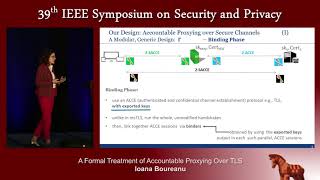
A Formal Treatment of Accountable Proxying over TLS
Formal analysis of accountable proxying over TLS, revealing vulnerabilities in mcTLS and proposing a secure alternative with provable security and practical implementation.
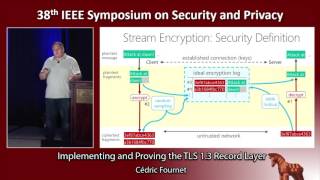
Implementing and Proving the TLS 1.3 Record Layer
Explore the implementation and security proofs of TLS 1.3's record layer, focusing on authenticated encryption, cryptographic algorithms, and formal verification using F* language.
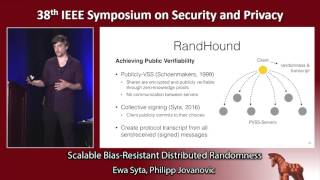
Scalable Bias-Resistant Distributed Randomness
Explore scalable protocols for generating unbiased public randomness in distributed systems, focusing on RandHound and RandHerd's innovative approaches to ensure integrity and efficiency.

Embracing the Hack - A Better Strategy for Team-Defense
Explore how embracing "hacky" solutions in cybersecurity can enhance enterprise defense. Learn innovative strategies and custom detection techniques to gain an advantage over attackers.
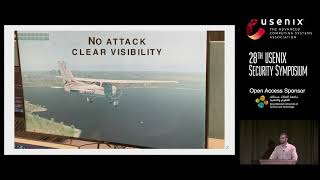
Wireless Attacks on Aircraft Instrument Landing Systems
Investigates vulnerabilities in aircraft instrument landing systems to wireless attacks using software-defined radio, demonstrating potential for spoofing signals and causing off-runway landings in low-visibility conditions.
Software Networking and Interfaces on Linux
Comprehensive overview of Linux network interfaces, from traditional to modern cloud-native types. Explores VMs, containers, and service meshes, aiding in debugging cloud platforms.
Who Is Answering My Queries - Understanding and Characterizing Interception of the DNS Resolution Path
Explores DNS interception by on-path devices, revealing widespread occurrence and potential security risks. Presents novel detection methods and analyzes data from global IP addresses to uncover concerning practices.
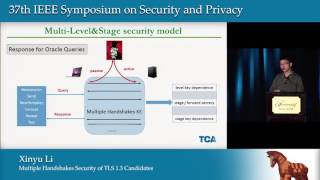
Multiple Handshakes Security of TLS 1.3 Candidates
Explores security aspects of TLS 1.3 candidates, focusing on multiple handshake protocols. Introduces a multi-level security model and proves the soundness of TLS 1.3 security design.