
HAProxy
Comprehensive guide to HAProxy, covering load balancing, scaling, security, and advanced configurations for high-performance web infrastructure.

HTTP/2
Comprehensive exploration of HTTP/2, covering its workings, performance benefits, and implementation challenges. Includes comparisons with other HTTP versions and related protocols.

Envoy Proxy Crash Course - Architecture, L7 & L4 Proxying, HTTP/2, Enabling TLS 1.2/1.3 and More
Comprehensive guide to Envoy Proxy, covering architecture, L7/L4 proxying, HTTP/2, and TLS configuration. Includes practical examples and demonstrations for effective implementation.
Compressing Certificates in TLS - The Backend Engineering Show
Explore TLS certificate compression techniques to enhance performance by reducing certificate size, improving handshake efficiency, and optimizing network traffic in secure communications.
Key Confirmation in Key Exchange - A Formal Treatment and Implications for TLS 1.3
Formal treatment of key confirmation in key exchange protocols, focusing on TLS 1.3. Explores security definitions, implications for protocol design, and practical applications in cryptographic systems.

Securing the Future of TLS - What's New in TLS 1.3
Explore TLS 1.3's key improvements, including enhanced security, faster connections, and streamlined handshake process. Learn about new features and their impact on web communication.

SSL-TLS and Why It Keeps Your Lake Empty - Andy Shepherd, Symantec
Explore SSL/TLS encryption, its impact on network visibility, and the evolution to TLS 1.3. Learn about security implications and strategies for maintaining network oversight.

Transport Layer Security - TLS 1.2 and 1.3 Explained by Example
Comprehensive overview of TLS protocol, covering HTTP, HTTPS, TLS 1.2 handshake, and TLS 1.3 improvements. Explains key concepts and encryption methods for secure client-server communication.

TLS 1.3 Handshake - Major Changes from Prior Versions
Explore major changes in TLS 1.3 handshake: shorter round trips, enhanced encryption, and improved key generation for better security and performance.
TLS 1.3 Cipher Suites - Key Changes and Improvements
Explore key changes in TLS 1.3 cipher suites, including simplified structure, fewer options, mandatory AEAD and forward secrecy, and the elimination of custom DH groups.
Building Modern Cryptography: Best Practices and Recent Breaks - If It Ain't Broken, Do Fix It
Explore modern cryptographic best practices through recent security breaches, discussing TLS 1.3 and strategies for building more secure systems in an interactive session.
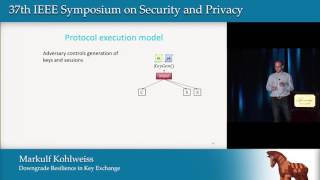
Downgrade Resilience in Key-Exchange Protocols
Explore downgrade attacks in key-exchange protocols, their causes, and strategies for achieving downgrade security. Learn about vulnerabilities and protective measures in widely-used protocols like TLS.
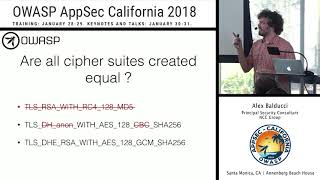
What's New in TLS 1.3
Explore TLS 1.3's security enhancements, new protocol handshakes, and 0-RTT resumption. Learn about potential deployment pitfalls and how to avoid them in this comprehensive overview of the latest TLS version.
A Unilateral-to-Mutual Authentication Compiler for Key Exchange - with Applications to Client Authentication in TLS 1.3
Explore unilateral-to-mutual authentication in key exchange, focusing on client authentication in TLS 1.3. Learn about the SIGMAC compiler, security definitions, and post-handshake protocols.
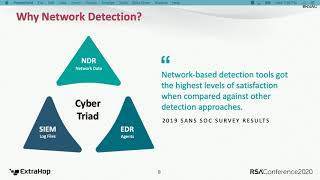
The Network Is Going Dark - Why Decryption Matters for SecOps
Explore strategies for decrypting encrypted network traffic, focusing on TLS 1.3 challenges and solutions like SSL fingerprinting and session-key forwarding for effective network security operations.
Playback - A TLS 1.3 Story
Explore TLS 1.3's 0-RTT feature, its risks, and real-world replay attacks. Learn about potential solutions and mitigation controls for secure deployment of TLS 1.3-supported software.
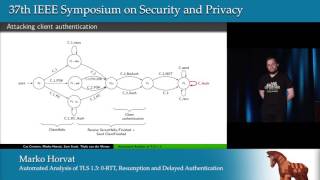
Automated Analysis and Verification of TLS 1.3 - 0-RTT, Resumption and Delayed Authentication
Explore automated analysis of TLS 1.3, focusing on 0-RTT, resumption, and delayed authentication. Learn about security verification using the Tamarin prover for this crucial protocol.
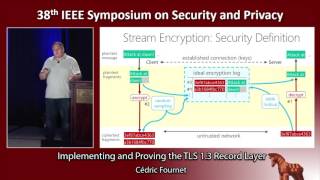
Implementing and Proving the TLS 1.3 Record Layer
Explore the implementation and security proofs of TLS 1.3's record layer, focusing on authenticated encryption, cryptographic algorithms, and formal verification using F* language.
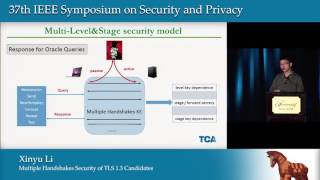
Multiple Handshakes Security of TLS 1.3 Candidates
Explores security aspects of TLS 1.3 candidates, focusing on multiple handshake protocols. Introduces a multi-level security model and proves the soundness of TLS 1.3 security design.
TLSv1.3 - Minor Version, Major Changes
Explore TLS 1.3's major improvements, including enhanced security, faster connections, and simplified handshake process. Learn about cipher suites and notable changes in this protocol version.
The Multi User Security of Authenticated Encryption - AES GCM in TLS 1.3
Explore authenticated encryption, AES-GCM, and their multi-user security implications in TLS 1.3, as presented by Bellare and Tackmann at Crypto 2016.