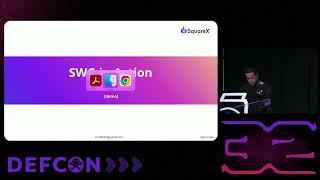
Breaking Secure Web Gateways: Last Mile Reassembly Attacks
Uncover critical vulnerabilities in Secure Web Gateways through "Last Mile Reassembly Attacks" and learn how to bypass enterprise-grade security solutions using an open-source attack toolkit.

The Linux NFS Server in 2024 - New Features and Development Roadmap
Discover the latest innovations in Linux in-kernel NFS server, including security enhancements, pNFS block layout support, RDMA capabilities, and network partition handling improvements.

Elevating Linux File Access - Recent Advancements in SMB3.1.1 Client
Discover the latest advancements in Linux SMB3.1.1 client, including enhanced security features, improved performance, and new capabilities for remote storage access across cloud and various SMB3 file servers.

SMB and NFS Protocol Comparison - Understanding Similarities and Differences
Explore the technical similarities and differences between NFSv4 and SMB protocols, focusing on interoperable locking infrastructure and server implementation considerations.

Exploring Optimizations of Content Delivery Networks
Explore optimization techniques for Content Delivery Networks through simulation studies, examining over 100,000 configuration variants to enhance performance and reduce operational costs.
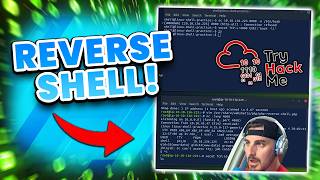
Executing Your First Reverse Shell with TryHackMe - A Beginner's Guide
Master the fundamentals of executing reverse shells through a guided walkthrough of TryHackMe's platform, featuring practical cybersecurity skills and hands-on learning experiences for beginners.
Cloud Native Networking - Introduction and Deep Dive
Dive into cloud native networking fundamentals and advanced topics, exploring microservices architecture, distributed systems, and modern infrastructure design principles with TAG Network.
Cilium: Connecting, Observing, and Securing Kubernetes and Beyond with eBPF
Discover how Cilium leverages eBPF to revolutionize cloud native networking, providing advanced observability and security features for Kubernetes environments while expanding into load balancing and multi-cloud solutions.
Securing the Future of Ingress-NGINX
Discover essential security improvements and future roadmap for Ingress-NGINX, including hardening guidelines, default security features, and transition plans to Gateway API implementation.

D-LINK NAS Security Bug Analysis and Firmware Vulnerability
Dive into a critical analysis of D-LINK NAS's unpatched firmware vulnerability, exploring security implications and understanding the technical oversight in network storage systems.

AI Workflows with Kafka and Modern Architectures
Discover how to build secure, real-time AI workflows using Apache Kafka, exploring key features, integration patterns, and zero-trust architecture implementation for robust AI data pipelines.
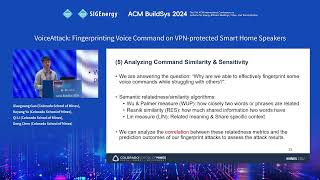
VoiceAttack: Fingerprinting Voice Commands on VPN-Protected Smart Home Speakers
Uncover how voice commands on VPN-protected smart speakers can be fingerprinted and potentially compromised, exploring security vulnerabilities in smart home systems.

NGINX Tutorial - Building a Node.js Application with Docker and Load Balancing
Master NGINX fundamentals through hands-on practice: configure reverse proxy, implement load balancing, and set up HTTPS with Docker and Node.js in a real-world project scenario.
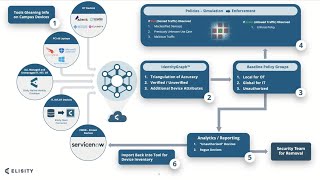
Microsegmentation Challenges and Goals in Pharmaceutical and Healthcare Industries
Discover how microsegmentation addresses cybersecurity challenges in manufacturing, pharmaceutical, and healthcare sectors, focusing on securing legacy systems while maintaining regulatory compliance and operational continuity.
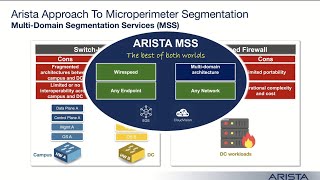
Arista Multi-Domain Segmentation - Zero Trust Networking with CloudVision
Discover how CloudVision enables zero trust networking through flexible identity-based microsegmentation, offering enterprise-wide security orchestration and comprehensive monitoring across multiple domains.
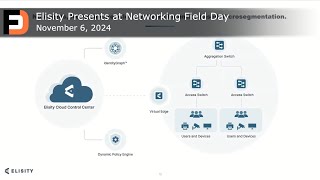
Optimizing Microsegmentation Architecture with Identity-Based Security
Discover how Elisity's cloud-native microsegmentation architecture enables identity-based security controls, leveraging machine learning and dynamic policy enforcement for zero-trust implementation in critical environments.
6Sense: Internet-Wide IPv6 Scanning and Security Applications
Discover groundbreaking IPv6 scanning technology that uses reinforcement learning to efficiently discover and analyze millions of IPv6 hosts, enabling comprehensive Internet security research and vulnerability detection.
GFWeb - Measuring the Great Firewall's Web Censorship at Scale
Discover groundbreaking research on China's Great Firewall censorship system through GFWeb's extensive study, revealing unprecedented insights into HTTP/HTTPS blocking mechanisms and evolving censorship patterns.

Racing for TLS Certificate Validation: A Hijacker's Guide to the Android TLS Galaxy
Explore critical TLS certificate validation vulnerabilities in Android apps, focusing on validation hijacking issues, their impact on security, and the role of third-party libraries in creating these risks.
Infinite Traffic Loops at the Application Layer - A Study of DoS Attack Primitives
Explore application-layer traffic loops in network security, examining how infinite loops between servers can be triggered by single IP-spoofed packets to create cost-free DoS attacks.
Rethinking the Security Threats of Stale DNS Glue Records
Explore the security vulnerabilities of DNS glue records, examining how outdated records and resolver behaviors create risks for domain hijacking and denial-of-service attacks across millions of domains.