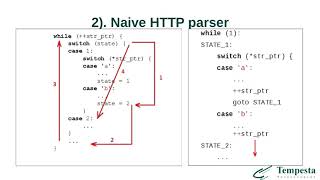
The Linux Network Stack Extension for DDoS Mitigation and Web Security
Explore Tempesta FW, an open-source Linux kernel module for efficient HTTPS traffic filtering and DDoS mitigation. Learn about its integration with the TCP/IP stack and advanced security features.

How Australian IaaS OrionVM Uses FreeBSD
Explore how OrionVM leverages FreeBSD's unique features for cloud environments, including guest OS, OpenZFS storage, FreeNAS for VPC, and PFSense for security in hybrid workloads.

Macro Security for Your Microservices
Explore microservices security with Istio, covering traffic encryption, access control, and auditing. Hands-on tutorial on architecture, policy enforcement, and mutual TLS for protecting distributed systems.
An Introduction to Penetration Testing Using Kali Linux
Hands-on introduction to penetration testing with Kali Linux. Learn to find devices, test vulnerabilities, and attempt access using real-life scenarios. Ideal for beginners interested in ethical hacking and network security.

Playable Ads - What REALLY Are They?
Explore the world of playable ads: their nature, functionality, potential for hijacking or bypassing, and hidden purposes. Uncover the truth through reverse engineering and man-in-the-middle techniques.

Zero Trust SSH
Explore SSH certificates for secure, scalable infrastructure management. Learn to implement a self-service certificate authority using open-source tools and OAuth2 authentication.

Keeping the Watchers at Bay
Explore the evolution of Internet security protocols, focusing on encryption efforts, challenges, and future directions in safeguarding online communication between endpoints.

SMBcmp - A New Tool to Diff Network Captures
Explore a new open-source tool for comparing network captures, enhancing Wireshark's capabilities to efficiently debug protocol issues and analyze packet differences.
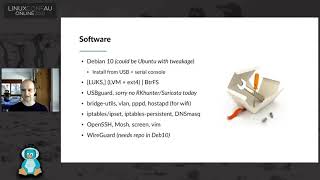
Building My Own Border Router - A WireGuard Love Story
Learn to build a custom border router using open-source components, enhance network security, and implement WireGuard VPN for improved performance and protection. Gain insights into advanced networking techniques and configurations.
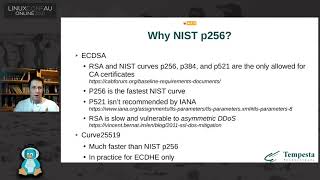
Mathematics and Development of Fast TLS Handshakes
Explore fast TLS handshakes using modern cryptography algorithms, with benchmarks comparing Tempesta TLS to OpenSSL/Nginx, focusing on elliptic curve computations and security considerations.
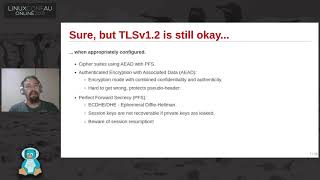
TLSv1.3 from Scratch
Explore the development of a new TLSv1.3 stack from scratch, including design decisions, challenges, and implementation complexities. Learn about interoperability, testing, and pitfalls in protocol implementation.
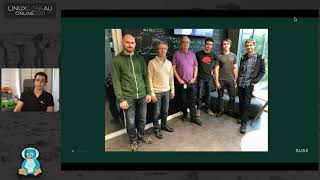
Life Amongst the Authentica-ceans
Explore the history and future of authentication and IDM technologies, including opensource offerings and the introduction of Kanidm, a new IDM system adapting to changes in security.
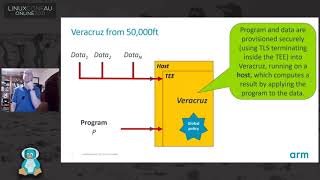
Veracruz - Privacy-Preserving Multiparty Computation Using Trusted Hardware
Explore privacy-preserving computation using secure enclaves, enabling secret data processing on untrusted hosts. Learn about Veracruz's implementation, security measures, and potential applications in multiparty scenarios.
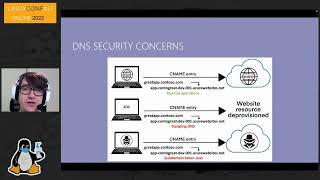
Avoiding DNS Pain
Explore DNS maturity assessment and management improvement techniques using tools like DNSControl to enhance security, resilience, and operational efficiency of this critical system.

Sweet Dreams - Abusing Sleep Mode to Break Wi-Fi Encryption and Disrupt WPA2/3 Networks
Novel Wi-Fi attacks exploiting power-save mode to leak encrypted frames and disrupt networks. Explores vulnerabilities in AP frame buffering and encryption, demonstrating potential security risks in Wi-Fi implementations.

Dock Your Jupyter Notebook
Learn to containerize Jupyter Notebooks with Docker for reproducible and shareable machine learning projects, enabling smooth execution on remote machines.
Python for Threat Intelligence
Explore threat intelligence using Python: automate tasks, analyze data, and build tools for security incident prevention. Learn from real-world examples and development practices.
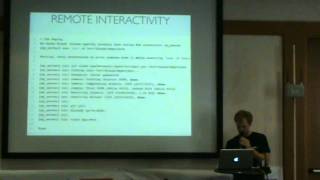
Deploying Web Applications to the Cloud with Python
Explore cloud deployment of Python web apps using Amazon AWS. Learn EC2 setup, security configurations, and automated deployment with Fabric and DjangoZoom for efficient and repeatable processes.

The Return of Peer to Peer Computing
Explore the resurgence of peer-to-peer computing, its implications for privacy, and potential to disrupt centralized communication models in the digital age.

Lost in OAuth - Learn Velruse and Get Your Life Back
Explore Velruse, a Python library simplifying OAuth implementation for seamless third-party authentication in web applications. Gain practical insights to streamline your development process.
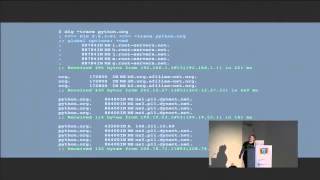
For Lack of a Better Name - DNS Explained
Explore DNS fundamentals, communication protocols, and Python integration. Learn how DNS works, its components, and how to interact with it using Python, including creating a simple DNS server.