Euclid and the Failure of Prime Factorization for Z - Data Structures Math Foundations
Explore the failure of prime factorization for z, challenging Euclid's theorem and examining ancient Greek mathematical foundations through a modern lens.
Reciprocals, Powers of 10, and Euler's Totient Function II - Data Structures Math Foundations
Explore unit groups, Euler's totient function, and number theory concepts. Learn how to calculate repeated cycles for fractions using algebraic techniques and group theory principles.
Modular Arithmetic With Fermat and Euler - Data Structures in Mathematics Math Foundations
Explore Fermat's and Euler's theorems in modular arithmetic, learning to simplify calculations and solve problems like z mod 13 through practical examples and applications.
Back to Gauss and Modular Arithmetic - Data Structures in Mathematics Math Foundations
Explore modular arithmetic and its applications in number theory. Learn about congruences, divisibility, and efficient calculation of remainders without long division.
Astronomy and Trigonometry in India - Math History
Explore ancient Indian contributions to astronomy and trigonometry, including Brahma Gupta's work and the development of sign tables, in this insightful mathematical history lecture.
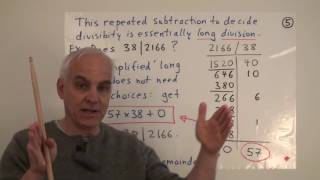
Divisibility of Big Numbers - Data Structures in Mathematics Math Foundations
Explore divisibility of large numbers, modular arithmetic, and long division techniques. Learn key concepts and practical applications in number theory and mathematical foundations.
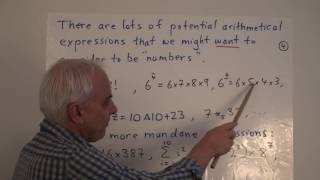
Arithmetical Expressions as Natural Numbers - Data Structures in Mathematics Math Foundations
Explores the complexities of representing large numbers through arithmetical expressions, discussing limitations, logical issues, and the challenges of creating a coherent system for such representations.
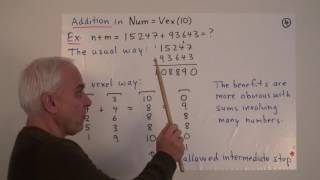
A New Look at Hindu Arabic Numbers and Their Arithmetic - Data Structures in Math Foundations
Exploring base-10 arithmetic using vexels, extending from binary to decimal systems. Covers addition, multiplication, and Hindu-Arabic numerals, providing insights into foundational mathematics.

The Hindu Arabic Number System Revisited - Data Structures in Mathematics Math Foundations
Explores three approaches to Hindu Arabic numerals, examining their mathematical foundations and practical applications in arithmetic and number representation.
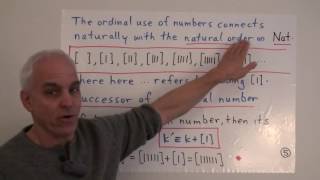
Naming and Ordering Numbers for Students - Data Structures in Mathematics Math Foundations
Explores naming, ordering, and using natural numbers, focusing on their fundamental nature as expressions of marks. Discusses counting, cardinal vs ordinal usage, and the successor operation.
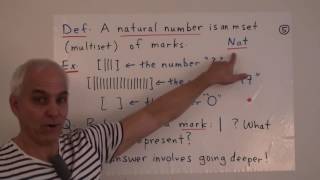
The Essential Dichotomy Underlying Mathematics - Data Structures Math Foundations
Explore the fundamental dichotomy underlying mathematics, challenging traditional views on natural numbers and geometry to uncover the core essence of mathematical thinking.
Ancient Astronomy in Babylon and China - Math History - NJ Wildberger
Explore ancient Babylonian and Chinese astronomy, examining celestial observations, coordinate systems, and angular measurements that laid the foundation for modern astronomical understanding.
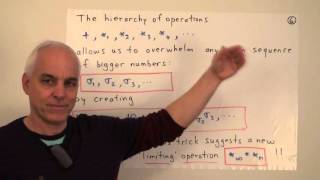
Hyperoperations and Even Bigger Numbers - Data Structures in Mathematics
Explore hyperoperations and the successor limit hierarchy to extend arithmetic beyond traditional bounds, opening up new realms of mathematical understanding and computation.
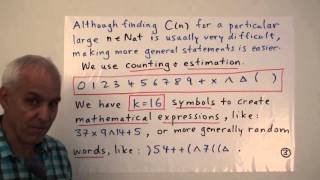
The Sporadic Nature of Big Numbers - Data Structures in Mathematics
Explores how arithmetic breaks down with large numbers, revealing most "numbers" are invisible to us. Challenges conventional number theory and questions the nature of natural numbers.
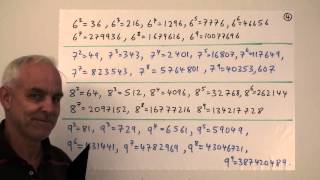
The Chaotic Complexity of Natural Numbers - Data Structures in Mathematics
Exploring the complex nature of arithmetic with large numbers, focusing on exponential and triangular complexity, and examining the role of powers in mathematical computations.
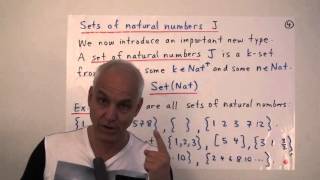
Maxel Algebra I - Data Structures in Mathematics Math Foundations
Explore maxel algebra, a new matrix theory focusing on idempotent diagonal maxels and sets of natural numbers. Learn about multiplication, identity maxels, and key propositions in this mathematical foundation.
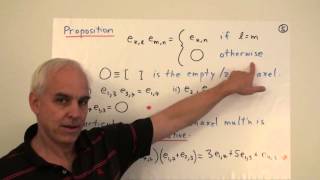
Maxel Theory - New Thinking About Matrices II - Data Structures Math Foundations
Exploring maxel theory as an extension of matrix theory, focusing on multiset views, distributive and associative laws, 1-maxels, and frames. Introduces new terminology and notation for a data structure-oriented approach.
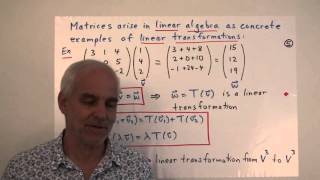
Arrays and Matrices II - Data Structures in Mathematics Math Foundations
Explore matrices from traditional linear algebra to a novel data structure approach. Learn matrix multiplication, algebra, and a new perspective using pixels and maxels.
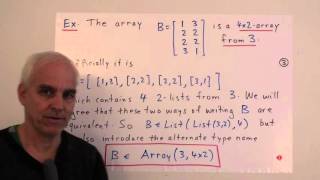
Arrays and Matrices - Data Structures in Mathematics Math Foundations | NJ Wildberger
Introduction to arrays and matrices as 2D data structures, exploring definitions, examples, and extending to 3D arrays. Distinguishes between arrays and matrices, offering a novel approach to linear algebra.
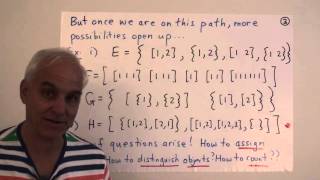
Higher Data Structures - Data Structures in Mathematics Math Foundations
Explore advanced mathematical data structures, including nested combinations of lists, ordered sets, multisets, and sets. Learn their applications in combinatorics, graph theory, and other mathematical fields.
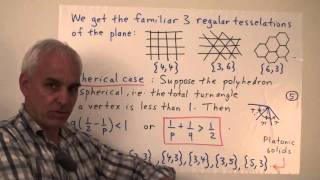
The Classification of Platonic Solids I - Universal Hyperbolic Geometry
Exploring the classification of Platonic solids using modern notation and turn angles. Examines planar, spherical, and higher-dimensional cases, highlighting mathematical constructions and challenges in Euclid's proof.