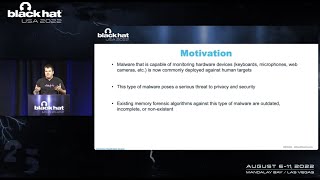
New Memory Forensics Techniques to Defeat Device Monitoring Malware
Discover new Volatility plugins for detecting device monitoring malware across major OS. Learn about advanced memory forensics techniques to combat sophisticated threats.

Exploiting Volatile Memory Analysis Challenges for Fun and Profit
Automated memory analysis tool for efficient malware detection and artifact extraction, featuring visual representation, data cross-referencing, and System Manifest for rapid context reloading.
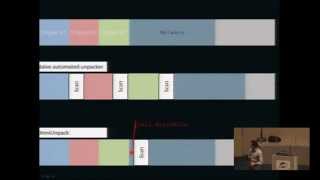
One Packer to Rule Them All
Explore advanced packing techniques to evade antivirus detection, including new methods for x86 and x64 malware, and learn about the stages of malware detection processes.
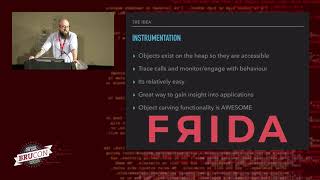
Hunting Android Malware - A Novel Runtime Technique for Identifying Applications
Novel Android malware detection technique analyzing application HEAP at runtime, identifying dangerous objects without APK access. Potential integration with Android Attestation Framework for real-time malicious app identification.

Detecting Malware Even When It Is Encrypted
Innovative machine learning approach for detecting malware in encrypted HTTPS traffic using Bro IDS logs, without decryption. Focuses on behavioral features and connection 4-tuples for improved accuracy.

Old Things Are New Again - Efficient Automatic Signature Generation for Malware Detection
Explore efficient automatic signature generation for malware detection using machine learning techniques and engrams, with a focus on registry key signatures and practical applications.

BYOI Payloads - Fusing the Power of .NET With a Scripting Language of Your Choosing
Explore .NET assembly generation, embedding scripting languages, and advanced techniques for creating versatile payloads in this cybersecurity-focused talk on BYOI (Bring Your Own Interpreter).

Where Do We Go From Here? - Stalkerware, Spouseware, and What We Should Do About It
Explore stalkerware and spouseware threats, their impact on victims, and potential solutions. Learn about detection, legal aspects, and the role of tech companies in combating these privacy invasions.
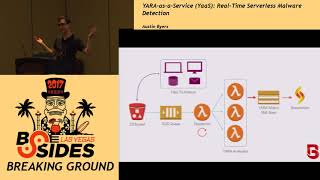
YARA-as-a-Service - Real-Time Serverless Malware Detection
Explore real-time serverless malware detection using YARA and Binary Alert. Learn about scalable security tools, features, and implementation for enhanced threat protection.

Anatomy of a WebShell
Explore WebShell malware: types, design, usage, and detection methods. Learn to identify and protect against this stealthy, powerful attacker tool used for long-term network compromise.
Medical Device Cyber Security - The First 164 Years
Explore the evolution of medical device cybersecurity, from historical perspectives to current challenges and future trends, emphasizing the balance between safety and security in healthcare technology.

FeatureSmith- Learning to Detect Malware by Mining the Security Literature - USENIX Enigma 2017
Automated feature engineering system for malware detection using AI to synthesize knowledge from research papers, achieving comparable performance to manual methods and suggesting new informative features.

FeatureSmith - Automatically Engineering Features for Malware Detection by Mining the Security Literature
Explore automated feature engineering for malware detection using security literature mining, enhancing detection accuracy and providing explainable results.

Social Media & Security
Explore the evolving landscape of online security, from email spam to social media threats, and learn strategies to protect yourself in the digital age.

Bot vs. Bot for Evading Machine Learning Malware Detection
Explore automated evasion techniques against machine learning-based malware detection, including AI-driven approaches and strategies for model hardening.

InfoSec Deep Learning in Action
Explore deep learning applications in cybersecurity, including use cases, data pipelines, algorithms, and real-world deployment challenges. Learn how AI can combat ransomware and other cyber threats.
Android App Penetration Testing 101
Learn Android app penetration testing essentials, including tools, methodologies, and practical techniques for identifying vulnerabilities and securing mobile applications.

Predator to Prey - Tracking Criminals with Trojans and Data Mining for Fun and Profit
Explore tracking techniques for stolen devices, from USB hacks to data mining, with ethical considerations and real-world case studies in digital forensics and cybersecurity.
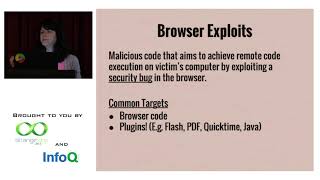
Chrome Security Secret Sauce
Explore Chrome's security features, threats, and protective measures. Learn about browser exploits, phishing, SSL attacks, and defense strategies from Google's "Security Princess".
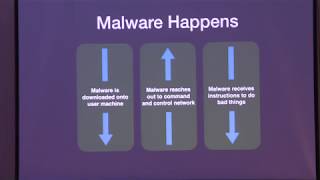
Deep Learning for Realtime Malware Detection
Explore an ensemble deep learning model for real-time malware detection, combining CNN, LSTM, and NLP techniques to analyze domain names and identify potential threats with high accuracy.
UNVEIL - A Large-Scale, Automated Approach to Detecting Ransomware
Automated approach to detect ransomware through dynamic analysis, focusing on file tampering and desktop changes. Improves detection of evasive ransomware unnoticed by traditional antimalware solutions.