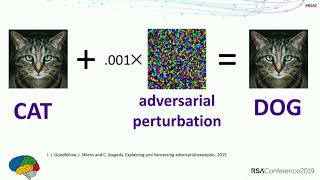
Attacking Machine Learning - On the Security and Privacy of Neural Networks
Explore security vulnerabilities in neural networks, including adversarial examples and data extraction, to understand potential threats and necessary defenses in modern machine learning systems.

JARVIS Never Saw It Coming - Hacking Machine Learning in Speech, Text and Face Recognition
Explore hacking techniques for machine learning systems in speech, text, and facial recognition, including exploits, backdoors, and adversarial attacks. Live demo included.
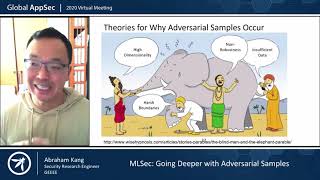
MLSec Going Deeper
Explore advanced machine learning security concepts, including adversarial samples, attack strategies, and defensive techniques for various ML models.

Accessorize to a Crime - Real and Stealthy Attacks on State-Of-The-Art Face Recognition
Explores stealthy attacks on face recognition systems using adversarial machine learning techniques, demonstrating vulnerabilities in state-of-the-art facial recognition technology through impersonation experiments.
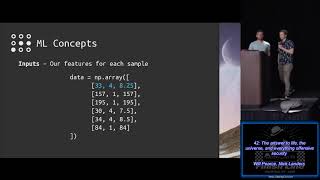
The Answer to Life the Universe and Everything Offensive Security
Explore offensive security through machine learning, sandbox detection, and attack graph theory. Learn about simulation, Q-learning, and adversarial attacks in this comprehensive overview.
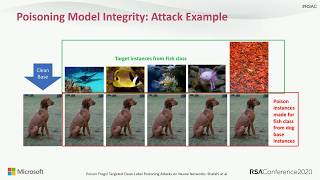
AI Security Engineering - Modeling - Detecting - Mitigating New Vulnerabilities
Explore AI security threats, including adversarial attacks and data poisoning. Learn detection, protection, and mitigation strategies for AI/ML systems from Microsoft experts.

Malicious Documents Emerging Trends - A Gmail Perspective
Comprehensive analysis of malicious document trends targeting Gmail users, exploring attacker tactics and Google's defensive strategies using AI detection and traditional antivirus methods.

Machine Learning Failures - For Art
Explore hilarious machine learning failures in art, from cookie recipes to pony classification, and learn how to deliberately create amusing AI mistakes.
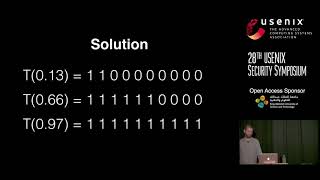
Lessons Learned from Evaluating the Robustness of Defenses to Adversarial Examples
Explore lessons from evaluating adversarial example defenses, common pitfalls, and recommendations for thorough defense assessments in machine learning security research.
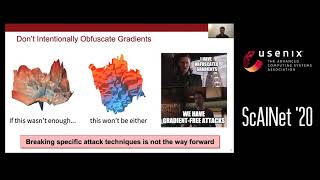
On Adaptive Attacks to Adversarial Example Defenses
Explore adaptive attacks on adversarial example defenses, examining challenges, whitebox attacks, and key observations to understand vulnerabilities in machine learning security.

The Devil is in the GAN - Defending Deep Generative Models Against Adversarial Attacks
Exploring vulnerabilities in Deep Generative Models, this talk introduces a threat model for training-time attacks and demonstrates backdooring techniques, while proposing effective detection methods through static and dynamic inspections.

Adversarial Attacks on Autonomous Cars - The Missed Gap
Explore adversarial attacks on autonomous vehicles, examining the gap between academia and industry, and discussing potential vulnerabilities in AI-driven transportation systems.
Superman Powered by Kryptonite - Turn the Adversarial Attack into Your Defense Weapon
Explore how AI-powered attacks on security mechanisms can be turned into defensive strategies, focusing on adversarial examples and innovative countermeasures in cybersecurity.
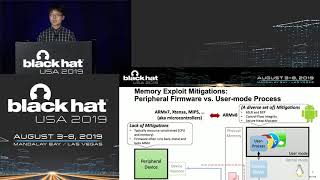
PeriScope - An Effective Probing and Fuzzing Framework for the Hardware-OS Boundary
Explore PeriScope, a Linux-based framework for analyzing device-driver interactions, enabling passive monitoring and active fuzzing to enhance hardware-OS boundary security.

Protecting the Protector - Hardening Machine Learning Defenses Against Adversarial Attacks
Strategies for enhancing machine learning model resilience against tampering, comparing cloud and client-based models, and exploring defense techniques for endpoint protection systems.
Smashing the ML Stack for Fun and Lawsuits
Explore legal risks and ethical considerations of testing commercial ML systems' security, with insights on potential lawsuits and regulatory implications for researchers.
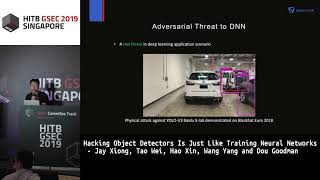
Hacking Object Detectors Is Just Like Training Neural Networks
Explore techniques for deceiving object detectors by comparing the attack process to neural network training. Learn how applying training techniques can improve adversarial attacks on state-of-the-art systems.

Exploring Practical Vulnerabilities of Machine Learning-Based Wireless Systems
Unveils practical vulnerabilities in ML-based wireless systems through RAFA, a hardware-implemented adversarial attack platform, demonstrating significant performance drops in communication and sensing approaches.
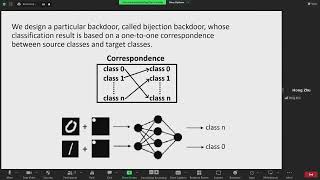
AI-Guardian - Defeating Adversarial Attacks Using Backdoors
Explore innovative techniques to counter adversarial attacks on AI systems using backdoor mechanisms, enhancing model robustness and security in critical applications.

Responsible AI for Business Leaders
Explore responsible AI practices, challenges, and Google's principles for ethical AI implementation in business. Learn strategies to mitigate risks and ensure positive outcomes in AI development.

Responsible AI for Engineers
Explore responsible AI practices, challenges, and solutions in this talk by Google's Technical Director. Learn about bias, unintended consequences, and techniques for aligning machine learning with ethical values.