AlphaTensor - Discover Faster Matrix Multiplication Algorithms with RL - IPAM at UCLA
Discover how DeepMind's AlphaTensor uses reinforcement learning to find efficient matrix multiplication algorithms, outperforming human-designed methods and improving on Strassen's algorithm after 50 years.
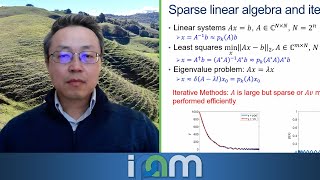
Practical Quantum Circuits for Block Encodings of Sparse Matrices
Explore efficient quantum circuits for block encodings of sparse matrices, focusing on strategies for well-structured matrices and quantum walks on graphs. Gain insights into quantum linear algebra algorithms.
Theory Seminar - On Linear Data Structures and Matrix Rigidity, Sivaramakrishnan Ramamoorthy
Explores systematic linear data structures, rectangular rigidity, and their equivalence. Discusses rigidity lower bounds and Cayley graphs, presenting recent research findings and open problems.
Theory Seminar - Algorithms and Hardness for Linear Algebra on Geometric Graphs, Aaron Schild
Explore algorithms and hardness for linear algebra on geometric graphs, focusing on efficient spectral graph theory and its limitations in high-dimensional spaces.
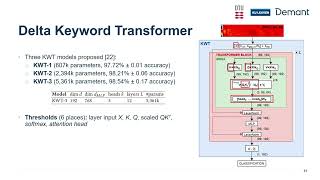
Delta Keyword Transformer: Bringing Transformers to the Edge Through Dynamically Pruned Multi-Head Self-Attention
Explore cutting-edge techniques for optimizing Transformers in edge computing, focusing on the Delta Keyword Transformer and its dynamic pruning approach for efficient multi-head self-attention.
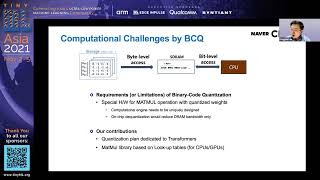
Extremely Low-Bit Quantization for Transformers - tinyML Asia 2021
Explore extremely low-bit quantization techniques for Transformers, focusing on mixed precision strategies to optimize deployment on resource-limited devices without compromising accuracy.
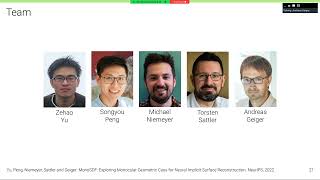
Constraining 3D Fields for Reconstruction and View Synthesis
Explore advanced techniques in 3D field reconstruction and view synthesis, covering RegNeRF, MonoSDF, and TensoRF for improved neural rendering and geometric representation in computer vision.
Linear Error Correcting Codes - Lecture 11b of CS Theory Toolkit
Explore linear error correcting codes, their properties, and applications in computer science theory. Learn about decoding, notation, and minimum distance in this graduate-level lecture.

Multi-Qubit Systems - Lecture 5 of Quantum Computation at CMU
Explore multi-qubit systems, tensor products, and joint states in quantum computation. Learn about Bell states and fundamental properties of quantum systems with multiple qubits.

Unitary Transformations and the Elitzur-Vaidman Bomb - Quantum Computation at CMU
Explore unitary transformations and the Elitzur-Vaidman bomb paradox in quantum computation, covering linear transformations, reflections, and allowable quantum operations.
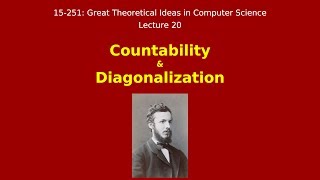
Great Ideas in Theoretical Computer Science: Countability and Diagonalization
Explore fundamental concepts in theoretical computer science, including countability, diagonalization, and set theory, with a focus on infinite sets and cardinality.

Analysis of Boolean Functions at CMU - Additive Combinatorics
Explore additive combinatorics in Boolean functions, covering subspaces, cosets, Hamming balls, and the Fryman region conjecture. Gain insights into advanced theoretical concepts.
Maths in OpenGL
Explore essential mathematical concepts for OpenGL programming, focusing on practical applications and techniques for efficient graphics rendering.
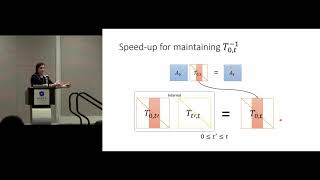
Dynamic Matrix Inverse - Improved Algorithms and Matching Conditional Lower Bounds
Explore advanced algorithms for dynamic matrix inversion, including improved techniques and conditional lower bounds, enhancing computational efficiency in linear algebra applications.
Functional Encryption for Inner Product: Achieving Const
Explore advanced cryptography concepts with a focus on functional encryption for inner product, achieving constant-size ciphertexts in prime-order groups.
Maximizing Small Root Bounds by Linearization and Applications to Small Secret Exponent RSA
Explore techniques for maximizing small root bounds through linearization, with applications to enhancing security in RSA cryptosystems using small secret exponents.
A Decade of Fully Homomorphic Encryption - Past, Present and Future
Comprehensive overview of fully homomorphic encryption's evolution, exploring its journey from concept to practical tool, examining various schemes, and discussing future directions in the field.
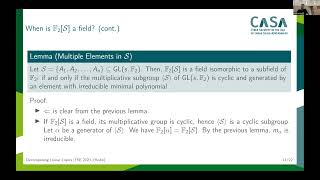
Linear Layers in Cryptography - Session from Fast Software Encryption 2023
Explore field structures, linear layers, and matrix decompositions in cryptography. Learn about evolutionary matrices and their applications in software encryption.
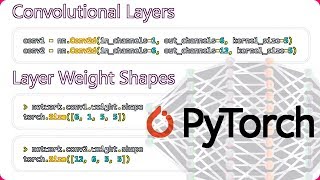
CNN Weights - Learnable Parameters in PyTorch Neural Networks
Explore PyTorch's inner workings, including OOP concepts, convolutional and linear layer weight tensors, and matrix multiplication for deep learning in neural networks.

How to Evaluate Observability Agent Performance - Understanding Overhead
Explore observability agent performance, including types of work, resource usage, and key variables. Learn to evaluate overhead and make informed decisions for your infrastructure.
A Quantum Speed-Up for Approximating the Top Eigenvector of a Matrix via Improved Tomography
Quantum algorithm for approximating top eigenvectors of matrices, offering polynomial speedup over classical methods. Introduces efficient quantum tomography techniques for state and process reconstruction.