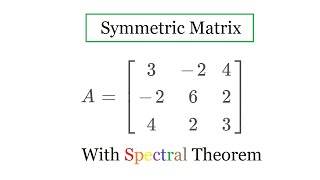
Symmetric Matrices
Explore symmetric matrices, quadratic forms, and the true second derivative test in linear algebra and calculus.
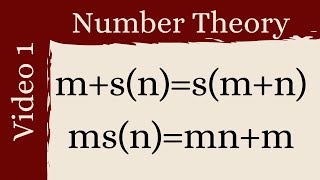
Number Theory
Comprehensive exploration of number theory, covering foundational concepts to advanced topics like quadratic reciprocity, integer partitions, and Ramanujan's congruences.
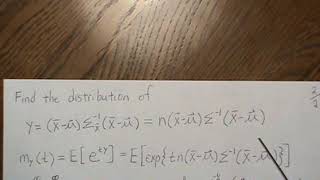
Quadratic Forms
Explore the distribution, properties, and independence of quadratic forms in multivariate normal distributions, including Cochran's Theorem and related proofs.
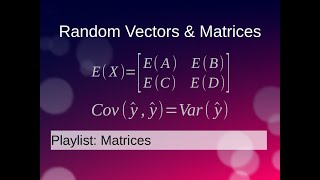
General Linear Models - Background Material
Comprehensive exploration of statistical concepts and matrix algebra, covering distributions, quadratic forms, projection matrices, and advanced matrix operations for linear modeling.

Factoring by Substitution Practice Test Full Solutions
Comprehensive video guide demonstrating step-by-step solutions for factoring by substitution problems, covering various patterns and techniques to enhance algebraic problem-solving skills.
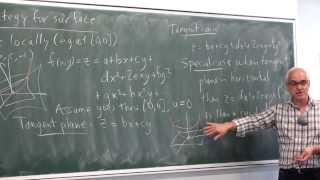
Paraboloids and Associated Quadratic Forms - Differential Geometry
Explore paraboloids and quadratic forms in differential geometry, covering diagonalization, eigenvalues, and Dupin's indicatrix. Learn key concepts for understanding surface curvature.
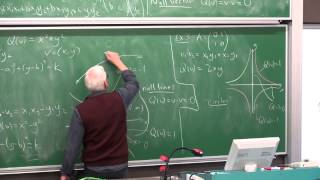
Metrical Structure and Curvature of a Parabola - Differential Geometry
Explore metrical structures and curvature in differential geometry, focusing on parabolas. Learn about symmetric bilinear forms, relativistic geometries, and their applications in physics.
Seminar - Some Fundamental Formulas from Metrical Algebraic Geometry
Explore fundamental formulas in metrical algebraic geometry, connecting classical theorems to modern discoveries. Gain insights into affine and projective variants applicable across various fields.
Spectral Graph Theory - Minimizing/Maximizing the Quadratic Form
Explore spectral graph theory, focusing on minimizing and maximizing quadratic forms, with connections to graph components and bipartiteness in this graduate-level lecture.
Spectral Graph Theory - The Quadratic Form
Explores spectral graph theory, focusing on the quadratic form associated with undirected graphs. Covers basic setup and provides examples for graduate-level computer science research.
The Space of Lorentzian Polynomials
Explore Lorentzian polynomials, projective varieties, and discrete convexity with June Huh. Delve into quadratic forms, M-convexity, and algebraic intuition in this advanced mathematical lecture.
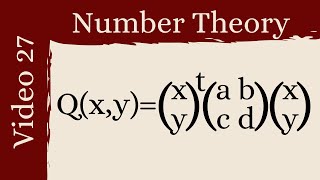
Quadratic Forms - Number Theory
Explore quadratic forms in number theory, delving into their properties, applications, and significance in mathematical analysis.
Maria Esteban - Spectral Results and Open Problems for Dirac-Coulomb Operators With Charge Distributions
Explore spectral results and open problems for Dirac-Coulomb operators with general charge distributions, focusing on self-adjoint extensions, eigenvalue characterizations, and electron stability conditions.
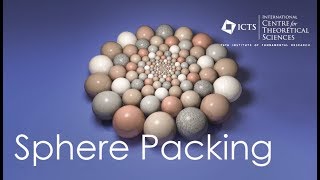
Quadratic Forms and Hermite Constant, Reduction Theory by Radhika Ganapathy
Explores techniques for computing densest lattice packings, including quadratic forms, Hermite constants, and reduction theory. Covers perfect forms, eutactic lattices, and Voronoi's algorithm for listing perfect forms.
Computer-Assisted Proofs in the Arithmetic of Quadratic Forms - IPAM at UCLA
Explore computer-assisted proofs in quadratic forms arithmetic, covering equivalence, representation, local-global principles, and modular forms. Gain insights into complex computations across mathematics.
Variety of Fractional Laplacians
Explore various types of fractional Laplacians, their properties, and applications in mathematical analysis through proofs, comparisons, and counterexamples.
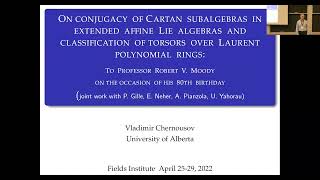
On Conjugacy of Cartan Subalgebras in Extended Affine Lie Algebras and Classification of Torsors
Explore advanced concepts in extended affine Lie algebras and torsors over Laurent polynomial rings in this mathematical lecture by Vladimir Chernousov at the Fields Institute.
Historical Development of Group Theory - From Number Theory to Geometry
Explore the historical development of group theory, from its roots in number theory and algebra to its impact on geometry, covering key concepts and influential mathematicians.
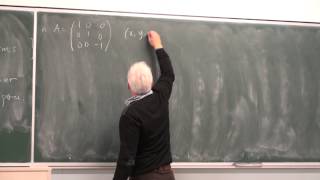
Duality, Polarity and Projective Linear Algebra - Differential Geometry Lecture 11
Explores projective geometry, quadratic forms, and pole-polar duality in relation to the unit circle. Connects these concepts to Lorentz/Einstein/Minkowski geometry and Apollonius' work.
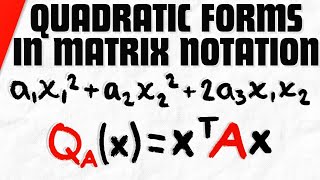
Quadratic Forms in Matrix Notation - Linear Algebra
Explore quadratic forms in matrix notation for R^2 and R^3, learning how to write and interpret these essential linear algebra concepts with clear examples and explanations.
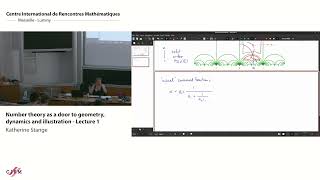
Number Theory Through Geometry, Dynamics and Illustration - Lecture 1
Explore number theory through geometry and dynamics, focusing on continued fractions, Diophantine approximation, and Apollonian circle packings. Emphasizes visual and experimental tools in mathematical research.