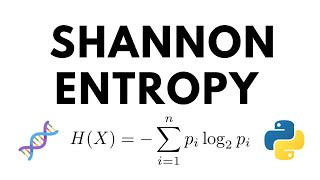
Shannon Entropy from Theory to Python
Learn to quantify information in sequences using Shannon Entropy. Explore the theory, formula, and Python implementation of this powerful information theory metric for data analysis and comparison.
Oatmeal is Cheap - A Fundamental Theorem for Procedural Generators
Explore Kolmogorov complexity in procedural generation, linking generator knowledge to output complexity. Insights for game design decisions in Minecraft, Borderlands, and Tea Garden, with interactive examples.
Mutual Information-based Preference Disentangling and Transferring for Cross-Domain Recommendations
Explore mutual information-based techniques for disentangling and transferring user preferences across multiple non-overlapping domains in recommendation systems.

The Theory of Quantum Information - Channels, Capacities, and Communication Resources
Delve into quantum information theory's core concepts, exploring communication channels, entanglement, and quantum capabilities while discovering new perspectives on quantum theory fundamentals.
Open Quantum Dynamics and Spontaneous Symmetry Breaking
Explore the fundamental principles of open quantum systems and spontaneous symmetry breaking, examining information-theoretic phase transitions and their applications in quantum dynamics.
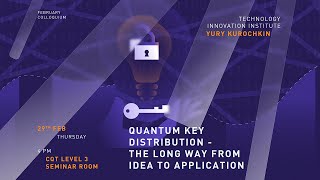
Quantum Key Distribution - From Theoretical Concept to Practical Applications
Explore the evolution, challenges, and practical implementation of quantum key distribution, from theoretical concepts to real-world network applications and security considerations.

Tradeoff Constructions for Quantum Locally Testable Codes
Explore groundbreaking constructions for quantum locally testable codes, examining weight reduction, soundness amplification, and distance amplification techniques to achieve new parameter regimes in quantum error correction.
Generalized Rényi Entropy Accumulation Theorem and Quantum Probability Estimation
Delve into advanced quantum cryptography through an exploration of the generalized Rényi entropy accumulation theorem, focusing on improved finite-size bounds and convex optimization techniques.

Sufficiency of Rényi Divergences in Quantum Information Theory
Delve into quantum state equivalence and Rényi divergences, exploring their sufficiency in classical and quantum systems, with applications to state transitions and resource theory.
Information-Theoretic Generalization Bounds for Quantum Learning
Explore a unified mathematical framework for quantum learning theory, covering state discrimination, PAC learning, and generalization bounds using quantum mutual information and optimal transport concepts.
Sequential Clustering of Data Streams from Unknown Distributions
Explore sequential nonparametric clustering techniques for data streams, focusing on universal tests that efficiently group streams based on distribution proximity, with applications in statistical analysis.
Streaming Codes for Three-Node Relay Networks With Burst Erasures
Explore packet-level erasure codes and delay-constrained recovery techniques for three-node relay networks, focusing on innovative streaming code construction for handling burst packet losses.
Tight Bounds for General Computation in Noisy Broadcast Networks
Delve into the mathematical analysis of noise-resilient protocols in broadcast networks, exploring tight bounds for general computation and innovative simulation schemes with Dr. Saxena.
Codes for Unexpected and Expected Loads in Distributed Computing Systems
Explore coding theory applications in distributed computing systems, focusing on erasure coding's role in handling unpredictable data access patterns and optimizing storage efficiency.
Designing Robust Algorithms for Data Streams with Adversarial Generation
Explore advanced techniques for designing robust streaming algorithms that maintain accuracy even under adversarial data manipulation, focusing on Missing Item Finding and graph coloring challenges.
The Capacity of Causal Adversarial Channels
Explore the mathematical foundations of causal adversarial channels and their capacity constraints, focusing on discrete-time systems and state-based transitions in communication networks.
Multiparty Interactive Coding over Networks of Intersecting Broadcast Links
Delve into advanced network communication concepts, focusing on interactive coding schemes for broadcast channels with random bit-flip noise and strategies for optimizing multiparty computations.
Collaborative Decision-Making Under Adversarial and Information Constraints
Explore collaborative decision-making challenges in large-scale learning, focusing on handling adversarial outliers and communication constraints in linear stochastic bandit scenarios.
Age-Distortion Tradeoffs in Communication Systems
Explore the balance between timely data transmission and quality in networked systems, examining optimal strategies for packet-based communication and the impact of coding across packets.
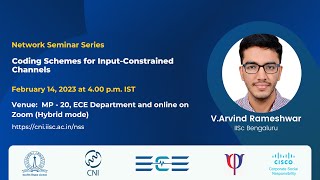
Coding Schemes for Input-Constrained Channels in Information Theory and Communication
Explore coding schemes for binary input-constrained channels, focusing on RLL constraints, Reed-Muller codes, and error resilience in both stochastic and adversarial channel models.
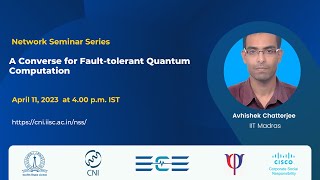
A Converse for Fault-tolerant Quantum Computation - Fundamentals and Lower Bounds
Delve into quantum computation fundamentals, exploring fault tolerance, redundancy bounds, and noise thresholds in quantum systems through advanced mathematical and theoretical frameworks.